A 30-Year Recruiter Shares How to Get Hired — Here's What That Means for Your Résumé in 2026
June 29, 2026 · 4 min read · Past the Bots
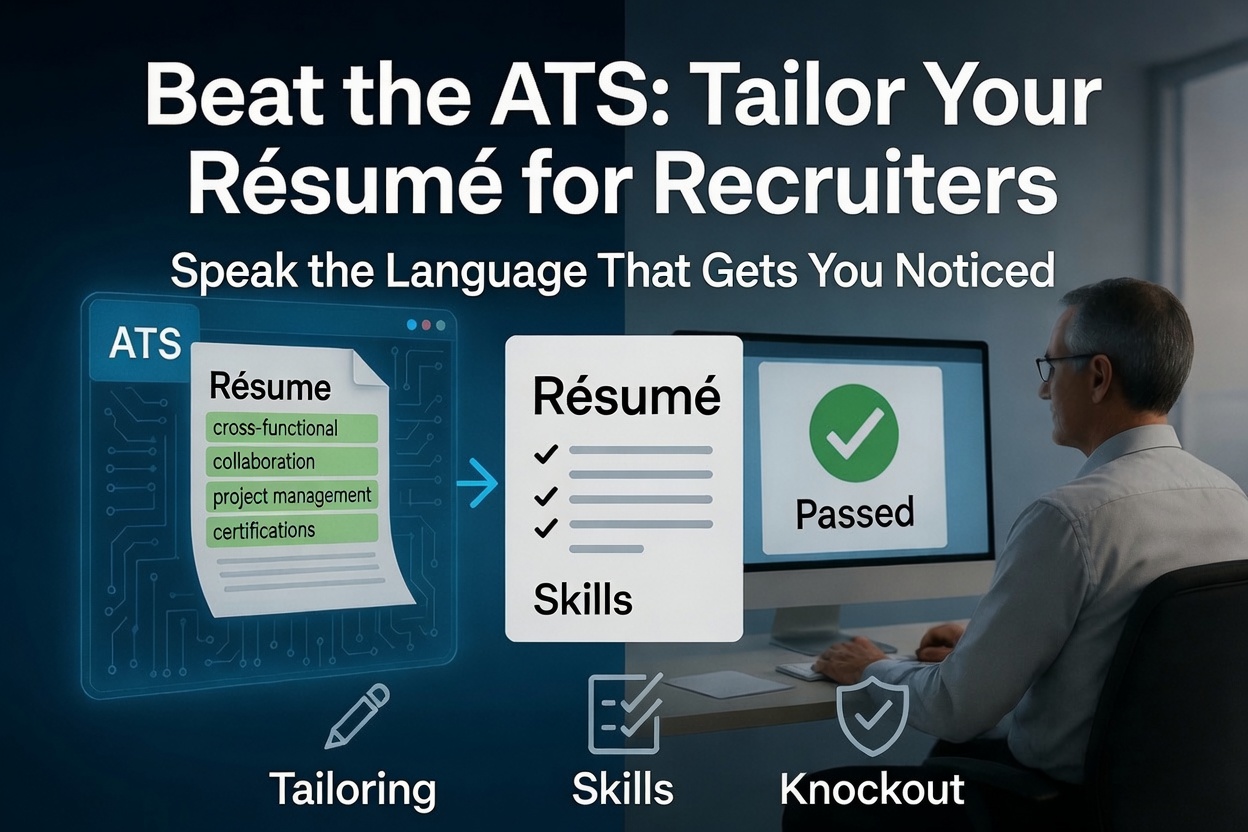 A recruiter with three decades of hiring experience recently shared their unfiltered take on what separates candidates who get called back from those who disappear into the void. The advice is refreshingly direct, and a lot of it holds up. But there's a layer the article doesn't fully address: before a recruiter ever lays eyes on your résumé, an Applicant Tracking System has already decided whether you're worth surfacing.
Let's walk through the core advice and talk about what it actually takes to act on it today.
Your Résumé Has to Speak Two Languages
The veteran recruiter's first big point is that your résumé needs to be tailored to each role, not blasted out generically. One hundred percent true. But tailoring used to mean reading the job description and rewriting a few bullets. Now it means something more specific.
ATS software pulls keywords, job titles, and skills from your résumé and compares them against the job description algorithmically. If the language doesn't match closely enough, you get filtered out before any human reads a word.
This is why a résumé that impresses your mentor or your career coach can still score poorly in an ATS scan. The system doesn't care how well-written your bullets are. It's looking for signal words.
What to do: When you tailor your résumé, mirror the exact phrasing from the job posting where it accurately reflects your experience. If they say "cross-functional collaboration" and you wrote "worked with multiple teams," the parser may not connect those as the same thing.
The Skills Section Actually Matters More Than You Think
The recruiter in the article emphasizes that hard skills need to be visible and specific. This tracks with how most ATS platforms parse résumés. They scan for skills in dedicated sections and in bullet context. If your skills are buried in paragraph-style job descriptions, some parsers will miss them entirely.
A clean, explicit skills section near the top of your résumé gives the system multiple chances to register what you bring. It also gives a recruiter doing a 10-second skim an instant read on your fit.
Tools like the ATS scan in Past the Bots show you exactly what a parser is extracting from your résumé, including your skills, contact info, section headers, and job titles. It flags critical errors (things that cause outright parsing failures), warnings, and items that look fine. Seeing your résumé through a parser's eyes is genuinely eye-opening if you've never done it.
Gaps, Titles, and Knockout Criteria
One of the sharper points the recruiter makes is that hiring managers often set hard filters they won't budge on, even if the rest of a candidate looks strong. Years of experience, specific certifications, particular job titles, that kind of thing.
These are sometimes called knockout questions in ATS systems. They're pass/fail. If your résumé doesn't hit the threshold, the algorithm removes you from consideration automatically.
How to protect yourself:
- Read job descriptions carefully for required vs. preferred qualifications
- Make sure any credentials or certifications you hold are spelled out clearly and consistently with how employers list them
- Don't assume a close equivalent will be recognized. "PMP" and "Project Management Professional" may or may not resolve to the same thing depending on the system
A skill-gap analysis against the specific job description you're applying to helps here. You want to know ahead of time whether you have a knockout gap or just a missing-keyword issue, because those require different responses.
Rewriting Your Bullets Without Faking Anything
The recruiter is pretty clear that embellishment backfires. Hiring managers who've done this for years can spot inflated language instantly, and it destroys credibility in interviews when you can't back up what's on the page.
This is the tension a lot of job seekers feel when they hear "tailor your résumé." They don't want to lie, but they also don't know how to make their real experience sound more relevant without it feeling dishonest.
The answer is reframing, not fabricating. You're taking what you actually did and describing it in language that connects to what the employer is looking for. A good AI tailoring tool does exactly this: it rewrites your bullets to be more relevant and ATS-friendly without inventing responsibilities or outcomes you didn't have.
The Format Still Has to Work
Finally, the recruiter mentions that presentation matters. Clean, readable, professional. What they don't mention, because it's not really in a recruiter's daily line of sight, is that creative formatting can wreck an ATS parse entirely.
Columns, text boxes, tables, headers and footers, and fancy fonts can all cause parsers to scramble your information or skip sections. A single-column, ATS-safe format is the foundation everything else sits on.
Get the format right first. Then tailor the content. Then check what a parser actually sees. That's the order, and it's the order that gets résumés in front of humans.