A $7.2B CEO Gets Thousands of Résumés a Day and Still Can't Find Good Candidates. Here's What That Means for You.
June 17, 2026 · 4 min read · Past the Bots
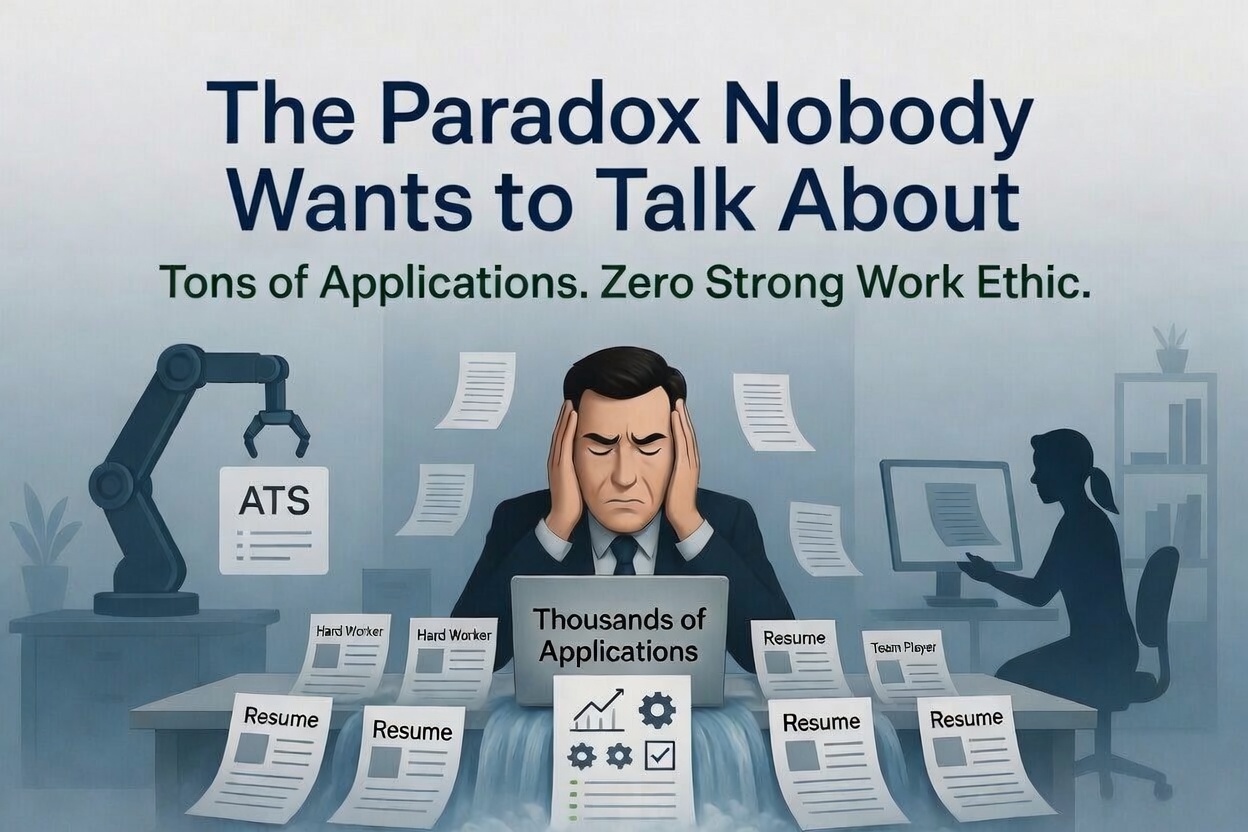
The Paradox Nobody Wants to Talk About
A recent report highlighted something that should make every job seeker stop scrolling: the CEO of a $7.2 billion AI company says he receives thousands of job applications every single day, and he still can't find candidates with a strong work ethic.
Thousands. Per day. And still coming up empty.
That's not a talent shortage. That's a signal problem.
If a high-volume, well-resourced company is drowning in applications but still frustrated with what they're seeing, it tells us something important: getting your résumé in front of a human is not the same as making a good impression on one. Most candidates are getting filtered out before anyone reads a single word. And the ones who do get through aren't always communicating what actually matters.
Let's break down what's happening, and what you can actually do about it.
Why "Work Ethic" Is Hard to See on a Résumé
Here's the honest truth: "strong work ethic" is one of those qualities that almost everyone claims and almost nobody proves. If you do a search of résumés on any job board, you'll find thousands that literally say "hard worker" or "strong work ethic" in the summary. That language is invisible to recruiters because it's everywhere.
What hiring managers are actually looking for is evidence. They want to see:
- Results that required sustained effort over time
- Projects you took ownership of, not just contributed to
- Situations where you went beyond the obvious scope of your role
- Consistency and progression across your career history
The problem is that most résumés bury this evidence under vague job descriptions and generic bullet points. And then, before a human even gets the chance to be impressed or unimpressed, an ATS (Applicant Tracking System) has already made a decision about whether your résumé is worth surfacing.
The Double Filter You're Up Against
Most job seekers think about one filter: does my résumé match the job description? But there are actually two filters working against you.
Filter one is the ATS. It's parsing your résumé for specific skills, job titles, and keywords. If your formatting is off, if your skills section doesn't match the language in the job posting, or if your contact information isn't where the parser expects it, your résumé gets quietly deprioritized. You never hear back, and you never know why.
Filter two is human skepticism. If you make it past the bot, a recruiter or hiring manager is scanning your résumé in about six seconds. If they see generic language and no concrete accomplishments, they move on. This is the gap that CEO was describing. The candidates making it through aren't telling a compelling enough story about who they are and what they've actually done.
You need to solve both problems, not just one.
What You Can Actually Do
This is where being strategic matters more than applying to more jobs.
Start by auditing how your résumé is actually being read. Past the Bots has a tool called Audit the Bots that shows you how different parsers extract your information. You can see exactly what an ATS pulls out: your name, contact details, skills, and sections. It flags critical issues, warnings, and things that are fine. Most people are shocked by what gets misread or dropped entirely.
Then match your language to the job, carefully. The skill-weighted match score inside Past the Bots compares your résumé against a specific job description and shows you matched keywords, missing ones, and any knockout gaps. This isn't about stuffing keywords in. It's about making sure your real experience is described in the language the employer is actually using.
Rewrite your bullets to show outcomes, not just tasks. This is the work-ethic problem, solved. Instead of "managed social media accounts," you want something like "grew organic Instagram following by 40% over six months by testing content formats and posting consistently." That second version shows initiative, consistency, and results. Past the Bots has an AI tailoring feature that helps you rewrite bullets like this for a specific job, without fabricating anything. It works with what you've actually done.
Make sure your formatting isn't hurting you. A creative résumé with columns, graphics, or unusual fonts can completely confuse an ATS. If you're not getting callbacks, this might be why. A clean, single-column rebuild is often the fix.
The Bottom Line
That CEO isn't wrong that finding great candidates is hard. But the candidates with strong work ethics are out there. Many of them are just invisible because their résumés aren't communicating what they've actually accomplished.
The fix isn't to apply to more jobs. It's to make sure the right signal is getting through, past the bots and into the hands of someone who can actually say yes.