AI Is Changing Who Gets Hired. Here's How to Make Sure It's Not Working Against You.
June 30, 2026 · 4 min read · Past the Bots
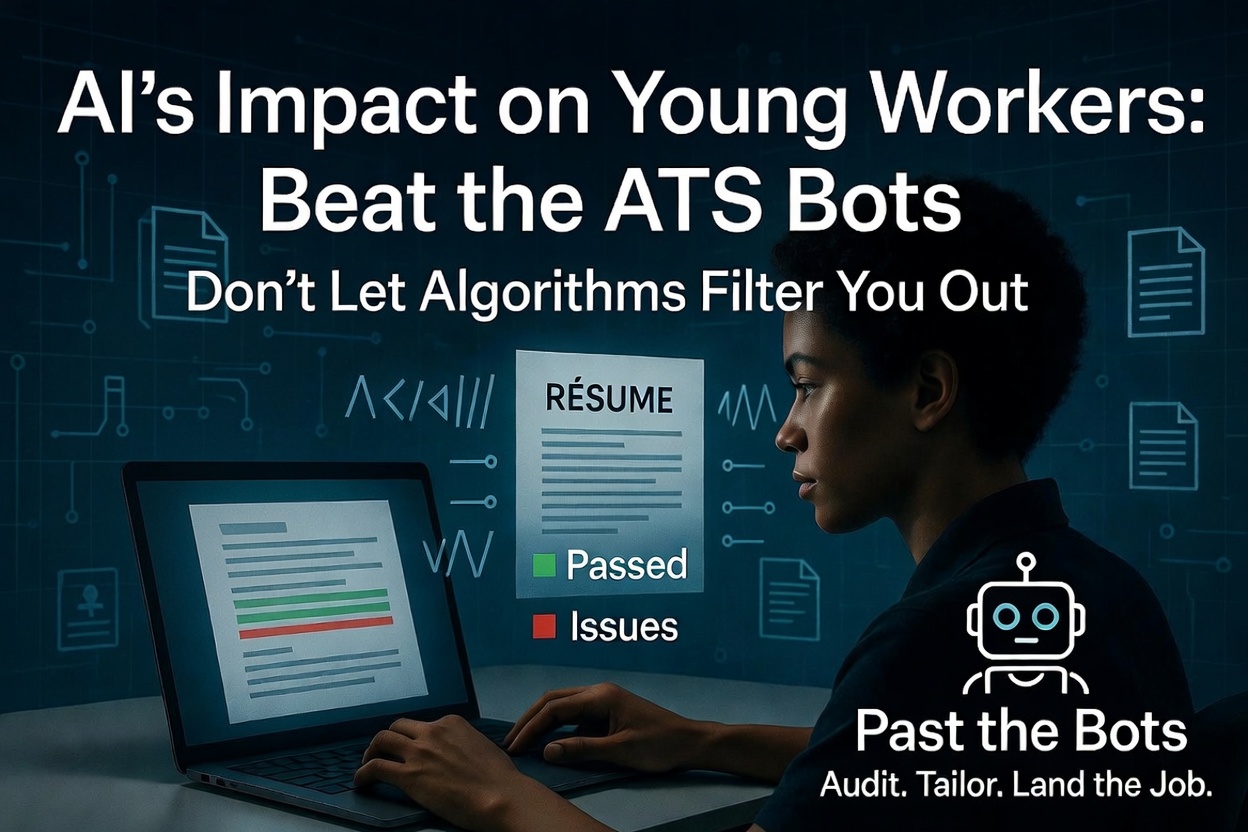 Microsoft President Brad Smith recently made waves by calling on policymakers and companies to rethink how AI is affecting young workers. His core concern: automation is hitting entry-level and early-career roles hardest, making it tougher than ever for people just starting out to get a foothold in the workforce.
It's a real problem. And if you're job searching right now, you're probably feeling it.
But here's the part that doesn't get talked about enough: AI isn't just affecting which jobs exist. It's also controlling who gets seen for the jobs that do exist.
The Invisible Filter Most Job Seekers Don't Know About
Before a human recruiter ever reads your résumé, it almost certainly passes through an Applicant Tracking System (ATS). These tools parse your document, extract your information, score your fit against the job description, and in many cases, filter you out before any person gets involved.
For early-career job seekers especially, this is brutal. You may not have years of experience, but you have relevant skills, coursework, projects, and potential. The problem is that a poorly formatted résumé or one missing the right keywords can make you look like a worse candidate than you actually are, at least to a bot.
Brad Smith's broader point is that we need systemic solutions to protect workers from AI's downsides. He's right. But while we wait for policy to catch up, you need to be strategic about the part of the process you can control.
What ATS Systems Actually Look For
Here's what most applicant tracking systems are doing when they process your résumé:
- Parsing your contact info so a recruiter can reach you (more complicated than it sounds if your résumé has a multi-column layout or a header in a text box)
- Identifying section labels like Education, Experience, and Skills
- Extracting keywords from your bullet points and matching them against the job description
- Scoring your fit based on how many required and preferred skills appear in your document
If your résumé has fancy design elements, tables, or graphics, the parser may skip entire sections. If you're using synonyms for skills instead of the exact terms in the job posting, you might score lower than a less-qualified candidate who just happened to use the right words.
None of this reflects your actual ability. It's a formatting and keyword problem, and it's fixable.
How to Stop Losing to Bots Before a Human Sees You
1. Know how your résumé is being read.
The first step is understanding what a parser actually extracts from your document. Tools like the Audit the Bots feature on Past the Bots show you exactly what different ATS systems pull from your résumé, your name, contact details, skills, section headers, and where things go wrong. It's eye-opening to see how much a parser misses when your layout is anything other than clean and simple.
2. Match the language in the job description.
This is the single highest-impact thing you can do. Run your résumé against the actual job posting and find the gaps. A skill-match tool will show you which keywords you've hit, which ones are missing, and which gaps are likely knockout criteria. You don't need to stuff your résumé with every term. You need to make sure the real skills you do have are described in the language the employer uses.
3. Tailor your bullets without making things up.
This is where a lot of job seekers get stuck. Tailoring sounds like lying. It's not. It's reframing real experience in the context of what the role needs. If you managed a team project in college and the job asks for "cross-functional collaboration," those are describing the same thing. AI tailoring tools can help you rewrite your bullets to connect those dots without fabricating anything.
4. Use a clean, ATS-safe format.
If you downloaded a beautiful template from a design site, there's a good chance it's hurting you. Single-column, plain-text-friendly formats are what parsers handle best. When in doubt, rebuild.
The Bigger Picture
Brad Smith is raising an important alarm about young workers and AI. The hiring process is just one piece of that puzzle, but it's a piece where individual job seekers have real leverage right now.
You can't change how many entry-level roles exist. You can make sure that when you apply, you're not getting filtered out by a system that never gave a human the chance to see what you bring.
The bots are part of the process. Understanding them, and knowing how to work with them, is just modern job searching.