Companies Are Getting Pickier About Who They Hire. Here's How to Make the Cut.
June 29, 2026 · 4 min read · Past the Bots
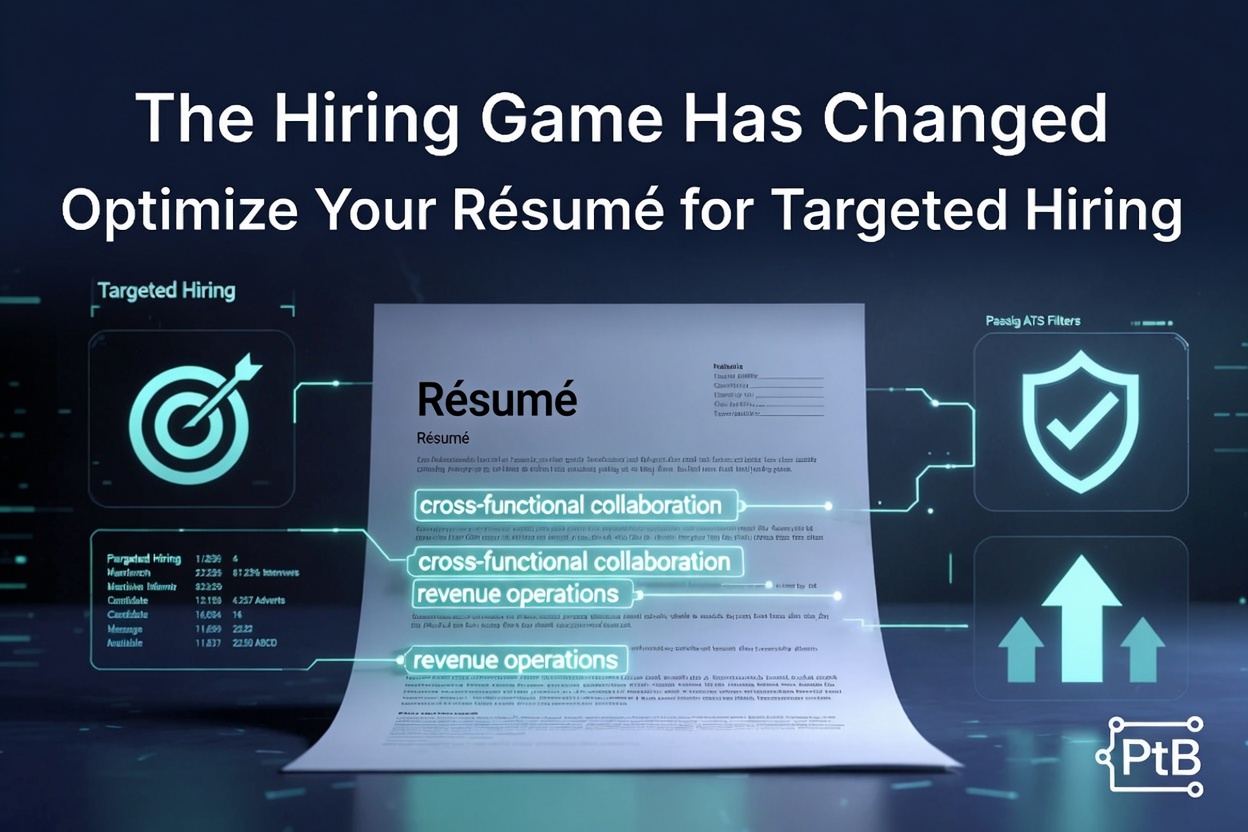 The hiring environment has quietly changed over the past year or two, and if your job search feels harder than it used to, you're not imagining it.
Recent reporting highlights a clear shift: companies are moving away from broad, high-volume hiring and toward much more deliberate, targeted recruitment. They're being selective about who they bring in, and they're investing more in keeping the people they already have. Translation? Fewer open roles, more competition for each one, and recruiters who are scanning résumés with a much sharper eye.
That's a tough environment if your résumé isn't dialed in. But it's also a solvable problem.
What "Targeted Hiring" Actually Means for You
When a company posts a role in this kind of market, they usually have a pretty specific person in mind. They've written the job description carefully. They know which skills are non-negotiable. And they're relying on their Applicant Tracking System (ATS) to do the first round of filtering before a human ever looks at anything.
That means two things need to be true about your résumé:
- It has to get past the ATS parser without critical errors. If the system can't read your contact info, misreads your job titles, or drops your skills section entirely, you're out before you started.
- It has to match the specific language of that specific job description. Generic résumés don't cut it when hiring is targeted. You need to reflect the words and priorities the employer actually used.
Most job seekers are losing at step one or step two, and they have no idea which one.
The Parsing Problem Nobody Talks About
ATS software doesn't read your résumé the way a person does. It parses it, pulling out fields like your name, contact details, work history dates, job titles, and skills. If your formatting confuses the parser, those fields get dropped or garbled.
Common culprits include tables, text boxes, fancy headers, graphics, and multi-column layouts. A résumé that looks beautiful in Word can come out as a jumbled mess inside an ATS.
Past the Bots has an "Audit the Bots" tool that actually shows you how different parsers read your résumé. You can see exactly what gets extracted and what gets lost. It flags critical issues (things that will get you filtered out), warnings (things that hurt your ranking), and items that are reading correctly. It's the kind of concrete feedback that's hard to get anywhere else.
If your résumé has parsing problems, the platform can also rebuild it into an ATS-safe single-column format that preserves all your content and keeps it readable by any system.
Matching the Job Description Matters More Than Ever
Once your résumé is parsing correctly, the next challenge is relevance. ATS systems score résumés based on how well they match the job description, and in a targeted hiring environment, that scoring matters a lot.
Here's a practical approach:
- Read the job description carefully and note recurring terms. If "cross-functional collaboration" appears three times, that phrase matters to them.
- Check for knockout requirements. Some qualifications are hard filters, not preferences. Missing them can mean automatic rejection regardless of everything else.
- Mirror the employer's language, not just the concept. If they say "revenue operations" and you wrote "sales ops," a keyword-matching system may not connect those as equivalent.
Past the Bots has a skill-weighted match score that compares your résumé against a pasted job description. It shows you which keywords matched, which ones are missing, and which gaps are potential knockouts. That takes the guesswork out of optimization.
Tailoring Without Making Things Up
One concern people have about tailoring is that it feels like fabricating. It doesn't have to be. Tailoring means reframing real experience using the language the employer understands, not inventing things that didn't happen.
Past the Bots has an AI tailoring feature that rewrites your bullet points to align with a target role while staying grounded in what you actually did. It's a meaningful distinction. You're not padding your résumé; you're translating your genuine background into terms that land with this specific employer.
The Bottom Line
Companies are being more deliberate about who they hire right now. That's frustrating if you're job searching, but it also means the bar for a well-optimized résumé has real payoff. A résumé that parses correctly, matches the right keywords, and speaks directly to the role is genuinely going to outperform one that doesn't.
The good news is that none of this is guesswork anymore. You can see exactly how your résumé is being read, where it's falling short, and what to fix. That's a real edge in a market where everyone is competing for fewer spots.