Gen Z's Guide to Dodging Career Dead Ends (and the ATS Traps Nobody Warns You About)
June 28, 2026 · 4 min read · Past the Bots
 If you've been following the conversation around Gen Z and career navigation lately, you've probably noticed a theme: younger job seekers are getting smarter about avoiding dead ends. They're researching companies more carefully, asking harder questions in interviews, and thinking about career trajectories before accepting offers. That's genuinely great.
But there's one dead end that doesn't get nearly enough attention, and it trips up job seekers of every generation: getting filtered out by an Applicant Tracking System before a human ever sees your resume.
You can do everything else right and still never get a callback because a bot decided your resume didn't match the job. Let's talk about where that actually happens and what you can do about it.
The ATS Problem Nobody Explains Clearly
Most job postings at mid-size and large companies run through an ATS before a recruiter touches them. The system parses your resume, tries to extract your name, contact info, work history, and skills, and then scores you against the job description.
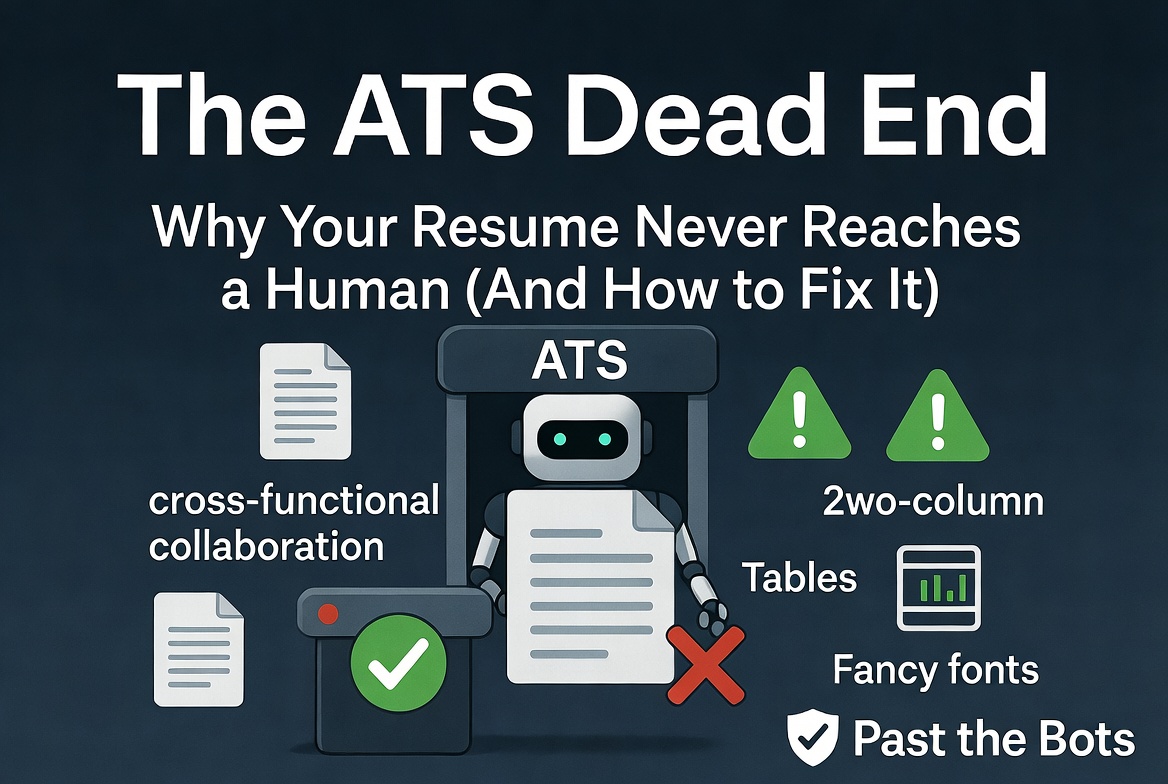
Here's where it gets frustrating: the ATS doesn't read your resume the way a person does. A two-column layout with a stylish header might look sharp on screen, but some parsers will completely scramble the text order, reading your sidebar skills as part of your job titles. A PDF with embedded graphics can come out as near-gibberish on the other side. Even a section labeled "Core Competencies" instead of "Skills" can cause a parser to miss your skills entirely.
None of that has anything to do with your qualifications. It's a formatting and keyword problem, and it's 100% fixable.
The Career Dead End Hidden in Your Resume Format
Gen Z job seekers are often advised to stand out visually, and that instinct makes sense for creative roles or portfolio work. But for the initial application layer, a visually busy resume is often a liability.
Some specific things that cause ATS problems:
- Text boxes and tables: Many parsers skip content inside them entirely
- Headers and footers: Contact info buried there can get lost
- Fancy fonts or icons: These can introduce parsing errors
- Two-column layouts: Column order often gets scrambled during extraction
- Skill bars or rating graphics: The system can't read "4 out of 5 stars" as a proficiency level
The fix isn't to turn in a boring resume. It's to understand where the ATS layer ends and the human layer begins, and optimize accordingly.
Matching the Job Description Actually Matters
Another dead end: applying with a generic resume to every posting. ATS systems score your resume against the specific language in the job description. If the posting says "cross-functional collaboration" and your resume says "worked with different teams," you might score lower even though you mean the same thing.
This is where taking a few extra minutes pays off. Before you apply, look at the job description and ask:
- Which skills are mentioned multiple times? Those are weighted heavily.
- Are there specific tools or certifications listed as requirements?
- What words do they use for common responsibilities?
Then check whether your resume actually uses that language. If it doesn't, update it. This isn't about being dishonest. It's about making sure the system can connect your real experience to what the employer is actually looking for.
The Past the Bots match score tool does exactly this: paste in a job description, upload your resume, and it shows you which keywords you're hitting, which ones you're missing, and which gaps might be outright knockout factors. That way you're not guessing.
How to Actually Fix This Before Your Next Application
Here's a practical sequence that works:
Run your resume through an ATS audit first. See what a parser actually extracts from your file. Is your name where it should be? Are your skills showing up? Past the Bots shows you exactly what gets pulled out, with flags for critical issues, warnings, and things that look fine.
Check your match score against the specific job. Don't apply with the same resume everywhere. Spend five minutes on the keyword gaps for each role.
Rewrite bullets to reflect the job language, not fabricate experience. If you managed a project budget, say that clearly using the words the employer uses. AI tailoring can help you rephrase without making things up.
If your formatting is a mess, rebuild it. A clean single-column structure is the safest bet for ATS compatibility.
The Bigger Picture
Gen Z is right to be strategic about career moves and skeptical of paths that lead nowhere. Adding ATS awareness to that strategy just closes one more gap between a strong application and actually getting the interview. The bot isn't your enemy, it's just a gatekeeper with specific rules. Once you know the rules, getting past it is mostly a checklist problem.