Get Found by Recruiters (While Keeping Your Email Private)
July 17, 2026 · 4 min read · Past the Bots
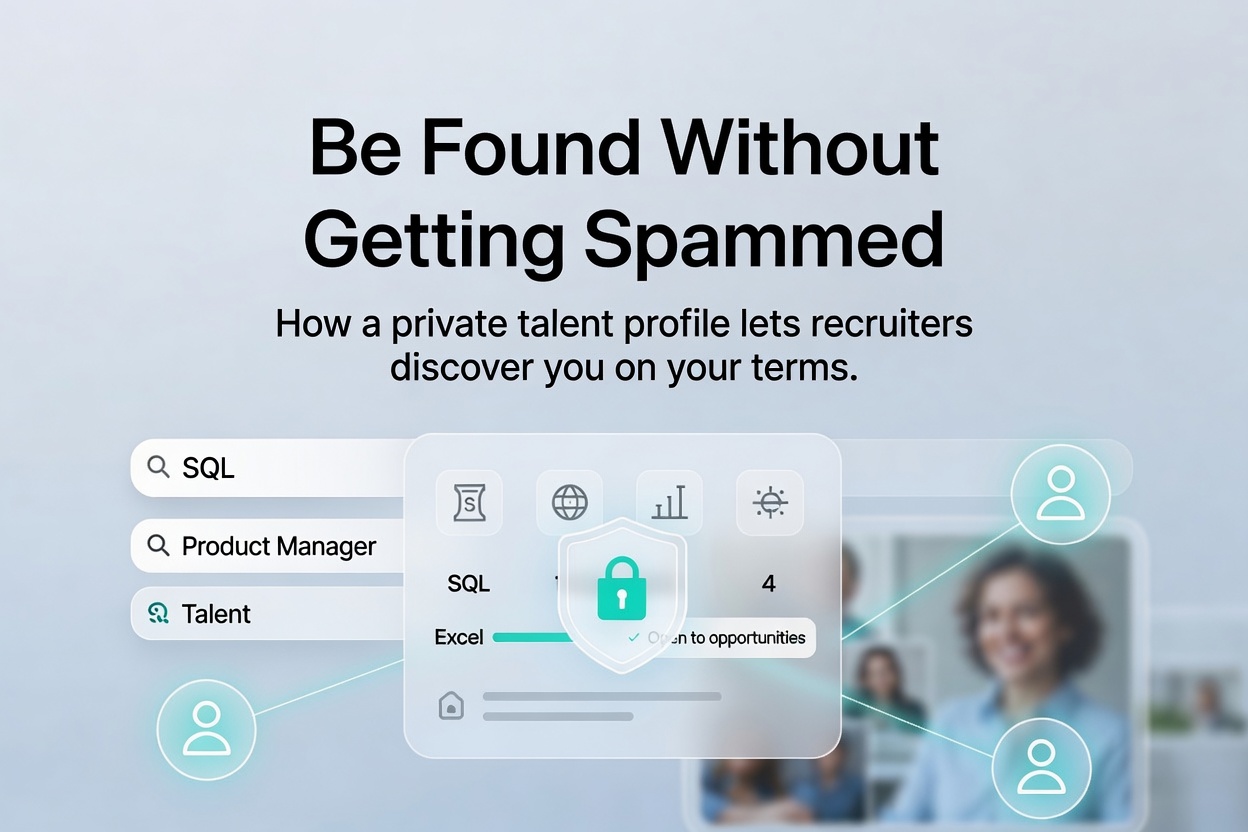 Most job search advice follows the same script: apply, wait, apply more, wait more. But a growing number of hires happen the other way around. A recruiter searches for someone with a specific skill set, finds a candidate who looks like a fit, and reaches out directly. If you are not set up to be found, those opportunities just go to someone else.
The catch is that most ways of being "discoverable" online require you to either blast your email address everywhere or keep LinkedIn perpetually updated and hope the algorithm cooperates. Neither feels great.
Here is a better approach.
What a Talent Profile Actually Does
A talent profile is a lightweight, structured snapshot of your skills, experience level, and what you are open to. Think of it as a public-facing signal to recruiters: I exist, I have these qualifications, and I am at least open to a conversation.
The key difference from just uploading a resume somewhere is that a well-built talent profile is:
- Searchable by skill and role, not just job title
- Controlled by you -- you decide what is visible and when
- Separated from your personal contact details -- recruiters see your profile, not your inbox
That last point matters more than people realize. When your email is public, you get spam. You get recruiters pitching roles that are nowhere near what you do. You get messages at your work address that your employer can see. A profile with a contact layer in between keeps you reachable without making you totally exposed.
Why Recruiters Actually Use Talent Pools
Recruiters, especially in-house sourcers at mid-size and larger companies, do not spend all their time waiting for applications to come in. They search. They have Boolean queries, saved searches, and tools that surface candidates based on skills and availability signals.
If your profile is opted into a talent pool, you show up in those searches. If it is not, you do not. Simple as that.
The candidates who get found tend to have a few things in common:
- Their skills are spelled out explicitly, not buried in job-description prose
- Their experience level is clear -- years of experience, seniority, scope of work
- They have indicated openness -- even something like "open to the right opportunity" is a meaningful signal
- Their profile matches how recruiters actually search, which means using the terms recruiters use, not just the titles their past employers happened to give them
The Privacy Trade-Off You Actually Control
Here is what a sensible opt-in setup looks like in practice. Your name and headline are visible. Your skills and general experience are visible. But your direct email address sits behind a contact request, so you see who wants to reach you before you respond.
You can turn visibility on when you are actively looking and dial it back when you are not. You are not locked into a setting forever.
This is genuinely different from leaving your resume posted on a job board where it sits for three years and gets scraped by everyone. An opt-in talent pool is a deliberate choice to be discoverable, on your terms.
Making Your Profile Actually Work
Being in a talent pool is not enough if your profile is vague. Here is what to focus on:
- Lead with skills, not just titles. A title like "Senior Analyst" means different things at different companies. Skills like SQL, financial modeling, or Tableau are searchable and specific.
- Include your target role and level. If you want a Senior Product Manager role at a Series B company, say something close to that. Recruiters are not mind readers.
- Match the language recruiters use. If your industry calls it "demand generation" and not "lead gen," use both. If you have done "workforce planning" that is sometimes called "headcount planning," include both terms.
- Be honest about availability. "Actively looking," "open to conversations," or "not looking right now" all help recruiters decide whether to reach out.
If you have already run your resume through an ATS scan, you have a head start here. You will know which skills parsed cleanly and which ones got missed. That same logic applies to a talent profile -- the keywords that matter to automated systems are usually the same ones recruiters are searching for manually.
The Bottom Line
Job searching does not have to be purely outbound. Setting up a discoverable profile that keeps your contact details private is one of the lower-effort, higher-leverage things you can do, especially if you are passively open to opportunities but not ready to go full application-blast mode.
You put in the work to build your skills. Making sure the right people can find them is just the next logical step.