Holding Down Multiple Jobs in Tech? Here's How to Keep Your Résumés Straight
July 17, 2026 · 4 min read · Past the Bots
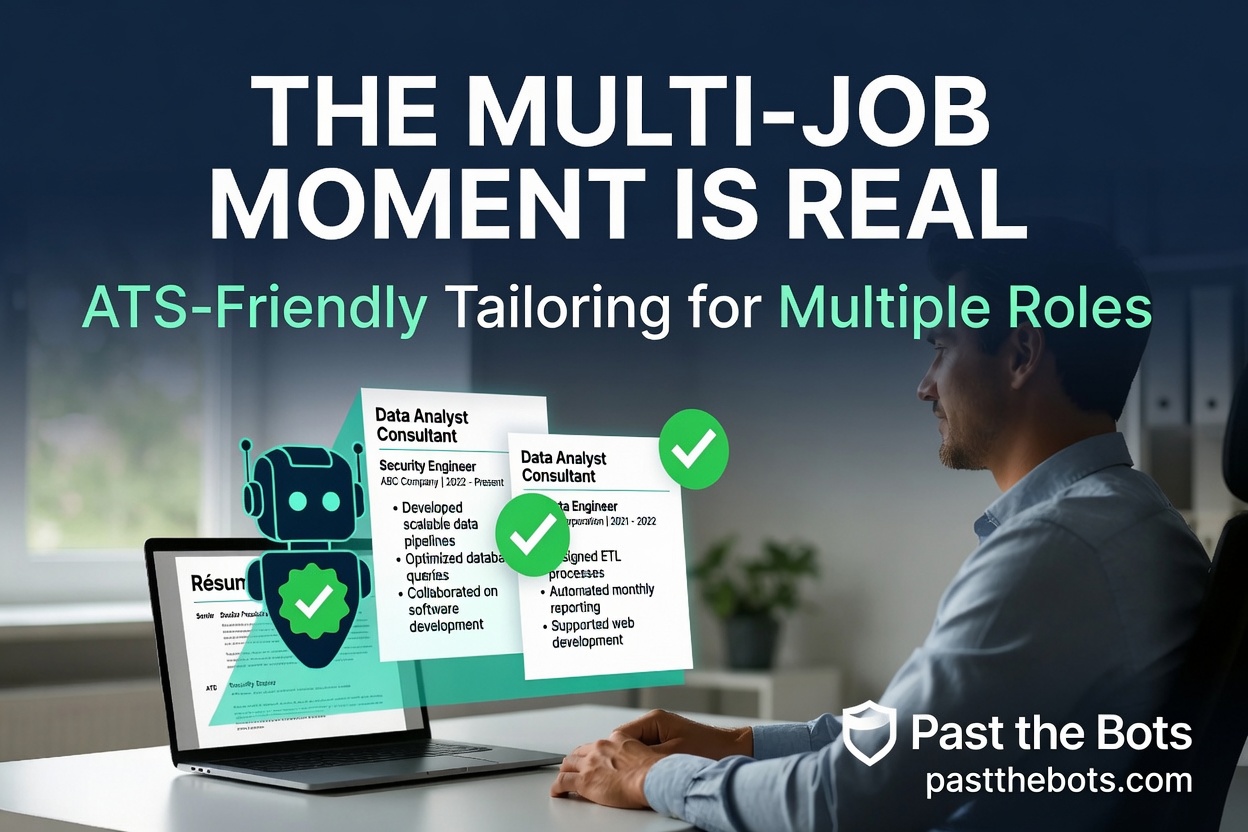
The Multi-Job Moment Is Real
If you've been paying attention to tech Twitter (or Blind, or your group chats), you already know: holding down more than one job at a time has become a quiet norm in certain corners of the industry. A recent piece from MSN highlights how some tech workers are ethically juggling multiple roles simultaneously, often fully remote positions that don't overlap in ways that create conflicts. The conversation has moved from "is this even possible?" to "how do I do this responsibly?"
But there's a practical problem that doesn't get talked about enough: your résumé situation gets complicated fast.
When you're working one job and applying for another, a single polished résumé is usually enough. When you're managing two roles, considering a third, or strategically building your portfolio of work, you suddenly need multiple versions of your résumé tailored to very different job descriptions, and you need to keep all of them accurate and ATS-friendly.
That's where things get messy.
Why ATS Systems Trip Up Multi-Role Candidates
Applicant Tracking Systems are already unforgiving. They parse your résumé for specific information, extract keywords, and score you against a job description before a human ever sees your application. When your résumé has overlapping employment dates, parallel roles, or a skills section that's trying to serve too many masters at once, the parser can get confused, or worse, silently disqualify you.
Common problems multi-job candidates run into:
- Overlapping date ranges that some parsers flag as errors
- Bloated skills sections that dilute your match score for any specific role
- Bullets written for one job that tank your relevance score for another
- Formatting workarounds (like tables or text boxes used to visually separate roles) that break ATS parsing entirely
None of these are deal-breakers if you know what's happening. But most people don't know, because they never see what an ATS actually extracts from their file.
The Fix: Know Exactly What the Bot Sees
The first step is running each version of your résumé through an ATS audit before you submit it. Past the Bots shows you exactly what information a parser pulls out: your name, contact details, job titles, dates, skills, and section headers. If something is getting misread or skipped entirely, you'll see it flagged as a critical issue, a warning, or an OK before it costs you an opportunity.
For multi-role candidates specifically, a few things are worth checking:
- Are both (or all) of your current roles being read as separate positions, with correct titles and dates? Some parsers collapse overlapping roles into one.
- Is your skills section pulling the right keywords for this specific application? A backend engineer who also does freelance data work might need two very different skills sections depending on the job.
- Does your formatting hold up? If you've gotten creative to visually distinguish parallel roles, make sure the underlying structure is still ATS-safe.
Tailoring Without Fabricating
Here's the ethical line that the MSN piece rightly emphasizes: transparency matters. You're not hiding that you have multiple jobs, you're presenting your experience in the way that's most relevant to each opportunity.
That's just good résumé practice, and it's something AI tailoring tools can help with when they're used correctly. The key word is correctly. A tool that rewrites your bullets to match a job description is useful. A tool that invents experience you don't have is a liability.
Past the Bots' AI tailoring works from what's already on your résumé. It surfaces the keywords a specific job is looking for, shows you which ones you're already matching and which ones you're missing, and helps you reframe real experience in language that resonates with that particular role. Nothing gets added that isn't already true.
For someone with a multi-role background, this is especially valuable. You might have genuinely done the work a job description is asking for, but it's buried under bullets written for a different audience.
Keeping It All Organized
If you're managing multiple concurrent roles or running parallel job searches across different specialties, a few practical habits help:
- Keep a master résumé with everything on it, then create tailored versions for each application
- Run every version through an ATS scan before submitting, not just once when you first build it
- Match your skills section to the job, not to your ego, a shorter, targeted list outperforms a sprawling one
- Export clean .docx files for each tailored version so you're not reformatting by hand every time
Moonlighting in tech is increasingly normalized, and there's nothing wrong with building a career that reflects the way modern remote work actually functions. Just make sure your résumé is working as hard as you are.