How to Answer 'Tell Me About Yourself' (And What to Do If You Were Laid Off)
June 8, 2026 · 4 min read · Past the Bots
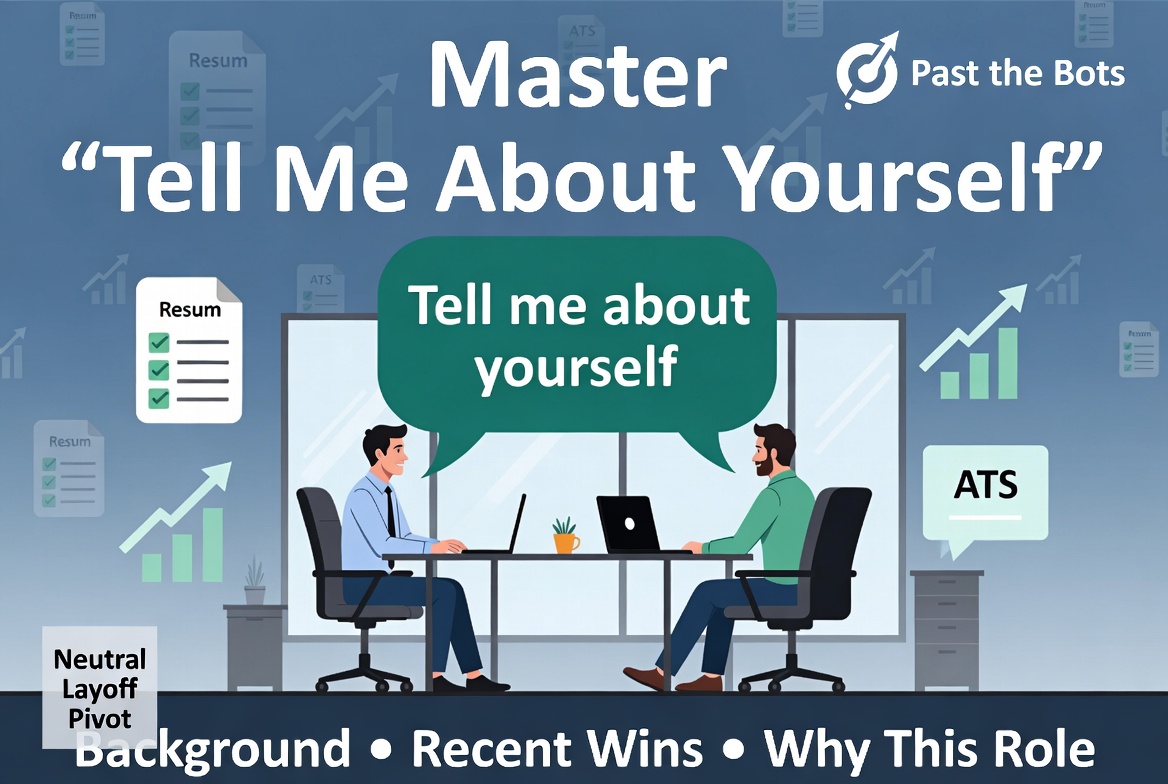
You finally made it past the automated screening, your resume landed in front of a real human, and now you're sitting across from a hiring manager. The first thing they say is: "So, tell me about yourself."
It sounds easy. It's not. Most people either ramble for three minutes or give a nervous summary of their entire LinkedIn profile. Neither one is great. Here's how to do it well, including what to say if a layoff is part of your story.
Why This Question Trips People Up
The "tell me about yourself" prompt feels open-ended, but interviewers are actually listening for a few specific things: who you are professionally, why you're relevant to this role, and whether you can communicate clearly under pressure.
According to career experts, the best answers follow a loose structure that moves from your background, to your recent experience, to why you're here talking to them today. Think of it as a 60-to-90 second highlight reel, not a biography.
A solid formula looks something like this:
- Where you've been: One or two sentences on your background and area of expertise
- What you've been doing: Your most recent role and a specific accomplishment or two
- Why you're here: What draws you to this company or role right now
Keep it tight. Keep it relevant. And practice it out loud before the interview so it doesn't sound like you're reading off a teleprompter.
How to Handle a Layoff in Your Answer
If you were laid off, you might be tempted to either over-explain or avoid the topic entirely. Neither works well.
The honest, simple approach is almost always the right one. Something like: "My company went through a round of restructuring last spring and my role was eliminated. It gave me the chance to be intentional about my next step, which is why I'm particularly excited about this opportunity."
That's it. You've acknowledged it, framed it neutrally, and pivoted toward something forward-looking. You don't need to apologize, over-explain the business circumstances, or badmouth your former employer.
What you do need is confidence, and confidence in an interview comes largely from preparation. The more clearly you understand your own story and what you bring to the table, the easier it is to tell it.
Where Your Resume Fits Into Interview Prep
Here's something job seekers often overlook: your resume and your interview answers should tell the same story. If your resume is vague or generic, your interview answers tend to be too.
Before you walk into any interview, it's worth auditing what your resume actually says about you. That's where Past the Bots comes in.
The ATS scan shows you exactly what an applicant tracking system extracts from your resume: your name and contact info, the skills it identifies, and how your sections are being read. If the system is mangling your job titles or missing key skills entirely, you have a problem, and now you can fix it before it costs you an interview.
The skill-match tool lets you paste in a job description and see which keywords your resume hits and which ones are missing. This is useful beyond just getting through ATS screening. When you can see the specific skills and language a company is prioritizing, you can prep better interview stories around those exact areas.
The AI tailoring feature rewrites your bullet points to better align with a specific job, without inventing experience you don't have. This matters because the accomplishments it surfaces are real ones from your background. Reading through those revised bullets before an interview is a genuinely useful way to remind yourself of things you've done that are worth talking about.
A Simple Pre-Interview Checklist
Before your next interview, try running through these steps:
- Run your resume through the ATS scan. Know what a system sees before a human does.
- Use the skill-match tool with the actual job description. Note the gaps and think about whether you have relevant stories to address them.
- Review your tailored bullets. These are your raw material for interview stories.
- Draft your "tell me about yourself" answer. Write it out, then say it out loud a few times.
- Prepare your layoff line if you need one. One sentence, neutral, forward-looking. Done.
The Bottom Line
Getting past the bots is step one. But the resume that clears automated screening also shapes how you show up in the room. When your resume is specific, accurate, and aligned to the job, your interview answers tend to follow. You know what you did, why it matters, and how to say it clearly.
That's the kind of preparation that actually moves you from "we'll be in touch" to a job offer.