Microsoft Laid Off Thousands. Do You Have a Plan?
July 7, 2026 · 4 min read · Past the Bots
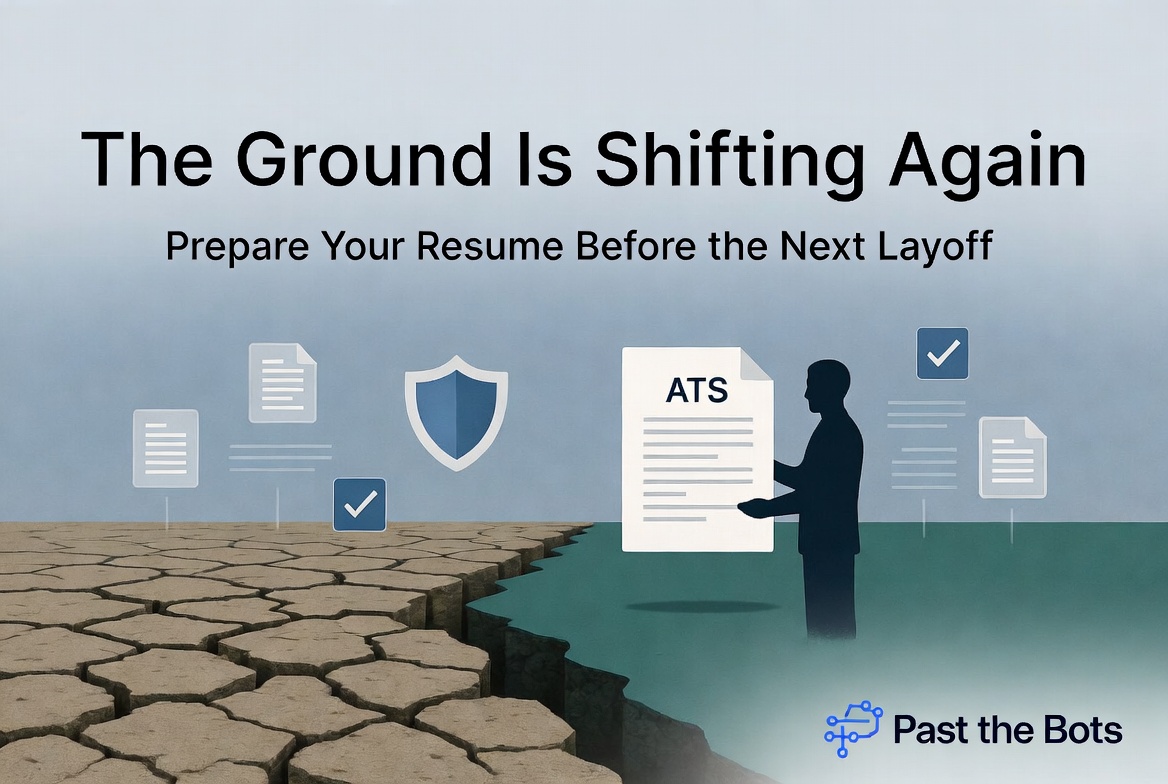
The Ground Is Shifting Again
Microsoft announced another round of significant layoffs this week, cutting roughly 4,500 positions across multiple teams and levels. If you work in tech, or honestly in any industry right now, that kind of news has a way of making you glance at your own situation and wonder: what would I do if it were me?
The answer most people have is some version of "I'd update my resume and start applying." That's a start, but it's not a plan. And when you're stressed, maybe freshly unemployed, and competing against thousands of people who got the same layoff notice on the same day, "I'd figure it out" isn't going to get you very far.
Having a plan ready before you need it is one of the most underrated career moves you can make.
Why Resumes Fail Before a Human Ever Reads Them
Here's something that surprises a lot of job seekers: most resumes are screened by software before they reach a recruiter. Applicant Tracking Systems (ATS) parse your resume, extract information like your contact details, skills, and work history, and score you against the job description. If the software can't read your resume cleanly, or if your skills don't match the keywords the system is looking for, you may never hear back.
This isn't a conspiracy. It's just logistics. A single job posting can receive hundreds of applications. Companies use ATS tools to sort and filter, and the resumes that make it through are the ones that are formatted clearly and written to match the role.
The frustrating part is that a perfectly qualified person can get filtered out because their resume has two columns, a fancy header, or skills listed in a way the parser doesn't recognize. It has nothing to do with their actual ability to do the job.
What a Real Plan Looks Like
If you're at a company that's been in the news for layoffs, or you're just feeling less certain about your role than you were a year ago, here's what "having a plan" actually means in practice:
1. Know where your resume stands right now. Don't wait until you're panicking to find out your resume has been unreadable by ATS software for the last three years. Run it through an audit now. Past the Bots shows you exactly what an ATS extracts from your file, flagging critical issues, warnings, and things that are fine. You'll see whether your name, contact info, skills, and sections are coming through correctly.
2. Have a tailored version ready, not just a generic one. A resume you wrote two jobs ago, sent out as-is, is not a plan. When you're applying for a specific role, the job description is basically a cheat sheet. It tells you the exact keywords and skills the hiring team cares about. Past the Bots can score your resume against a pasted job description, show you what's matching and what's missing, and flag knockout gaps where you might be disqualified automatically.
3. Rewrite your bullets to match the role without making things up. This is where a lot of people get stuck. They know their resume needs to sound more relevant to a specific job, but they don't want to lie or exaggerate. The AI tailoring in Past the Bots rewrites your existing bullets to better reflect the language and priorities of the role you're targeting, without fabricating experience you don't have. It's the difference between "managed team projects" and a bullet that actually speaks to what the hiring manager is looking for.
4. Make sure your resume is ATS-safe. Two-column layouts, tables, text boxes, and graphics look polished in a PDF but often break parsers. If you're not sure whether your current format is ATS-friendly, the single-column rebuild option gives you a clean, scannable version that holds up across different systems.
5. Don't forget the other pieces. A resume gets you through the filter. A strong cover letter and a direct recruiter outreach message help you stand out once you're in the pile. Having templates ready, personalized to a role in a few minutes rather than written from scratch in a panic, makes it much easier to apply quickly when timing matters.
The Best Time to Do This Is Before You Need It
Layoffs at big companies have a ripple effect. Job boards fill up. Recruiters get flooded. The candidates who move fastest and look most prepared are the ones who already knew where they stood.
You don't have to be anxious about your job to take this seriously. Think of it the same way you'd think about having an updated insurance policy or a savings account. You hope you don't need it urgently. But if you do, you'll be glad you didn't wait.