Recruiters: Stop Losing Great Candidates to Bad Parsing
July 15, 2026 · 4 min read · Past the Bots
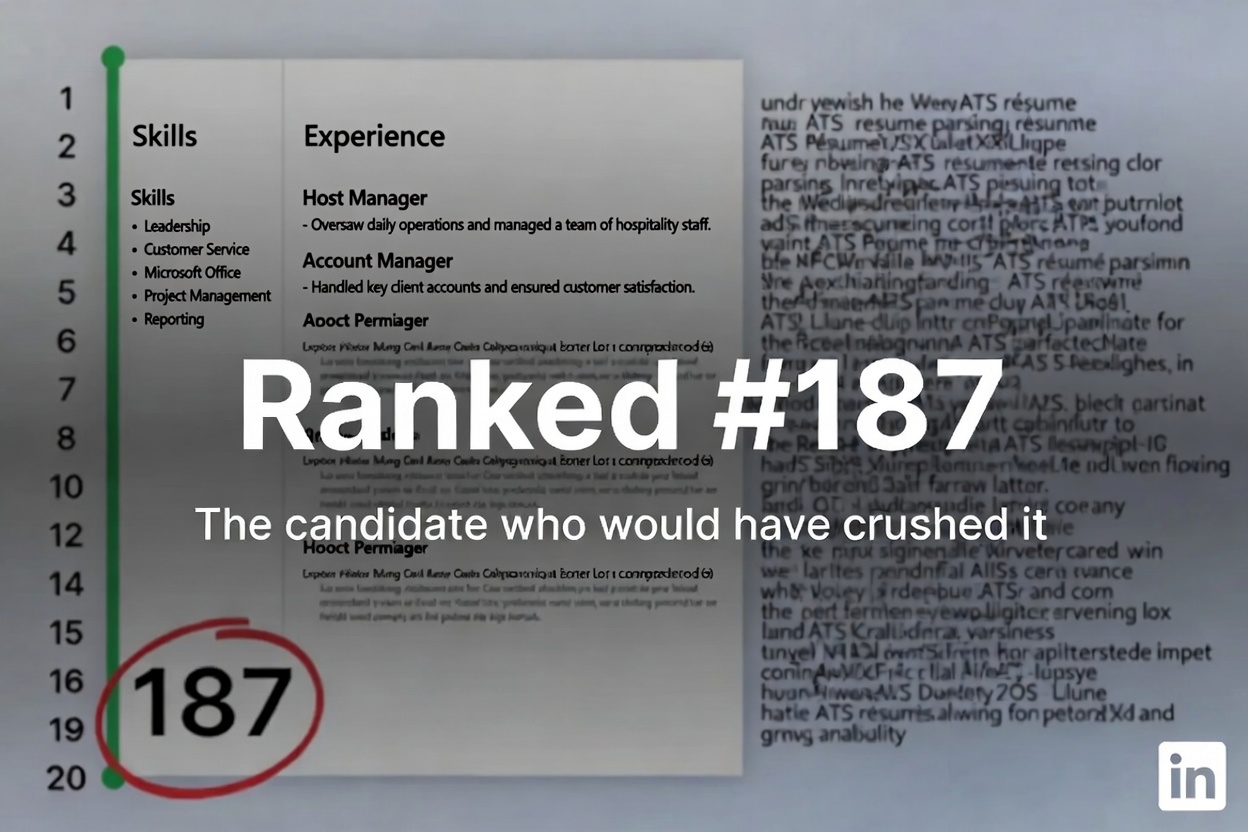 You posted a role, got 300 applications, and your ATS ranked the top 20. But what if the person who would have crushed it was sitting at number 187 because their résumé used a two-column layout that scrambled their skills section?
This happens constantly. And most recruiting teams have no idea.
The Parsing Problem Nobody Talks About
Applicant Tracking Systems like Greenhouse, Lever, Workday, and iCIMS all parse résumés differently. They're reading a PDF or Word file and trying to figure out what's a job title, what's a skill, what's a date. When that parsing goes sideways, a candidate with 10 years of exactly the experience you need can look like a blank slate.
Common parsing failures include:
- Two-column résumés where the left and right columns get merged into a jumbled string of text
- Headers and footers that contain contact info the parser never captures
- Tables and text boxes that most parsers skip entirely
- Non-standard section labels like "Where I've Been" instead of "Work Experience" that the system doesn't recognize
- Graphic elements and icons that sit where skills or contact details should be
The result? A candidate's profile in your ATS looks incomplete, their keyword match score tanks, and they never surface in your searches.
Your Ranking Is Only as Good as Your Parsing
Most ATS platforms score candidates based on keyword matches between the résumé and the job description. That sounds reasonable until you realize the score is calculated from the parsed text, not the actual résumé.
If the parser missed a candidate's skills section because it was in a sidebar, their match score might be 12% when a fair read would put them at 78%. You filtered them out before a human ever looked.
This is especially common with candidates who:
- Used a template from Canva or a design-heavy résumé builder
- Downloaded a visually polished Word template with text boxes
- Are career changers who listed transferable skills in a creative format
- Have international formatting conventions that differ from US norms
These aren't bad candidates. They just had résumés that your parser couldn't handle.
What You Can Actually Do About It
1. Audit a sample of your rejected applications.
Pull 20 or 30 résumés from your last rejected pile and look at what your ATS actually captured for each one. Compare the parsed profile to the actual document. You may be surprised how often the two don't match.
2. Tell candidates what format to use.
This feels counterintuitive, but it works. Add a note to your job postings that says something like: "For best results, submit a single-column Word or PDF résumé without text boxes or graphics." Candidates who want the job will follow the instructions. This small step meaningfully improves parse quality across your applicant pool.
3. Use tools that show you what parsers actually see.
Past the Bots has an "Audit the Bots" feature that shows exactly how different parsers read a résumé, including what they extract for name, contact info, skills, and section labels. If you're evaluating résumés at scale or coaching candidates before they apply, this kind of transparency closes the gap between what a résumé says and what your ATS hears.
4. Check your must-have filters.
Most ATS platforms let you set knockout filters: if a candidate doesn't have a specific keyword, they're out. Review those filters regularly. If "Python" is a knockout requirement but your parser is missing skills sections from 30% of applicants, you're not filtering on Python experience. You're filtering on résumé formatting.
5. Standardize your job description language.
Parsers match on keywords, so if your job description says "project management" but strong candidates wrote "program management" or "PMO," you'll miss them. Build your job descriptions with synonym awareness, or use a tool that surfaces near-matches and related skills rather than exact keyword hits only.
The Bigger Picture
Recruiters aren't trying to reject good candidates. But when your pipeline runs through automated screening, the quality of that screening determines who you actually get to see.
Parsing failures are a silent tax on your hiring quality. They're invisible in your metrics, they don't show up as errors, and they're easy to ignore because you never meet the people you filtered out.
The fix isn't complicated. It's a combination of auditing what your system is actually doing, setting clearer expectations with applicants, and understanding that a résumé score is only meaningful if the underlying parse was accurate.
Better data in means better candidates surfaced. And that's better for everyone.