Remote Work Isn't Going Anywhere — But Your Résumé Might Be Holding You Back From It
June 15, 2026 · 4 min read · Past the Bots
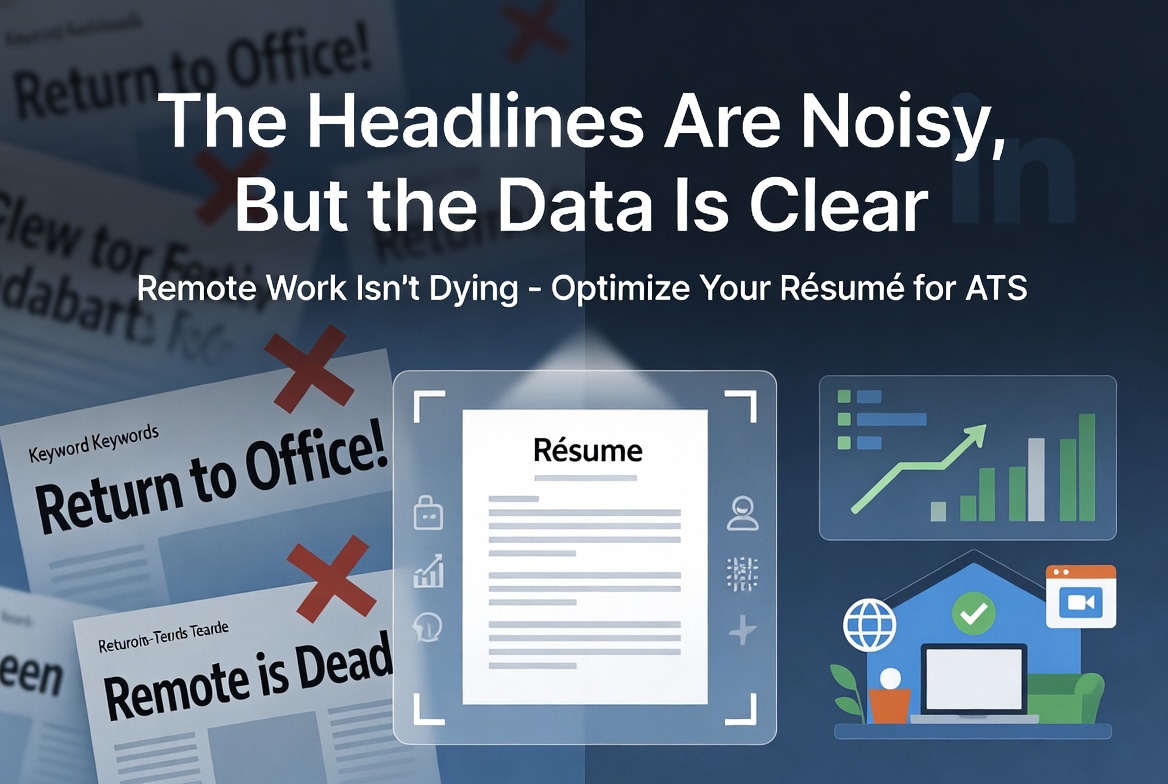
The Headlines Are Noisy, But the Data Is Clear
You've probably seen the wave of return-to-office mandates from big-name companies and wondered if remote work is actually dying. Spoiler: it's not. According to recent reporting, remote and hybrid arrangements have stabilized as a permanent fixture of the labor market, even if certain CEOs are loudly pushing back. Millions of workers are still fully remote, millions more are hybrid, and a huge chunk of the workforce says they'd leave a job before giving up location flexibility.
That's good news if you're hunting for a remote role. But here's the catch: because remote jobs draw applicants from anywhere in the country (or the world), the competition is intense. A posting for a remote project manager role might get five times the applications of an equivalent in-office role. That means the ATS filters are doing a lot of heavy lifting before a human ever touches your file.
So the question isn't whether remote work exists. The question is: does your résumé actually survive the screening process to get you in front of someone who can say yes?
Why Remote Job Applications Hit the ATS Wall Hard
Applicant Tracking Systems parse and rank résumés before recruiters see them. For remote roles specifically, a few things tend to go wrong:
- Location confusion. Some ATS platforms flag résumés that don't match a job's listed city or state, even when the role is remote. If your résumé header lists your city and the system is looking for a local match, you can get filtered out for a job you were perfectly qualified for.
- Missing remote-relevant keywords. Phrases like "distributed teams," "async communication," "remote collaboration," or specific tools like Slack, Zoom, Loom, or Notion often appear in remote job descriptions. If they're not in your résumé, your match score drops.
- Generic bullets that don't signal remote readiness. "Collaborated with team members" reads very differently than "led daily standups with a 7-person distributed team across three time zones."
None of these are insurmountable. They just require a little targeted work before you hit submit.
How to Actually Fix It
Start by knowing what the ATS sees. Before you tailor anything, you need to understand how a parser reads your current résumé. Past the Bots' Audit the Bots tool shows you exactly what different parsers extract from your file: your name, contact details, skills, and section headers. If your formatting is doing something weird (and it often is), you'll see it here before a recruiter does.
Run a match score against the job description. Copy the remote job posting you're applying to and paste it into the skill-weighted match scan. You'll see which keywords from the description are present in your résumé, which are missing, and whether there are any knockout gaps, qualifications listed as required that you haven't addressed at all. For remote roles, pay close attention to tool names and collaboration-style language in the job description.
Rewrite bullets to reflect how you actually work remotely. If you've been working from home for the past few years (and statistically, there's a decent chance you have), your résumé should show that. Use the AI tailoring feature to rewrite your bullets so they reflect the job description's language, without inventing experience you don't have. If you genuinely led a distributed team or managed projects asynchronously, that context deserves to be in your résumé in a way the ATS can find it.
Fix your header. If location matching might be an issue, consider listing your location as "[City, State] | Open to Remote" or simply "Remote" if that's accurate. It's a small change that can prevent an unnecessary filter-out.
Make sure your format isn't the problem. Fancy two-column layouts, text boxes, and tables all cause parsing errors. If you're not sure whether your résumé is ATS-safe, the single-column rebuild tool will reformat everything cleanly without losing your content.
The Bigger Picture
Remote work being "here to stay" is only useful to you if your résumé can survive the gauntlet that now stands between you and those roles. The pool of applicants is bigger, the ATS filters are doing more work, and generic applications are getting buried.
The good news is that most of these problems are fixable in an afternoon. Understanding what the bots actually see, matching your language to the job description, and making sure your formatting doesn't create parsing errors puts you ahead of a significant portion of applicants who are submitting the same résumé to every posting and wondering why they're not hearing back.
Remote work is available. You just have to get your résumé past the door first.