Resume Gaps Are Normal. Here's How to Handle Them Before a Recruiter Even Asks
July 5, 2026 · 4 min read · Past the Bots
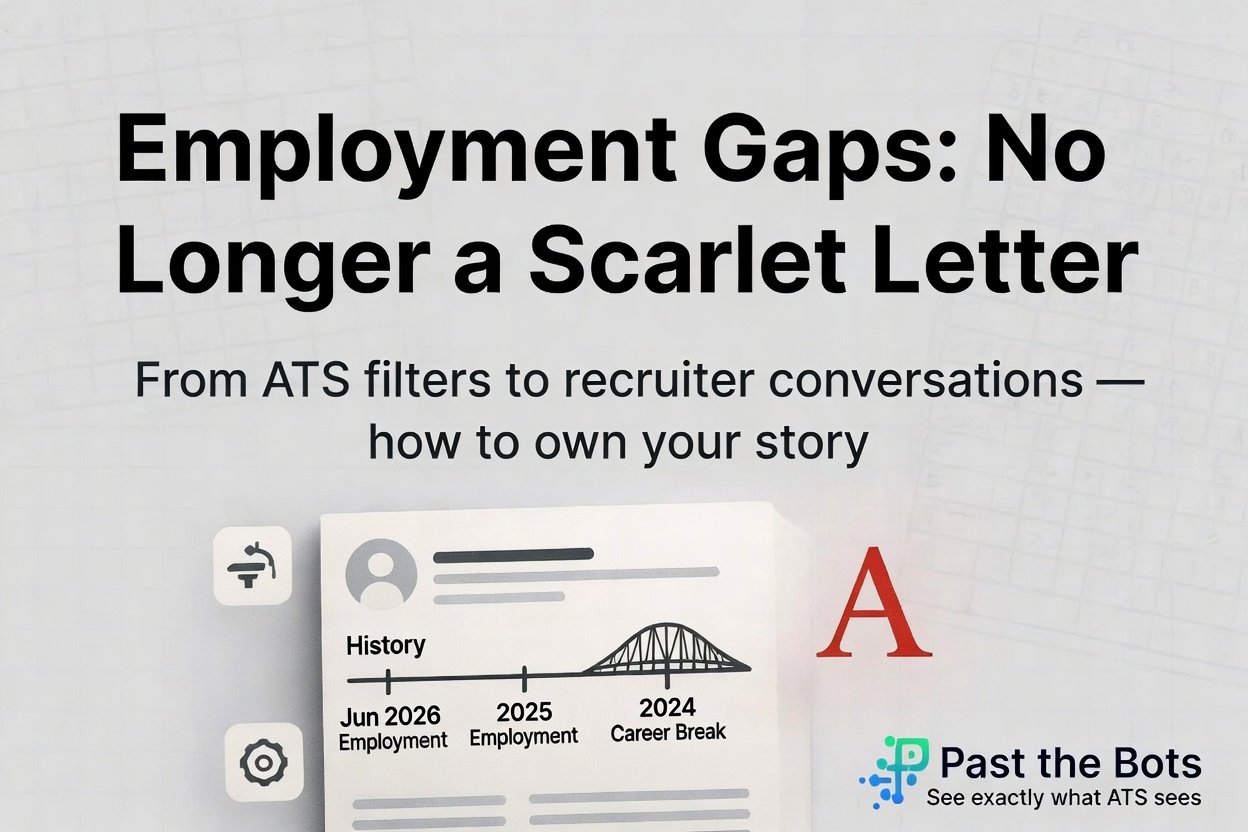 Employment gaps used to feel like a scarlet letter on a resume. But that thinking is changing fast. According to a recent report, recruiters increasingly expect candidates to have gaps in their work history — whether from caregiving, layoffs, health issues, personal development, or simply the chaos of the past few years. The question is no longer did you have a gap but how do you talk about it.
And before you even get to that conversation, your resume has to survive the first filter: the ATS.
Why Gaps Feel Scarier Than They Are
Here's the honest truth. Most resume gaps are completely understandable to a human recruiter who reads your full story. The problem is that a human recruiter might not be the first one reviewing your resume. Applicant Tracking Systems parse your work history looking for dates, job titles, and keywords. A gap itself does not automatically disqualify you, but how your resume is formatted around a gap absolutely can.
If your date formatting is inconsistent, if your gap period buries relevant skills, or if your resume sections are not clearly labeled, the ATS may misread your timeline entirely. A recruiter might never even see your application.
How to Format Gaps So the ATS Does Not Stumble
A few practical moves that make a real difference:
- Use consistent date formatting throughout. Pick one format (like MM/YYYY or just the year) and stick to it. Mixing formats confuses parsers.
- Do not leave a blank void. If you freelanced, volunteered, took a course, or cared for a family member, list it. Even a short entry labeled "Independent Contractor" or "Career Break: Caregiver" keeps your timeline readable.
- Put your strongest keywords where they count. Skills you built or refreshed during a gap belong in a dedicated skills section and in any role descriptions, not just buried in a paragraph no one reads.
- Stick to a clean single-column format. Multi-column layouts and fancy tables trip up parsers constantly. A simple, well-structured layout keeps your dates intact.
The Past the Bots ATS scan shows you exactly what a parser extracts from your resume, including how it reads your dates and employment sections. If your gap is causing a misread, you will see it flagged before a recruiter does.
What to Actually Say About a Gap
Once your resume gets through the ATS, you will likely face the gap question in a phone screen or interview. The good news: recruiters are not trying to trap you. They want to understand your story.
A few principles that hold up:
- Be brief and confident. One or two sentences is enough. You do not owe anyone an essay.
- Pivot to what you did or learned. Even rest and recovery is valid, but if you picked up a skill, completed a project, or did anything professionally adjacent, mention it.
- Do not apologize. Framing a gap as something shameful signals insecurity. Framing it as a period you navigated and moved on from signals self-awareness.
An example: "I took eight months off to care for a family member. During that time I completed an online certification in project management, and I have been actively searching since early this year." Short, honest, and it moves the conversation forward.
How This Connects to Recruiters
If you are a recruiter or hiring manager reading this, it is worth noting that the tools you use to screen resumes may be filtering out strong candidates simply because their gap is formatted awkwardly or their resume does not parse cleanly.
Past the Bots has recruiter-side tooling specifically to address this. The Audit the Bots feature shows how different parsers read the same resume, which can surface why a qualified candidate's application looks incomplete in your ATS. When candidates come to you with a Past the Bots score and a cleaned-up resume, the parsing noise is already reduced and you are looking at actual qualifications, not formatting artifacts.
For recruiters working with career coaches or staffing agencies, that is a real efficiency gain.
The Bottom Line
Gaps happen. Layoffs, health, family, burnout, the pandemic, a pivot in direction. None of these things make you a weaker candidate. But a resume that obscures your story rather than telling it clearly will cost you interviews regardless of your qualifications.
Get your formatting clean. Account for the gap period honestly. Make sure the right keywords are visible. And let the actual content of your experience do the work it deserves to do.