Richard Branson Says Keep Your Day Job. Here's How to Stay Ready While You Build on the Side.
June 26, 2026 · 4 min read · Past the Bots
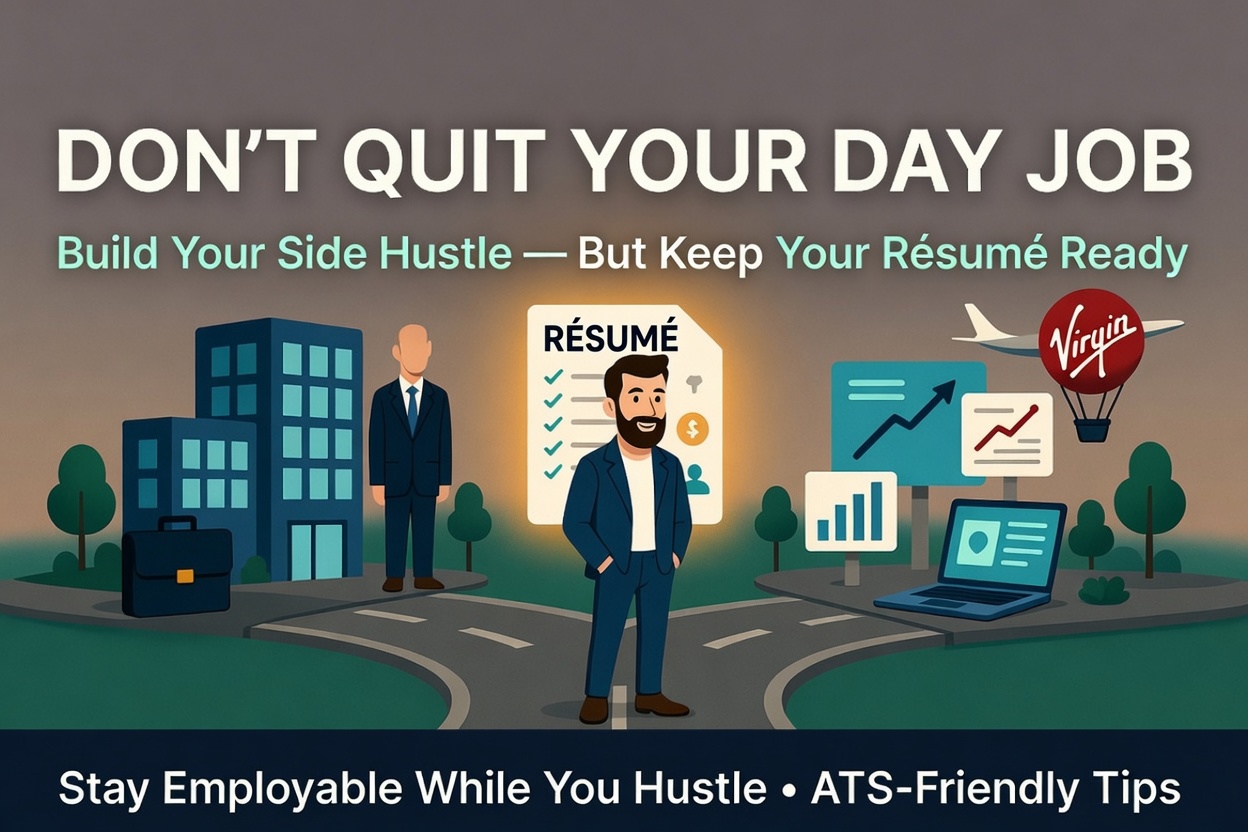 Richard Branson built Virgin while working. His well-known advice to aspiring entrepreneurs is surprisingly practical: don't quit your day job until your new venture can actually pay your bills. It's the kind of grounded thinking you don't always expect from a billionaire who once lived on a houseboat.
But here's the career angle nobody talks about when they share that advice: if you're running a side business while staying employed, your résumé can quietly become a liability.
You're busy. Your resume sits untouched. Skills go unlisted. New experience doesn't get documented. And if the day job disappears -- layoffs happen, companies get acquired, industries shift -- you're suddenly job hunting with a résumé that hasn't moved in two or three years.
This is exactly the scenario where a little ongoing résumé maintenance pays off in a big way.
Why the Side-Hustler's Résumé Gets Stale So Fast
When you're splitting your energy between an employer and your own project, a few things happen to your résumé without you noticing:
- Your day-job wins stop getting recorded. You're mentally checked into your side business, so you stop tracking the promotions you helped close, the processes you improved, or the team you trained.
- Your side-hustle skills don't make it on paper. Running your own thing builds real, marketable skills -- client acquisition, project management, budgeting, content creation, tool proficiency -- but they rarely end up in a format an ATS (applicant tracking system) can actually read.
- Your résumé formatting ages out. If your last major resume update was three years ago, there's a decent chance it's using a two-column layout, tables, or design elements that modern ATS software just chokes on.
The result: if you ever need to go back to a full-time search fast, you're starting from scratch under pressure. That's the worst time to realize your résumé isn't getting through automated screening.
How to Stay Employable While You Build
Branson's advice is about financial security and risk management. Staying résumé-ready is the same idea applied to your career. Here's how to do it without it taking over your already-packed schedule.
Document your side-hustle work like a job. Give your business or freelance work a real entry on your résumé. List it with a title (Founder, Consultant, Independent Contractor -- whatever fits), a date range, and two or three bullet points that describe what you actually did and what it produced. Quantify where you can: clients served, revenue generated, tools built, time saved.
Run your résumé through an ATS scan periodically. Not just when you're actively job hunting. If you're keeping your day job as a safety net, you want that net in good shape before you need it. Tools like the Past the Bots scanner show you exactly what an ATS extracts from your résumé -- your name, contact info, skills, section headers -- and flag what's broken or missing. Doing this once every six months takes about ten minutes and saves you a lot of scrambling later.
Keep a running "wins" document. This doesn't need to be fancy. A simple running note on your phone or in a Google Doc where you jot down accomplishments from both your job and your side project. Monthly updates take five minutes. When it's time to refresh your résumé, you're not trying to remember what you did two years ago.
Match your résumé to roles you'd actually want. If your side business is in a specific industry and you'd eventually want to move your day job in that direction, make sure your résumé reflects skills relevant to those roles. A skill-weighted match score against real job descriptions -- like what you'd get from pasting a job posting into a tool like Past the Bots -- tells you quickly whether your current résumé would even surface in a keyword search for the jobs you'd want.
The Bigger Picture
Branson's point isn't really about fear. It's about not burning your bridges before you've built the next one. That's smart entrepreneurship. But it's also smart career management.
The job market rewards people who are prepared, not people who scramble. If your side business takes off, great -- you leave on your own terms. If your employer unexpectedly disappears, you're not starting a job search with a résumé that looks like it was written during a different administration.
Staying employed while building something of your own is a legitimate, intelligent strategy. Just make sure your résumé is actually keeping up with you while you do it.