Software Engineers: Here's How to Stay Hireable When AI Is Eating Your Job Market
June 20, 2026 · 4 min read · Past the Bots
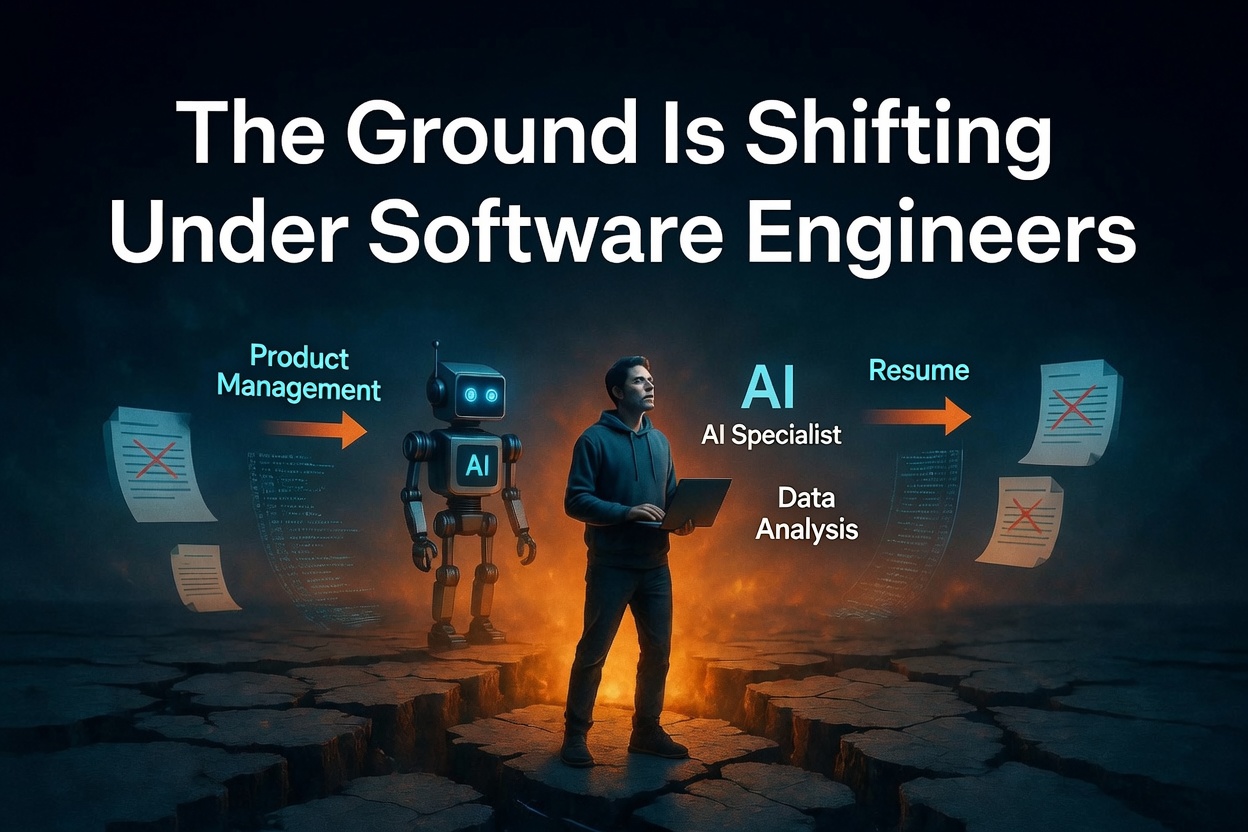
The Ground Is Shifting Under Software Engineers
If you're a software engineer right now, you've probably felt it. Hiring has slowed, layoffs keep hitting the news, and a growing number of engineers are either changing careers entirely or dramatically cutting their living expenses to ride out a market that looks nothing like it did two or three years ago.
A recent report highlighted exactly this: software engineers are contending with AI-driven displacement in ways that are forcing real, uncomfortable decisions. Some are pivoting to adjacent roles like product management, data analysis, or technical writing. Others are doubling down on AI-adjacent skills to stay relevant. And many are finding that the hiring process itself has gotten harder to crack, even when they're well-qualified.
That last part matters a lot. Because even if you have the right skills and experience, you still have to get past automated screening before a human ever sees your resume.
Why Your Resume Might Be the Hidden Problem
Applicant Tracking Systems (ATS) are the gatekeepers for almost every corporate job. They parse your resume before a recruiter ever lays eyes on it, pulling out your name, contact info, skills, job titles, and dates. If the system can't read your resume correctly, or if it doesn't see the right keywords, you're out before you're in.
For software engineers making a career pivot, this creates a specific problem: your resume is probably optimized for the job you had, not the job you want. A resume full of terms like "microservices," "CI/CD pipelines," and "sprint planning" might not score well against a product manager job description that's looking for "roadmap ownership," "stakeholder alignment," and "OKRs."
And if you're staying in engineering but targeting AI-forward roles, the keywords that mattered two years ago might not be what today's job descriptions are actually scanning for.
What Engineers in Transition Actually Need
Here's the practical breakdown of what to focus on:
1. Find out what the ATS actually sees on your resume.
Before you apply anywhere, run your resume through an ATS parser. You might be shocked. Columns, graphics, headers in text boxes, and non-standard fonts can all cause parsing failures. The Past the Bots audit tool shows you exactly what different parsers extract from your resume, including your name, contact details, skills, and section headers, along with critical fixes, warnings, and what's reading cleanly. If your resume has a two-column layout (common in engineer-designed resumes), there's a good chance the ATS is scrambling your work history.
2. Match your resume to each job description, not just in general.
A blanket resume is not enough in this market. Paste the job description into a keyword match tool and see exactly which skills you're hitting and which ones you're missing. Past the Bots gives you a skill-weighted match score that breaks down matched keywords, missing keywords, and knockout gaps, which are the skills so central to the role that their absence will likely get you filtered out automatically.
For engineers pivoting roles, this is especially important. You may have transferable experience that just needs to be surfaced with the right language.
3. Rewrite your bullets for the role you want, not the role you had.
This is where a lot of career changers get stuck. You can't fabricate experience, but you can reframe real experience to emphasize what's relevant. If you led cross-functional projects as an engineer, that's leadership and collaboration experience that matters for a product role. If you built internal tooling, that's process improvement experience.
The AI tailoring feature in Past the Bots rewrites your existing bullets to better fit a target job description without inventing anything. It works with what you actually did and surfaces the parts that matter most to the new role.
4. Make sure your resume is ATS-safe from the ground up.
If your current resume has formatting issues, the cleanest solution is a single-column rebuild in a plain, ATS-compatible format. It's not glamorous, but it works. A well-structured, readable resume that a parser can fully extract will always outperform a beautifully designed one that the system mangles.
The Market Is Hard, But the Process Doesn't Have to Be
The broader situation for software engineers is genuinely difficult, and there's no magic fix for that. But there's a real difference between a tough market and a tough market where you're also losing candidates to preventable resume screening failures.
If you're pivoting careers, targeting new roles, or just trying to get more interviews in a competitive field, start by making sure the basics are working. Know what the ATS sees. Know how well your resume matches the jobs you're applying for. And make sure the experience you do have is showing up in language the system and the recruiter will recognize.
The goal is simple: get a human to actually read your resume. Everything else follows from there.