The 5 Questions Great Interviewers Ask (And How to Prepare for Every One of Them)
July 13, 2026 · 4 min read · Past the Bots
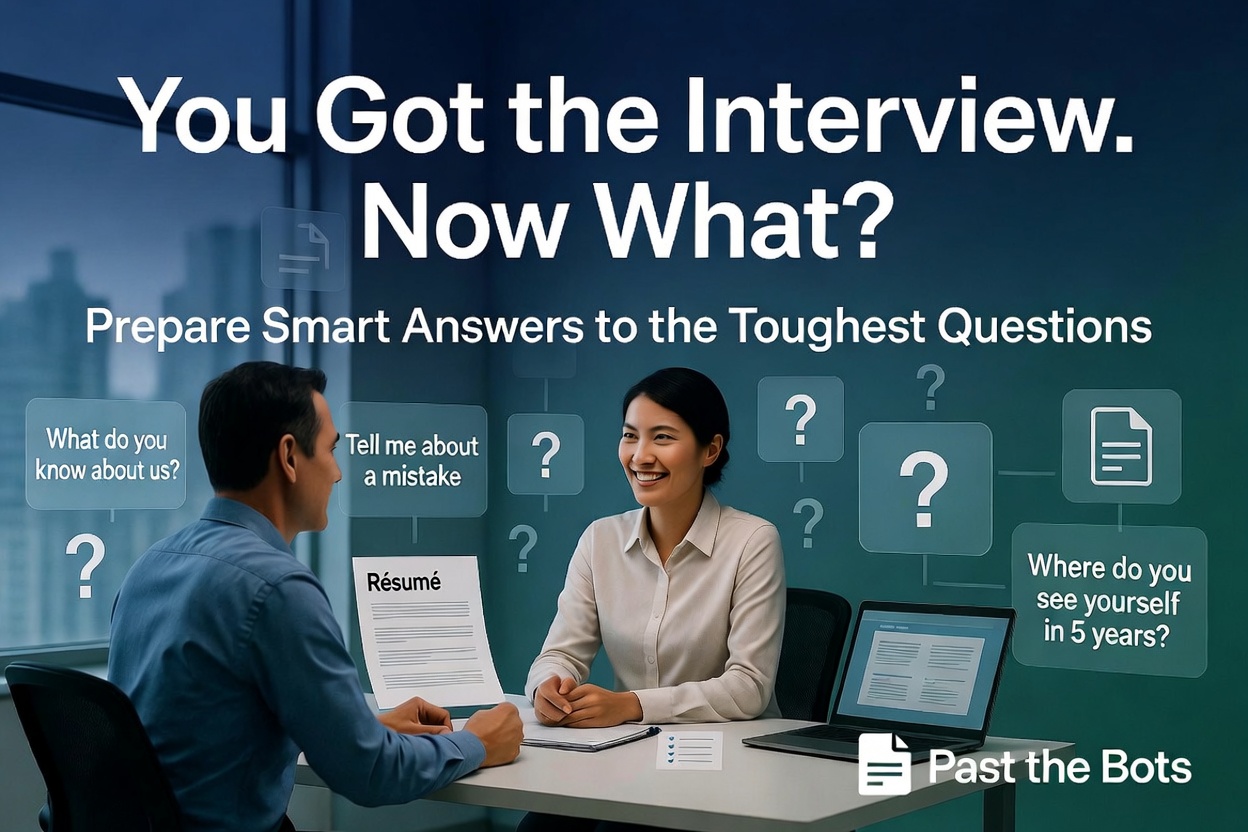 You finally got the interview. The ATS didn't eat your résumé, the recruiter called, and you have a slot on the calendar. Now what?
A lot of job seekers spend so much energy getting to the interview that they don't spend enough time preparing for what happens in it. And great interviewers, it turns out, ask better questions than "tell me about yourself."
A recent piece from MSN Money highlighted five questions that effective employers use to dig past rehearsed answers and actually understand a candidate. Let's walk through each one and talk about how you can prepare a real, confident response, not just a polished-sounding non-answer.
1. "What do you know about this role and our company?"
This one sounds easy but trips up more candidates than you'd think. Interviewers use it to filter out people who applied to 200 jobs without reading a single description.
How to prepare: Go back to the job description and actually study it. What skills does it emphasize? What problems is this team trying to solve? If you used a tool like Past the Bots to run a match score before applying, you already have a head start. You'll know exactly which skills and keywords the role prioritizes, which makes it much easier to speak to them naturally in the room.
Bring one or two specific details about the company that aren't on the homepage. Recent news, a product launch, a value from their about page that actually resonates with you.
2. "Tell me about a time you had to learn something quickly."
This is a behavioral question, and it's specifically probing for adaptability. The interviewer isn't just curious about your story. They want to see how you think through a challenge.
How to prepare: Use the STAR format (Situation, Task, Action, Result) and have two or three examples ready. Pick stories that are relevant to the role. If the job description calls out fast-paced environments or new technology adoption, those are your signals.
One underrated tip: if you used AI tailoring to align your résumé bullets to this specific role, your own résumé becomes a cheat sheet. Those rewritten bullets reflect the language and priorities of the job, so reading through them before the interview helps you remember which experiences to lead with.
3. "What's a mistake you made, and what did you learn from it?"
Interviewers love this one because most candidates either dodge it or overcorrect into a fake humble-brag ("I just work too hard"). Neither lands well.
How to prepare: Pick a real mistake. Keep it professional, not catastrophic. Focus most of your answer on what you changed afterward. The point isn't to confess, it's to demonstrate self-awareness and growth.
Avoid picking something that directly contradicts a core requirement of the role you're interviewing for.
4. "Why are you leaving your current job (or why did you leave your last one)?"
This question is about honesty, professionalism, and fit. Negative answers about former employers are a red flag. Vague non-answers feel evasive.
How to prepare: Be honest about what you're moving toward, not just what you're running from. "I want to move into a role where I can build more directly with customers" is a much better answer than "my manager was difficult."
Tie your answer back to something specific about this company or role whenever you can. It turns a potentially awkward question into a chance to reinforce your interest.
5. "Where do you see yourself in five years?"
Yes, this classic is still in rotation. And yes, interviewers are still using it to see if your goals align with what the role can actually offer.
How to prepare: Don't say "in your position" (unless you mean it and can back it up). Don't say "I'm not sure." Think about the honest version of your career direction and find the overlap with this role's likely growth path.
If you have a talent profile or a clear professional narrative built out, this answer gets a lot easier. Knowing how you're positioned, what your strengths are, and where you're headed helps you speak about the future with clarity instead of fumbling through it.
The Big Picture
Getting past the ATS is step one. But the interview is where you actually get the job. The good news is that the prep work isn't separate from your résumé work. When your résumé is tightly matched to the role, your skills are clearly articulated, and your bullets tell real stories, you already have most of the raw material you need.
The interview is just the conversation that brings it to life.