The AI Paradox: Why the Most Future-Ready Candidates Keep Getting Screened Out
June 24, 2026 · 4 min read · Past the Bots
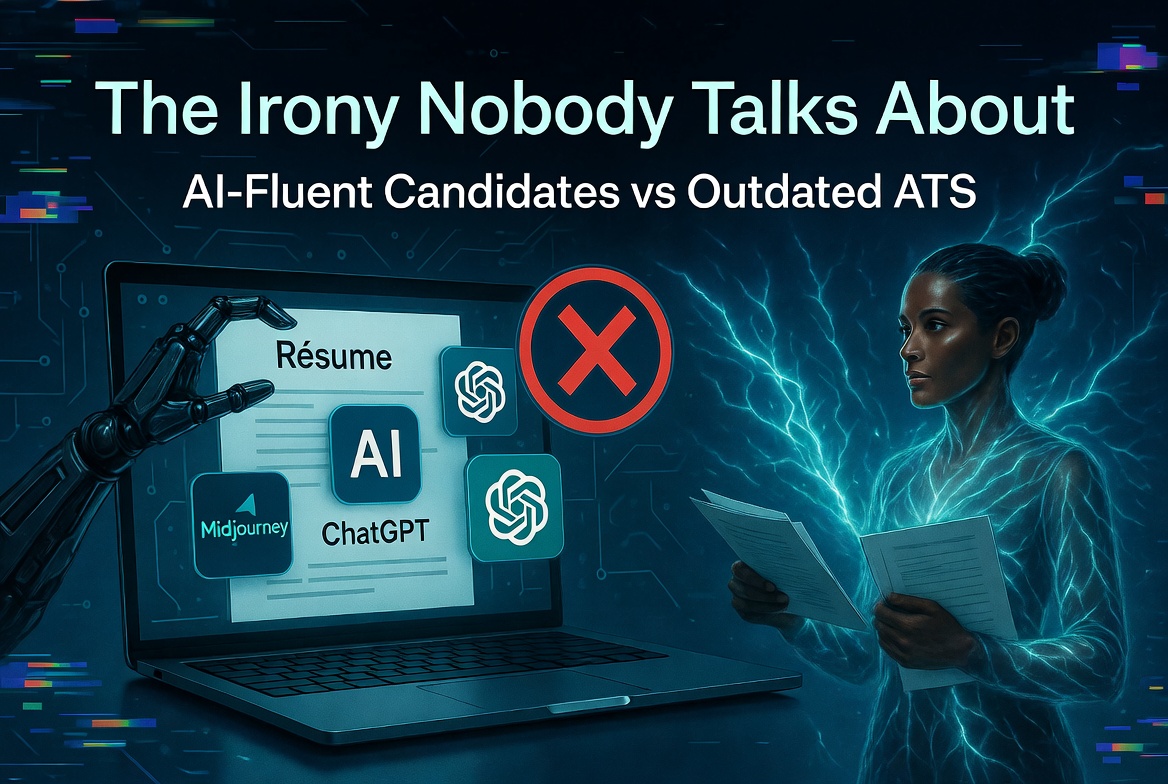
The Irony Nobody Talks About
Here's a maddening situation playing out in hiring right now: candidates who are genuinely fluent in AI tools are getting filtered out by automated systems before any human ever reads their résumé.
A recent report highlighted exactly this problem. Job seekers listing real, hands-on experience with tools like ChatGPT, Midjourney, or Claude are landing in the rejection pile, not because employers don't want those skills, but because the Applicant Tracking Systems screening those résumés don't know what to do with them. The terminology is too new, too inconsistent, or simply not matching the exact phrases baked into the ATS's parsing logic.
So the people most prepared for the future of work are being stopped at the gate by software that hasn't caught up yet. That's the AI paradox.
Why ATS Systems Struggle with AI Skills
ATS tools were largely built around traditional job categories and skill taxonomies. They're looking for standardized terms: "project management," "SQL," "Salesforce." When a candidate writes "used GPT-4 to automate client reporting workflows," the system may extract nothing useful, or worse, misparse it entirely.
A few specific things go wrong:
- Tool names get ignored. Many parsers don't recognize AI product names as skills because they aren't in the legacy skills database.
- Context collapses. A bullet like "leveraged generative AI to reduce content production time by 40%" might get stripped down to just "content production," losing the part that actually makes you stand out.
- Section misreads happen. If you've added a "Tools & AI Stack" section, some systems won't categorize it correctly and the skills inside it effectively disappear.
None of this is your fault. But it is your problem to solve.
What You Can Actually Do About It
The fix isn't to hide your AI skills or dumb down your résumé. It's to present those skills in a way that works for both the bot and the human reader.
1. Use the job description as your vocabulary guide.
If a posting says "experience with AI-assisted tools" or "familiarity with large language models," use that exact phrasing alongside your specific tool names. ATS systems do keyword matching, so mirroring the employer's language dramatically improves your parse score. Pasting a job description into Past the Bots' match tool will show you exactly which of your skills are landing and which are falling through the cracks.
2. Don't rely on a standalone "Tools" section alone.
Listing "ChatGPT, Midjourney, Notion AI" in a sidebar or skills block is fine, but those mentions need reinforcement. Weave the tools into your bullet points with context: what you did, what the outcome was. ATS parsers weight skills higher when they appear in multiple places and in meaningful context.
3. Audit how parsers actually read your file.
This is the step most people skip entirely. You can write what feels like a perfect résumé and still have an ATS extract your name wrong, miss your most recent job title, or completely drop your skills section. Past the Bots' Audit the Bots feature runs your résumé through multiple parsers so you can see exactly what each system pulls out, not what you think it pulls out. That gap is usually surprising.
4. Rebuild in a single-column, ATS-safe format if needed.
Creative layouts with columns, text boxes, or graphics are common culprits for parse failures. If your résumé was designed to look great as a PDF, there's a real chance key information is getting lost. A clean, single-column structure reads reliably across virtually every ATS.
5. Tailor your bullets without exaggerating.
One of the trickier parts of the AI skills conversation is that candidates sometimes feel pressure to either oversell their fluency or undersell it to seem "safe." Neither helps. The goal is accurate, specific language that maps cleanly to what employers are asking for. AI tailoring tools can help you reframe your actual experience using job-relevant language, without fabricating anything.
The Bigger Picture
Employers say they want AI-fluent candidates. Job seekers have those skills. The breakdown is happening in the middle, at the screening layer, because résumés aren't being written or formatted in a way that communicates those skills to automated systems.
The good news is this is a solvable problem. You don't need to game the system or stuff your résumé with buzzwords. You need to understand how the system reads your document and make deliberate choices about structure, language, and keyword placement.
Your AI skills are genuinely valuable. The job is making sure the software agrees.