The 'Talent Gap' Might Be a Screening Problem in Disguise
July 14, 2026 · 4 min read · Past the Bots
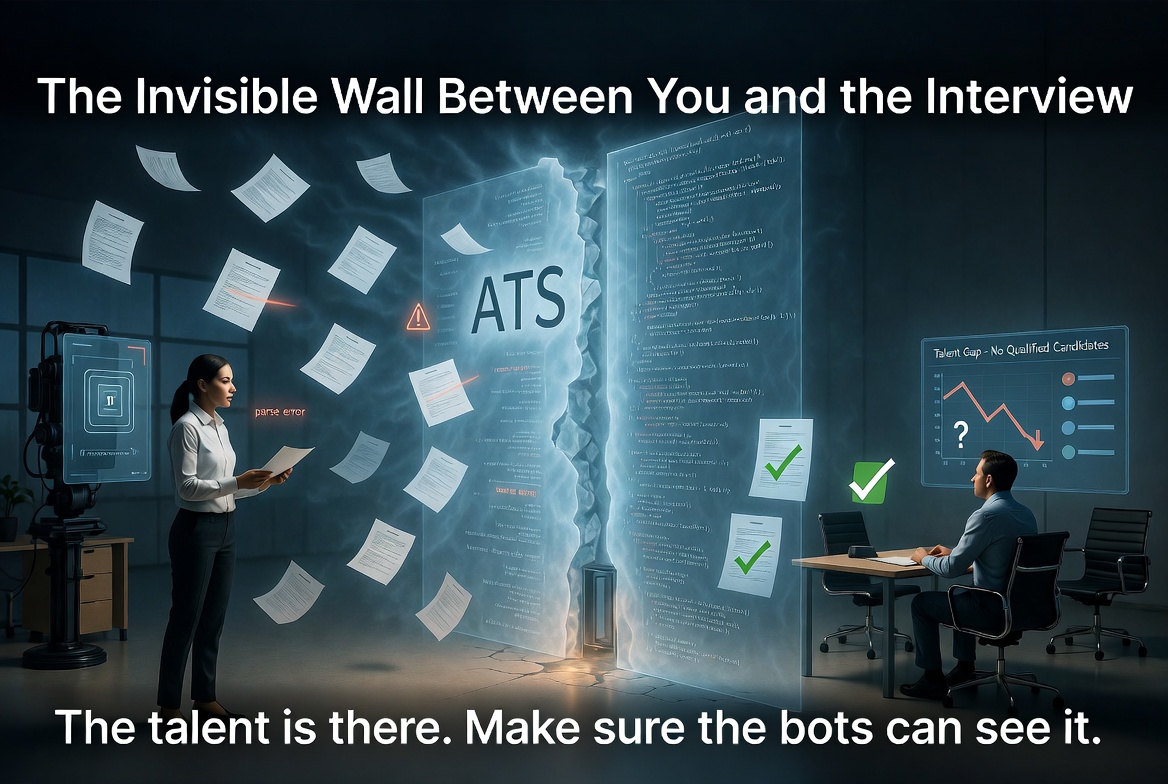 There's a frustrating disconnect happening in the job market right now. On one side, you have executives and HR leaders wringing their hands about a "talent gap" — claiming they simply cannot find qualified people to fill open roles. On the other side, you have highly qualified candidates sending out dozens of applications and hearing nothing back.
A recent piece in Forbes (via MSN) makes the case that leaders need to stop blaming the talent pool and start investing in developing the people they already have. That's a fair point for employers. But it also raises a question worth asking from the job seeker's side: what if the "gap" isn't really about talent at all?
What if qualified candidates are just getting filtered out before a human ever sees their resume?
The Invisible Wall Between You and the Interview
Most large employers (and a growing number of smaller ones) route every application through an Applicant Tracking System before a recruiter touches it. These systems parse your resume, extract information, and rank or filter candidates based on how well the document matches the role.
The problem is that ATS parsers aren't reading your resume the way a human would. They're looking for specific signals: section labels they recognize, keywords that match the job description, contact information in expected places, and a structure they can actually process. A resume with a beautiful two-column layout, a creative font, or a skills section buried at the bottom can get misread or scored poorly, even if the candidate is genuinely qualified.
So the "talent gap" might sometimes be a screening gap. Qualified people are applying. The bots are filtering them out. Hiring managers never see them, conclude the talent isn't there, and the cycle repeats.
What This Means If You're Job Searching Right Now
You can't control how a company has set up its ATS. But you can control how well your resume communicates with it. A few things worth doing:
Find out what the parser actually sees. This is the hardest part to do on your own, because the ATS doesn't send you a report card. Tools like the "Audit the Bots" feature in Past the Bots show you exactly what different parsers extract from your resume, including your name, contact info, skills, and section headers. If a parser is mangling your job titles or missing your contact info entirely, you need to know that.
Check what the ATS extracts, not just what your resume says. There's a difference between what you wrote and what the system pulls out. The Past the Bots ATS scan flags issues as critical, warning, or OK, so you can prioritize fixes instead of guessing.
Match your language to the job description. ATS systems rank candidates partly by keyword overlap. If a job posting says "cross-functional collaboration" and your resume says "worked with multiple teams," the system may not connect those as the same thing. Reviewing a skill-weighted match score against a specific job description helps you see exactly which terms you're missing and which are already landing.
Rewrite bullets to fit the role, but don't fabricate anything. This is where a lot of job seekers either do too little (send the same resume everywhere) or go too far (exaggerate or invent experience). The goal is to accurately reflect what you've actually done, using language that resonates with the specific role you're applying for.
The Structural Fix Most People Skip
Beyond keywords, resume structure is a bigger deal than most people realize. Two-column layouts, text boxes, tables, and headers/footers can all cause parsing errors. If your resume looks great in Word but the ATS is reading your skills column as part of your job descriptions, your match score is probably wrong in ways that hurt you.
An ATS-safe single-column format isn't glamorous, but it's the format that gets read correctly. You can always have a visually polished version for when you're emailing a recruiter directly or bringing something to an in-person interview.
The Bigger Picture
The Forbes article argues that companies need to stop treating the talent gap as a fixed external problem and start taking responsibility for how they find, evaluate, and develop people. That's a conversation worth having at the leadership level.
But while that conversation plays out, job seekers are still applying, still getting filtered, and still waiting for callbacks. The most practical thing you can do right now is make sure your resume is actually making it through the first gate.
The talent is there. Make sure the bots can see it.