The YouTuber Who Went Viral for Quitting His Job Has a Money Lesson Every Job Seeker Needs to Hear
June 2, 2026 · 4 min read · Past the Bots
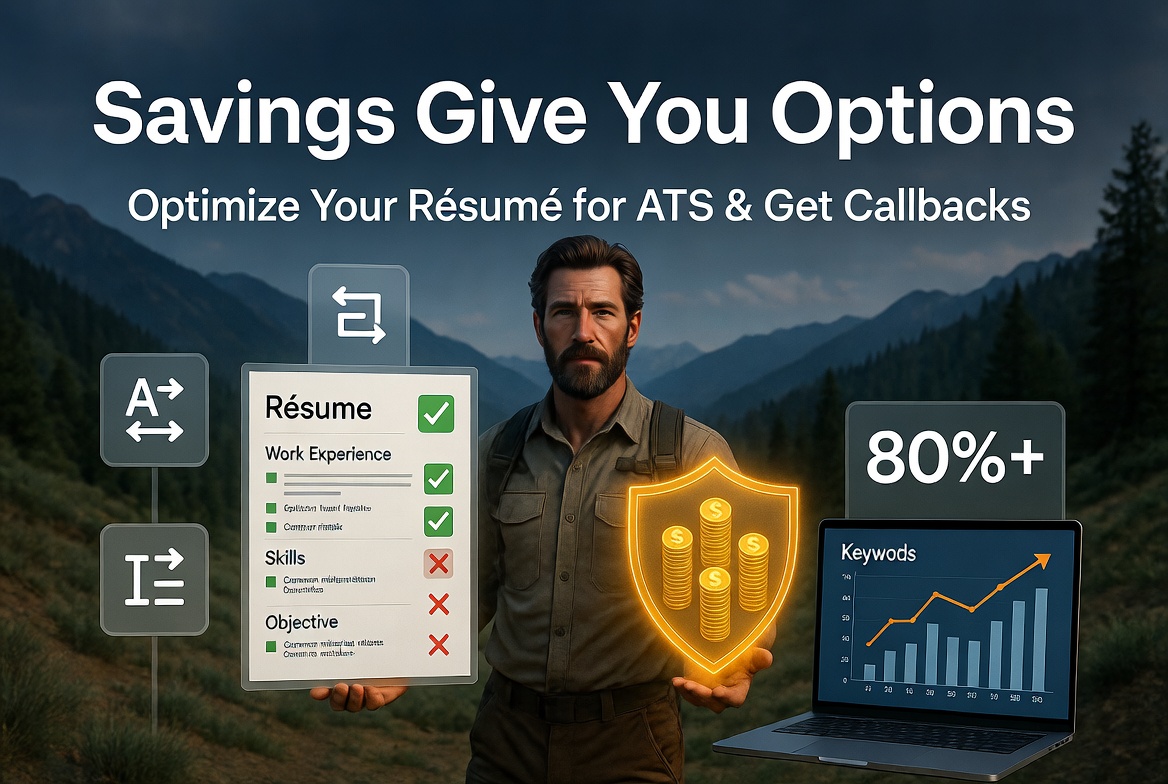
Luke Nichols, the guy behind the massively popular Outdoor Boys YouTube channel, recently shared some surprisingly grounded career advice in a Fortune interview. His core message: savings give you options. When a market turns or a job disappears, the people who have a financial cushion are the ones who get to be selective. Everyone else has to take whatever is available.
That hit differently than the usual hustle-culture content. And it got me thinking about how the same principle applies to job searching in an ATS-dominated hiring market.
The Connection Between Financial Runway and Job Search Quality
Nichols talked about how having savings meant he didn't have to panic-pivot his career when things got uncertain. He could be patient and strategic instead of desperate.
Most job seekers don't have that luxury, but here's what you can control: how long it takes your application to actually reach a human being. The average job posting gets filtered by an Applicant Tracking System before a recruiter ever sees it. If your résumé isn't formatted and optimized for those systems, you're burning time you may not have.
Patience is a financial resource. So is efficiency. Every week your search drags on because your résumé keeps getting filtered out is a week of savings disappearing.
What's Actually Getting in Your Way
Here's the thing most people don't realize: it usually isn't your experience that's failing you. It's how your résumé presents that experience to a machine.
Common ATS killers include:
- Two-column layouts that parsers read in the wrong order, turning your work history into gibberish
- Missing section headers that the system expects to find (like "Work Experience" or "Education")
- Skills buried in paragraph text instead of pulled out where they can be matched against job descriptions
- Contact info in a header or text box that gets stripped out entirely
- Job titles that don't match standard terminology even when your actual role is equivalent
You could be exactly what a company needs and still get auto-rejected because the parser couldn't make sense of your PDF.
How to Stop Leaking Time (and Money) in Your Search
The smartest thing you can do before applying anywhere is understand how automated systems are actually reading your résumé. That means going beyond spellcheck.
Run a real ATS audit. Past the Bots shows you exactly what different parsers extract from your résumé, including your name, contact info, skills, and work history sections. If something is getting misread or dropped, you'll see it clearly with flagged fixes broken into critical issues, warnings, and things that are fine.
Check your match score against the actual job description. Paste in a job posting and you'll get a skill-weighted match score that shows which keywords you're hitting, which you're missing, and whether there are any knockout gaps that would disqualify you automatically. This is how you know whether it's even worth applying or whether you need to do some rewriting first.
Tailor your bullets without making things up. AI tailoring can reframe how you describe your actual experience to better align with what a specific role is looking for. This isn't fabrication, it's translation. Your experience is real; the goal is making sure the system (and the recruiter) understands why it's relevant.
Fix your format once, properly. If your résumé has structural problems, a single-column ATS-safe rebuild solves them at the root. You stop fighting the same formatting battles on every application.
The Bigger Lesson from Luke Nichols
Nichols didn't get lucky. He made deliberate choices that gave him flexibility when he needed it most. That's the whole point of his advice: preparation isn't pessimism, it's power.
Your job search works the same way. The people who take an hour to actually audit and optimize their résumé before applying aren't overthinking it. They're the ones who get callbacks while everyone else wonders why the silence.
You don't need to be a formatting expert or an ATS whisperer. You just need to know what's broken so you can fix it before it costs you another week of applications going nowhere.
Your résumé is your first filter. Make sure it works for you, not against you.