Why Recruiters Are Rethinking Their Hiring Process (And How Better Résumé Data Helps)
July 16, 2026 · 4 min read · Past the Bots
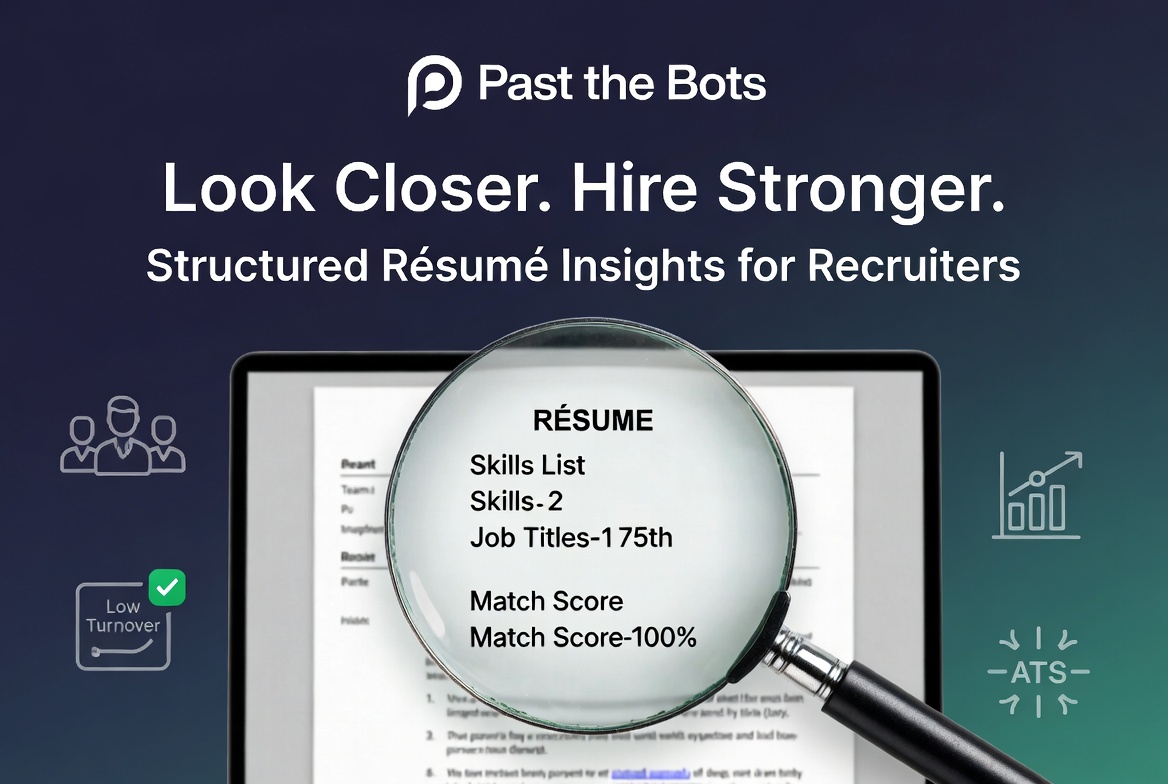 A recent piece making the rounds among hiring professionals describes a deceptively simple change one company made to its screening process: slowing down just enough to look past surface-level résumé signals and actually evaluate candidates for fit. The result? Stronger hires, lower turnover, and teams that gelled faster.
It sounds obvious in hindsight. But when you're a recruiter processing hundreds of applications a week, "slow down and look closer" isn't always actionable advice. That's where having better data at your fingertips changes everything.
The Real Problem With Résumé Screening at Scale
Most recruiters aren't trying to filter out good candidates. They're trying to survive an inbox that refills faster than they can clear it. Applicant Tracking Systems were supposed to solve this, and in some ways they did. But ATS parsing is notoriously inconsistent. A résumé with unusual formatting, a two-column layout, or a creative header can get mangled by a parser before a human ever sees it.
The result is a frustrating irony: strong candidates get screened out not because they lack the skills, but because the system couldn't read their résumé correctly. And recruiters, trusting the software, never know what they missed.
What "Looking Closer" Actually Requires
The hiring story referenced above is compelling because the change wasn't about hiring more people or spending more money. It was about getting more signal from the same pool of candidates. The recruiter started asking different questions and stopped relying so heavily on first-pass filters.
For that to work consistently, you need two things:
- Confidence that your ATS is actually reading résumés correctly
- A faster way to evaluate fit without reading every document word for word
This is exactly the gap that tools like Past the Bots were built to close, but from both sides of the hiring desk.
How Recruiters Can Use Past the Bots
Most people think of ATS checkers as something job seekers use to optimize their résumés. And yes, that's a huge part of what Past the Bots does. But the underlying technology is just as useful for the people doing the hiring.
See what your ATS actually extracts. The Audit the Bots feature shows how different parsers read a given résumé, including what name, contact info, skills, and sections get pulled through correctly and what gets dropped or misread. If you're screening candidates and your system is silently mangling résumés, you want to know that.
Get a structured skills breakdown instantly. Instead of skimming a résumé for keywords, you can see a parsed, structured view of what a candidate has listed: skills, job titles, dates, and section content. This doesn't replace human judgment. It just means you spend your judgment on the parts that matter, not on decoding formatting.
Match against a job description in seconds. Paste in your job posting and Past the Bots generates a skill-weighted match score that shows which required skills appear in the résumé, which are missing, and whether there are any knockout gaps for hard requirements. This is especially useful when you're comparing a shortlist of candidates and want an apples-to-apples view.
Spot red flags before they become surprises. The scan flags critical issues, warnings, and things that look fine, so you're not relying entirely on the ATS to catch problems. If a résumé has a skills section the parser couldn't read, you'll see it.
The Human Part Still Matters Most
None of this is about replacing recruiter judgment. The whole point of the article that inspired this post is that better hiring comes from more human engagement, not less. Tools should clear the path so you can do that engagement.
When a recruiter isn't spending twenty minutes per résumé trying to figure out if someone has the right background, they have time to actually read the interesting ones. They can have better intake conversations with hiring managers. They can write more thoughtful outreach to candidates instead of generic copy-paste messages.
Past the Bots also helps on the candidate communication side. The cover letter and recruiter outreach generation tools mean that when candidates come in, their materials are cleaner and easier to evaluate. Less noise, more signal.
A Small Change With Real Impact
The hiring leader in that story didn't overhaul their entire process. They made one intentional shift and paid attention to what changed. That's a model worth borrowing.
If you're a recruiter or talent acquisition professional, the equivalent shift might be as simple as adding one layer of structured résumé data to your screening workflow. Not to automate humans out of the decision, but to make sure the data you're working with is actually accurate before you act on it.
Better information leads to better calls. And better calls build stronger teams.