Your GPA Won't Get You the Interview. This Will.
July 3, 2026 · 4 min read · Past the Bots
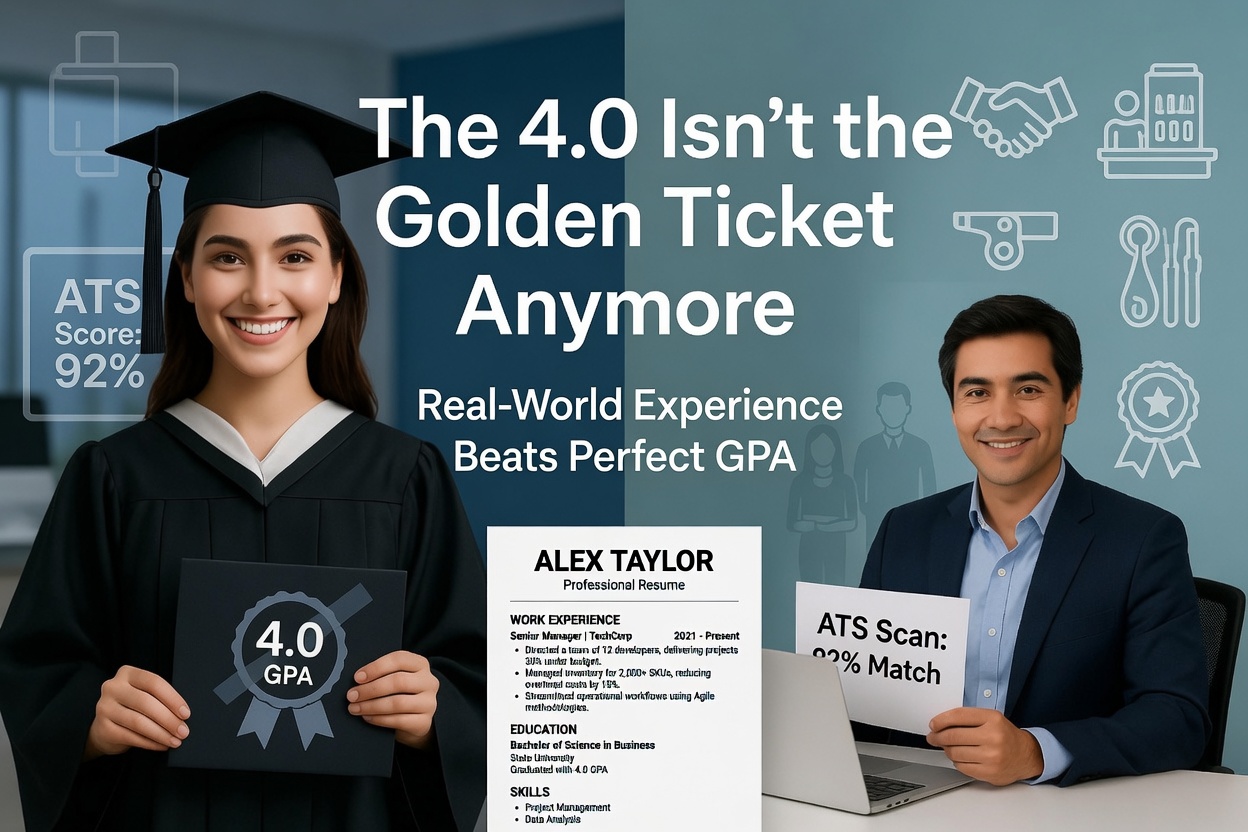
The 4.0 Isn't the Golden Ticket Anymore
A recent report from employers is pretty blunt: when it comes to hiring new graduates, a perfect GPA matters a lot less than you might think. What hiring managers actually want to see is real-world experience, things like summer jobs, internships, campus leadership, freelance gigs, and volunteer work.
That's genuinely good news if you spent a summer waiting tables, working a retail floor, or lifeguarding at the community pool instead of cramming for extra credit. Those jobs taught you things a classroom can't: how to handle difficult people, how to work a shift when you're exhausted, how to solve problems without a rubric.
The catch? You still have to get your résumé past the automated screening software before a human ever sees it.
Why Experience Alone Isn't Enough
Applicant Tracking Systems (ATS) are the software layers that sit between your application and a recruiter's inbox. They parse your résumé, extract information, and score you against the job description, often before anyone human lays eyes on your file.
Here's where a lot of strong candidates get filtered out: they have solid experience, but the way it's written on their résumé doesn't match what the ATS is scanning for. A summer job managing inventory at a hardware store is genuinely relevant to an operations role, but if your bullet says "kept track of stuff in the back" instead of something like "managed inventory for 2,000+ SKUs and reduced stock discrepancies by 15%," the system won't connect the dots.
The ATS isn't reading between the lines. It's pulling keywords, section headers, and structured data. If your résumé isn't formatted and written to be machine-readable, your real-world experience becomes invisible.
How to Translate Real Work Into ATS-Friendly Language
This is the skill that actually gets you interviews: taking honest, unglamorous experience and framing it in language that both humans and software can recognize as valuable.
A few concrete ways to do that:
- Lead with action verbs that match the job. "Coordinated," "trained," "managed," and "resolved" carry more weight than "helped with" or "was responsible for."
- Add numbers wherever you can. Even rough ones. How many customers did you serve per shift? How big was your team? What was the dollar value of what you handled? Numbers make bullets scannable and credible.
- Mirror the job description's language. If the posting says "customer service" and you wrote "guest relations," an ATS might not count that as a match. Use their words.
- Don't bury experience in a weird section. ATS software looks for standard headers like "Work Experience" or "Experience." Creative headers like "My Journey" or "What I've Done" can confuse parsers and cause your content to get misread or skipped entirely.
Where Past the Bots Comes In
If you're not sure whether your résumé is actually being read correctly by these systems, Past the Bots has a free scan that shows you exactly what an ATS extracts from your file, including your name, contact info, skills, and section content. You can see right away if something is getting lost in translation.
The skill-match tool lets you paste in a job description and see which keywords your résumé hits and which ones it misses. For entry-level applicants, this is especially useful because you might not realize that the skills from your summer job are actually relevant. The tool surfaces those gaps so you can close them honestly.
If your bullets need a rewrite, the AI tailoring feature will rework them to fit a specific job without fabricating anything. It works with what you actually did. That matters because making stuff up is a terrible idea that tends to surface in interviews at the worst possible moment.
And if your formatting is the problem, the ATS-safe single-column rebuild gives you a clean, parser-friendly version of your résumé that doesn't get scrambled by automated screening.
The Bottom Line
Employers are telling you directly that they'd rather see a summer of real work than a transcript full of A's. That's a genuine opportunity, especially if you've been out there doing things while your classmates were optimizing for GPA points.
But the opportunity only pays off if you can present that experience in a way that gets through the automated gatekeeping layer first. That means clean formatting, the right keywords, and bullets that actually describe what you did and why it mattered.
Your experience is more valuable than you think. Make sure the software can see it.