Your Personal Brand Is Talking. Is Your Résumé Keeping Up?
July 12, 2026 · 4 min read · Past the Bots
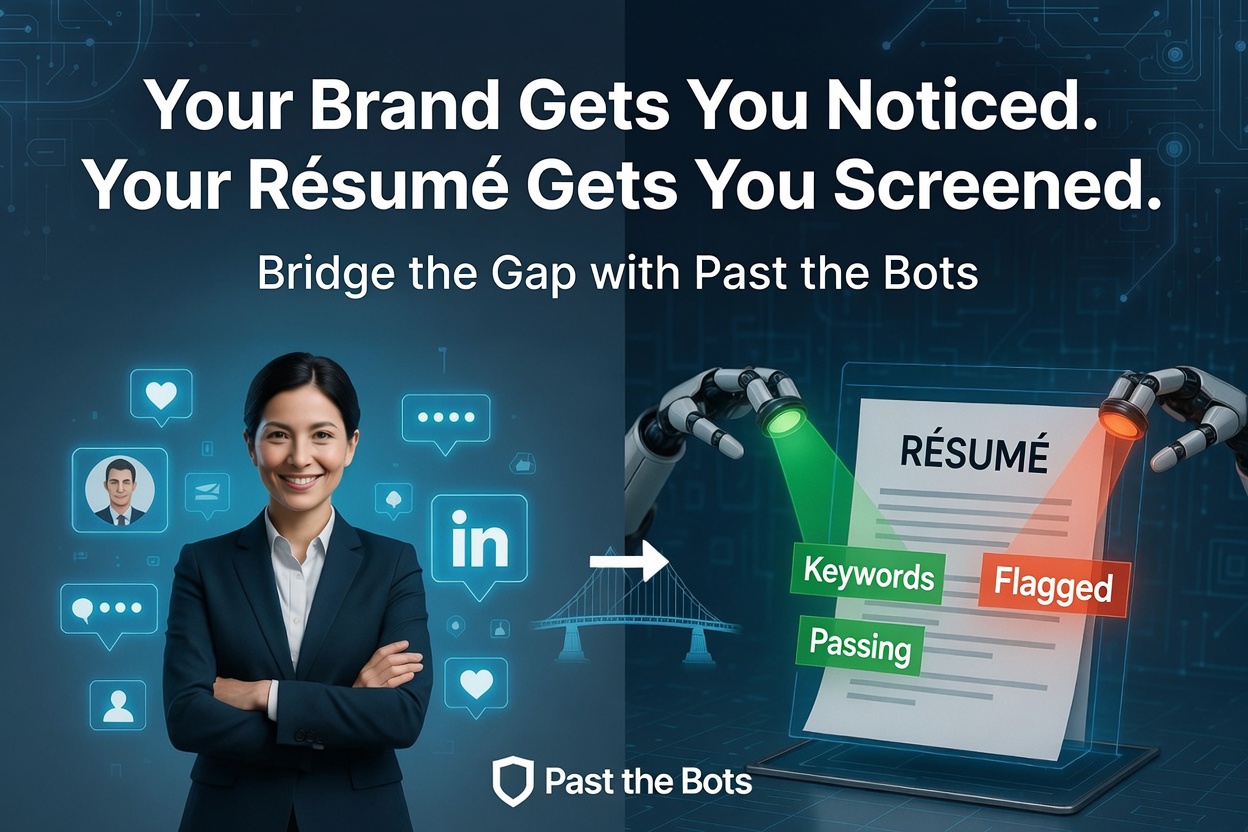 You've heard it before: your personal brand matters. Post on LinkedIn, share your expertise, build an audience, let people know who you are. And honestly? That advice isn't wrong. A recognizable name and a clear professional identity can absolutely get you in front of opportunities that a cold application never would.
But here's the part that doesn't get talked about enough: even the strongest personal brand eventually runs into an Applicant Tracking System. And an ATS does not care how many LinkedIn followers you have.
What Personal Branding Actually Does (and Doesn't Do)
Building a personal brand is about making yourself known, trusted, and memorable in your field. That might look like:
- Consistently sharing insights on LinkedIn or in industry communities
- Speaking at events or being quoted in trade publications
- Having a portfolio, newsletter, or body of work people can point to
- Getting warm referrals because people already know your name
All of that is genuinely valuable. A referral from a trusted contact can bypass a lot of the automated screening that trips up cold applicants. A hiring manager who already knows your work is predisposed to like your résumé before they even open it.
But here's the catch: even a referred candidate usually still submits a résumé. And that résumé still goes into the ATS. And if the system can't parse it correctly, or if it doesn't reflect the right keywords for the role, you can still get buried before a human ever reviews it.
Your brand gets you noticed. Your résumé gets you screened in.
The Gap Between Your Brand and Your Résumé
One of the most common things we see is a job seeker who has a genuinely impressive professional presence, a great LinkedIn profile, real results, a clear niche, but their résumé is doing absolutely none of that work.
Maybe it's formatted in a way that confuses parsers (tables, columns, text boxes). Maybe the skills section doesn't match the language the job description uses. Maybe the bullets are vague and duties-focused instead of result-focused. Maybe the file itself strips out key content when an ATS reads it.
When that happens, the system might score the résumé as a weak match for a role you're genuinely perfect for. A recruiter glancing at a low match score moves on. Your brand never even enters the picture.
How to Make Sure Your Résumé Matches Your Brand
Here's a practical approach to closing that gap.
1. Audit how the bots actually read your résumé. Before anything else, find out what an ATS is actually extracting from your file. Is your name parsed correctly? Are your job titles coming through? Are your skills being picked up? Past the Bots shows you exactly what different parsers see when they read your résumé, including what's getting missed or misread. It's often surprising.
2. Make sure your skills language matches the job, not just your brand. Your personal brand might describe you as a "growth strategist" but the jobs you want use terms like "demand generation" or "pipeline development." Both can be true at once. The résumé version of you needs to speak the language of the job description, not just the language of your niche. Running a keyword match against the actual posting tells you exactly where the gaps are.
3. Let your results do the branding work. The best résumé bullets aren't just keyword containers. They tell a small story: what you did, how you did it, and what happened as a result. That's also what makes a personal brand compelling. Rewriting vague duty bullets into specific, result-oriented statements makes your résumé stronger for humans and for ATS scoring.
4. Keep the format ATS-safe. A beautifully designed résumé that a parser can't read is a liability, not an asset. Single-column layouts with standard section headers are boring to look at but they're reliable. If you want a designed version to share directly with contacts (as part of your brand outreach), keep a clean ATS-safe version as your application copy.
5. Extend your brand into your outreach. A résumé is one document. Your personal brand lives in everything else: your LinkedIn, your cover letter, the note you send to a recruiter. Having consistent, compelling language across all of those materials is where brand and job search strategy actually merge.
The Bottom Line
Personal branding and ATS optimization aren't competing strategies. They work at different stages of the same funnel. Your brand warms people up and opens doors. Your résumé, when it's doing its job properly, walks you through them.
If you've put real work into building your professional reputation, it's worth making sure your résumé can hold up its end of the deal.