2 in 3 Job Seekers Claim They've Been Rejected by AI (and Why That's Pushing People Toward a Risky Fix)
October 15, 2026 · 4 min read · Past the Bots
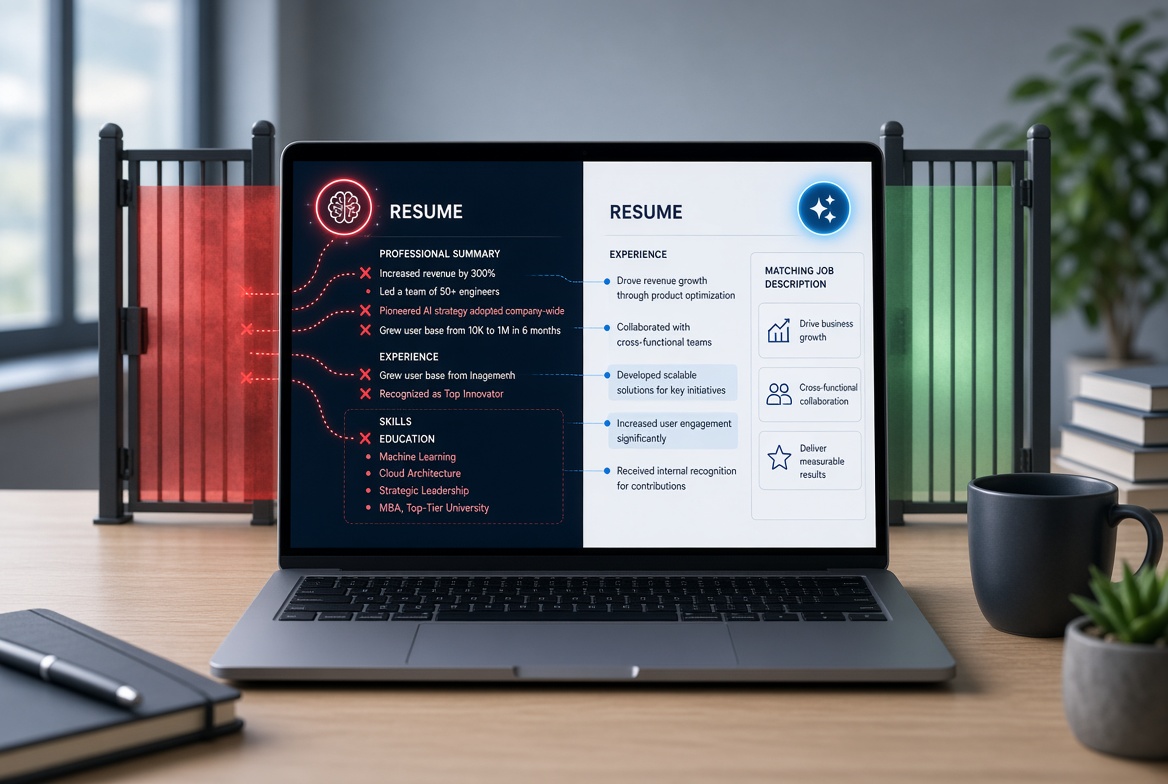 A recent Huntr survey found that 66% of job seekers believe they've received at least one AI-driven rejection -- a résumé screened out before a human ever saw it. That's not a fringe experience anymore. That's the majority.
And it's creating a pressure cooker situation.
The same survey found that 42% of respondents said they'd use AI to exaggerate or misrepresent parts of their résumé if it helped them land an interview. That number climbs even higher among millennials. People aren't doing this because they're dishonest. They're doing it because they feel like they're playing a game with invisible rules, and losing.
Here's the thing though: fabricating experience doesn't actually solve the ATS problem. And it creates a much bigger one.
Why People Are Reaching for a Risky Shortcut
When you apply to a job and hear nothing back, you don't get feedback. You don't know if your résumé was poorly formatted, missing keywords, or just buried under 400 other applications. The silence is maddening.
So when someone tells you that AI can rewrite your résumé to "beat the bots," it sounds like the answer. And some of those tools do deliver a score boost -- by stuffing in keywords you didn't earn, inflating job titles, or describing projects that didn't quite happen the way they're written.
The short-term logic is understandable. The long-term risk is real.
Recruiters are catching on. With so many AI-generated résumés flooding their pipelines, hiring teams are spending more time on verification, not less. Background checks, reference calls, and technical screens are getting sharper specifically because résumés have become less trustworthy. Getting caught in an exaggeration -- even a small one -- can end a candidacy instantly and damage your reputation with that employer for years.
What ATS Systems Actually Do (and Don't Do)
Before you optimize anything, it helps to understand what you're actually up against.
Applicant Tracking Systems don't "read" résumés the way a recruiter does. They parse them -- pulling out structured data like your name, contact info, job titles, dates, and skills. Then they match that extracted data against the job requirements.
This means two things:
- Formatting matters a lot. Multi-column layouts, tables, headers in text boxes, and fancy graphics can confuse a parser entirely. A skill listed in a sidebar may never get extracted.
- Keyword context matters less than keyword presence at the screening stage. The ATS isn't judging whether your use of "cross-functional collaboration" sounds authentic. It's checking whether the phrase exists.
That second point is where people get tempted to cheat. But here's what they're missing: you probably already have more matching keywords than you think. You just haven't written your résumé to surface them.
Honest Tailoring Is a Real Skill (and It Works)
There's a meaningful difference between fabricating experience and accurately representing experience in language that matches the job posting.
If you managed a project timeline, and the job description asks for "project coordination," writing "coordinated project timelines" is not lying. It's translation. Your résumé has been written in your company's internal language, and the job posting is written in the hiring manager's language. Bridging that gap is legitimate.
Here's a practical process for doing this honestly:
- Paste the job description somewhere you can study it. Note the specific verbs, nouns, and phrases that repeat. Those are the keywords the ATS is likely scoring against.
- Audit your current résumé against those terms. Where does your actual experience overlap, even if the wording is different?
- Rewrite bullets to reflect the overlap accurately. Don't invent a skill. Do describe a real skill in the vocabulary the employer uses.
- Check your formatting. A beautifully tailored résumé that gets mangled by the parser is still a problem. Single-column, clean formatting with standard section headers gives parsers the best shot at reading your content correctly.
Tools like the ATS scan in Past the Bots can show you exactly what a parser extracts from your résumé right now -- which sections it finds, which skills it pulls, and where it's losing information. The skill-match feature compares your résumé against a pasted job description and flags matched keywords, missing ones, and potential knockout gaps. That's useful for tailoring. It doesn't rewrite your experience for you -- it shows you where the gaps are so you can close them honestly.
The Trust Problem Cuts Both Ways
The AI rejection frustration is legitimate. Automated screening is imperfect, and good candidates do get filtered out. That's worth being angry about.
But the answer to a broken system isn't to feed it fabricated data. That just makes the system more broken for everyone, including the next person who applies.
You can beat the bots without becoming one. Clear formatting, honest tailoring, and understanding what parsers actually extract will take you further than keyword stuffing or inflated bullet points -- and you'll be able to back up everything on your résumé when you get to the interview.