250 Applicants Per Job? Here's How to Actually Stand Out
August 12, 2026 · 4 min read · Past the Bots
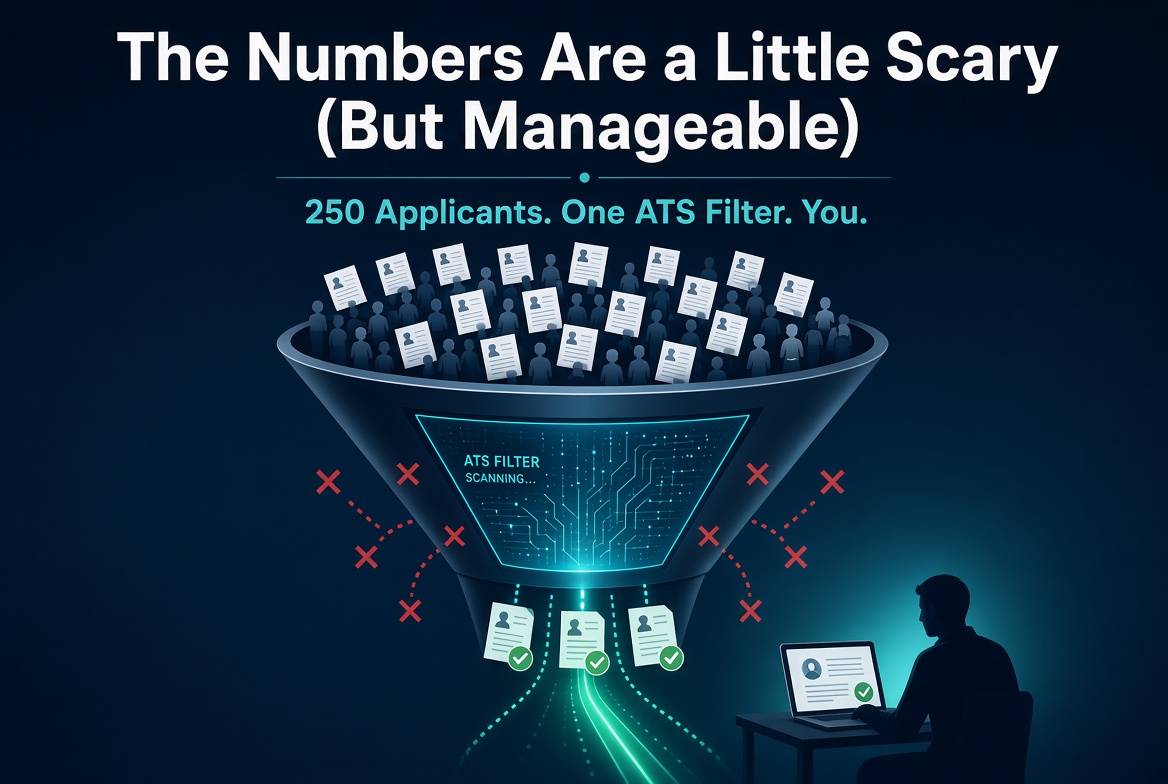
The Numbers Are a Little Scary (But Manageable)
A recent report from a hiring platform CEO put a very real number on something most job seekers already feel in their gut: the average corporate job opening attracts around 250 applicants. For roles at well-known companies or in competitive fields, that number climbs even higher.
That's 250 people all submitting resumes, most of them hoping the right human will see their work and make a call. The catch? Before any human lays eyes on your resume, an Applicant Tracking System (ATS) has already sorted, scored, and potentially filtered you out.
So the real competition isn't 250 people. It's the ATS first, then the humans.
Here's how to think about that, and what you can actually do about it.
Why Most Resumes Get Filtered Before Anyone Reads Them
ATS software doesn't read your resume the way a recruiter does. It parses text, looks for specific keywords, matches skills against job requirements, and assigns a score. If your resume doesn't clear a certain threshold, it can disappear into the void before a hiring manager ever sees it.
The frustrating part is that plenty of qualified candidates get screened out for reasons that have nothing to do with their actual experience:
- A two-column layout that confuses the parser
- Skills listed in an image or graphic the ATS can't read
- Job titles or section headers that don't match what the system expects
- Missing keywords from the job description, even when you have the underlying experience
This is the problem most job seekers don't realize they have. They assume their resume is fine because it looks good as a PDF. But looking good and parsing correctly are two very different things.
What You Can Do Right Now
Given the volume of competition, getting your resume in front of a human requires clearing a few specific hurdles. Here's where to focus:
1. Find out how your resume actually parses. Before you apply anywhere, check what an ATS actually extracts from your resume. Does it find your name and contact info correctly? Does it identify your job titles, dates, and skills? A tool like the Audit the Bots feature on Past the Bots shows you exactly what different parsers see when they read your file, so you're not guessing.
2. Match your resume to each job description. With 250 applicants, a generic resume isn't going to cut it. Most ATS systems score your resume against the specific keywords and skills in the job posting. A skill-weighted match score that shows you matched and missing keywords lets you see your gap before you apply, not after you've been rejected. Pay special attention to knockout gaps, required qualifications that your resume flat-out doesn't address.
3. Tailor your bullets without making things up. This is where a lot of job seekers get stuck. You know you should tailor your resume, but rewriting it for every application feels like inventing fiction. Good AI tailoring works differently. It takes your actual experience and reframes your existing bullets to better reflect the language and priorities of the role you're targeting, without fabricating anything. That's the kind of tailoring that actually works.
4. Fix your format. If your resume uses columns, text boxes, headers with graphics, or tables, there's a real chance key information is getting lost in parsing. A clean, single-column ATS-safe format isn't glamorous, but it's what gets you through the door. You can always have a visually designed version for networking and handing directly to people.
5. Don't stop at the resume. A strong cover letter and a targeted recruiter outreach message can separate you from the pile of applicants who only submitted a resume. These don't need to be long. They need to be specific, relevant, and clearly connected to the role.
The 250-Applicant Reality Is a Solvable Problem
High applicant volume feels overwhelming, but it mostly signals that the baseline is low. Most of those 250 resumes are generic, poorly formatted for ATS, or missing the keywords that would flag them as a match. That's actually an opportunity.
If you can make sure your resume parses correctly, speaks the language of the job description, and reaches a human reviewer, you've already outpaced a significant chunk of the competition without being more qualified than anyone else.
The job market is competitive. Your resume doesn't have to be another casualty of the process.