4 Job Description Red Flags That Signal a Toxic Workplace (And How to Spot Them Before You Apply)
August 13, 2026 · 4 min read · Past the Bots
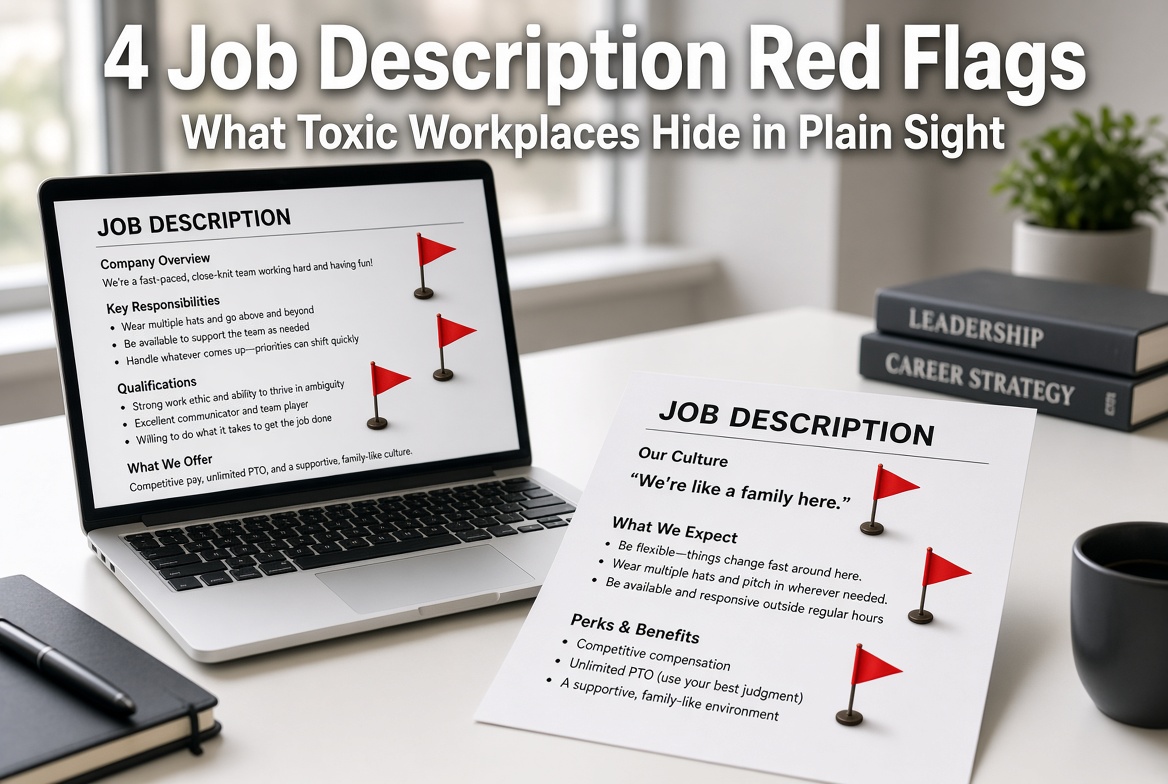 You found a job posting that looks perfect on the surface. Good title, decent salary range, company you've heard of. But something feels slightly off. Before you spend two hours rewriting your résumé and crafting the perfect cover letter, it's worth slowing down and reading that job description a little more carefully.
Serial entrepreneur and career commentator Cynthia Johnson recently highlighted four job description red flags that can reveal a toxic workplace before you ever set foot in an interview. The core idea: the language companies use in postings is rarely accidental. It reflects how they actually think about employees. Here's what to watch for, plus a smarter way to evaluate whether a role is even worth your effort.
Red Flag #1: "We're Like a Family Here"
This phrase sounds warm. It isn't. Healthy workplaces don't need to invoke family loyalty because they offer real incentives, clear expectations, and reasonable boundaries. When a company leads with family language, it often signals an expectation that you'll go above and beyond without question, stay late without extra pay, and put the team's needs ahead of your own.
What to do: Search for phrases like "tight-knit team," "wear many hats," and "we work hard and play hard." These can all be softer versions of the same message.
Red Flag #2: Vague or Impossible Responsibilities
Job descriptions that list fifteen responsibilities for what's supposed to be one role, or that describe a scope that would normally require three people, are telling you something important: either the role has no real definition, or they've had massive turnover and are hoping you won't notice.
Vagueness is also a setup. If your responsibilities aren't defined, they can be expanded indefinitely after you're hired.
What to do: Look for specific deliverables and clear reporting structures. If a posting says something like "and other duties as assigned" without defining what the core duties actually are, that's a yellow flag at minimum.
Red Flag #3: Unrealistic Qualifications for the Salary
A posting asking for ten years of experience, three certifications, fluency in two languages, and a Master's degree, for a coordinator-level salary, tells you the company either doesn't understand the market or doesn't respect it. Both are problems.
This matters for your job search strategy too. If you're running your résumé through an ATS match tool and coming up short on a posting like this, it may not be your résumé that's the problem. It may be the posting itself.
The Past the Bots skill-match tool shows you exactly which keywords from a job description appear in your résumé and which ones are missing, weighted by how prominently the employer emphasized them. If a role has fifty required skills and you match thirty, that's useful data. But if those fifty skills span three entirely different career tracks, that's a red flag about the role, not a gap in your experience.
Red Flag #4: Urgency Without Substance
"We're looking to fill this role immediately" or "must be available to start ASAP" without any other context about why can signal disorganization, a revolving door, or a situation where they need someone to walk into a mess. Urgency itself isn't bad. Urgency paired with a lack of clarity about the role, team, or expectations usually is.
What to do: It's reasonable to ask in a first interview why the role is open and what the timeline looks like. The answer tells you a lot.
So What Do You Do With This?
The goal isn't to become so suspicious of job postings that you never apply anywhere. It's to be selective with your energy.
Tailoring a résumé well takes real time. Rewriting bullets to match a specific job description, running an ATS scan to catch formatting issues, generating a cover letter, the whole process adds up. That investment makes a lot more sense when you've already decided the role is worth pursuing.
A smart workflow looks like this:
- Read the posting critically first. Does the language feel respectful and realistic?
- Research the company. Check Glassdoor, LinkedIn, and even the company's own job history to see if similar roles have been posted repeatedly.
- Then optimize your application. Once you've decided the role is genuinely worth it, use every tool available to make your résumé and cover letter as strong as possible.
Past the Bots is built for that last step. But the first two steps are on you, and they might be the most important ones.
Not every job posting that uses the word "family" is hiding a nightmare, and not every urgent hire is a red flag. Context matters. But your time matters too. Read carefully, apply strategically, and save your best effort for the opportunities that actually deserve it.