7 Sessions to a Sharper Job Search: What Neuroscience Says About Learning New Skills Fast
August 19, 2026 · 4 min read · Past the Bots
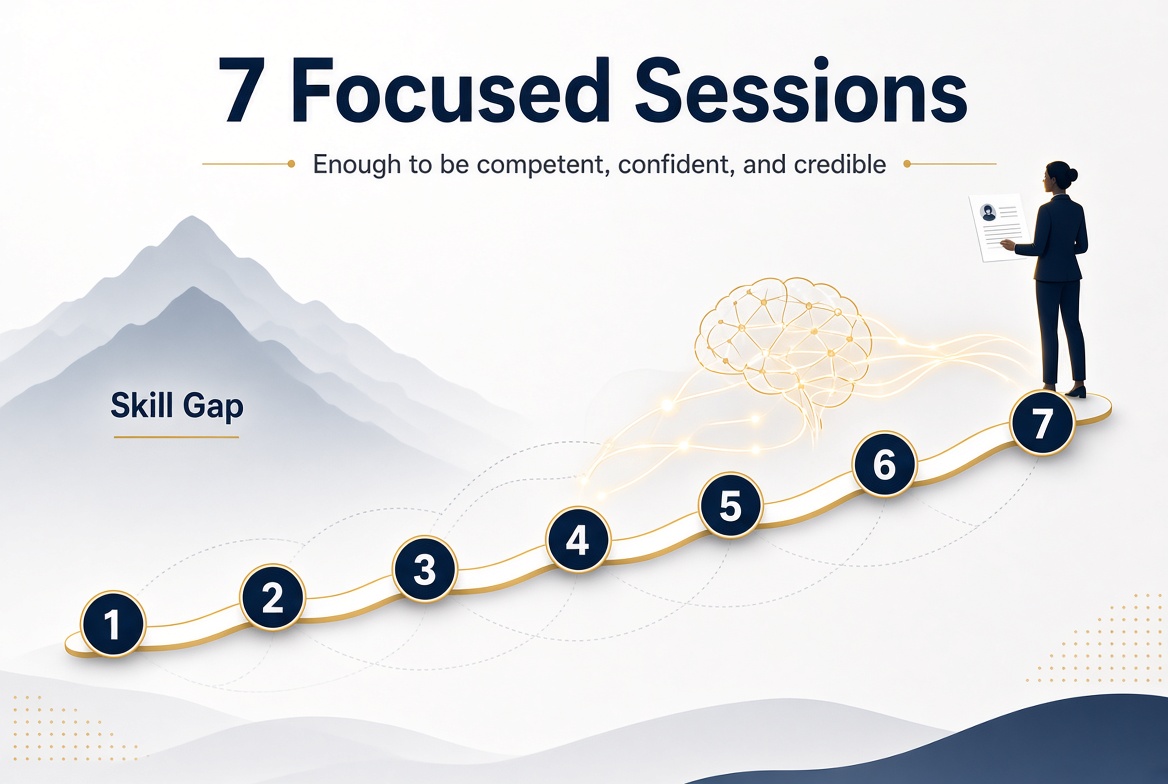 You've probably told yourself some version of this: I need to learn that tool before I can apply for those jobs. And then weeks go by and you still haven't started because it feels like too big a mountain.
Here's some genuinely good news. Neuroscience research suggests that seven focused learning sessions is often enough to build a working understanding of a new skill. Not mastery, but enough to be competent, confident, and credible. The key is that the sessions need to be spaced out, intentional, and low-distraction.
For job seekers, that reframes a lot of things. You don't have to spend six months getting certified before you can honestly list something on your résumé. You might be closer than you think.
Why Seven Sessions Works
The science behind this comes down to how memory consolidates. Each time you revisit a concept after a short break, your brain reinforces the neural pathway. By around the seventh repetition, spaced over several days, the information starts to feel automatic rather than effortful.
The practical upshot is that short, consistent practice beats marathon cramming every time. Two hours spread across a week beats a single two-hour session back to back.
For job seekers, this matters because:
- You can realistically pick up a tool or framework in two to three weeks
- You can use that skill honestly in your résumé bullets and interviews
- You don't have to wait until you feel like an expert to start applying
What Skills Are Actually Worth Your Seven Sessions
Not every skill gap is worth closing before you apply. The ones that are worth your time are the ones showing up repeatedly in the job descriptions you care about.
This is where doing a real keyword match against target roles pays off. If you paste a job description into a tool like Past the Bots and run a skill match, you'll see exactly which keywords you're missing and which ones are flagged as potential knockout gaps. That tells you where to focus your learning energy instead of guessing.
Once you know your gaps, you can be strategic:
- One session to get oriented (a YouTube tutorial, a free lesson, the product docs)
- Two or three sessions to actually do something with it (a practice project, a sandbox environment, a real work task)
- The final sessions to apply it, reflect on it, and put it into words you can use in an interview
How to Get a New Skill Onto Your Résumé the Right Way
This is the part people get wrong. They either undersell themselves by leaving the skill off entirely, or they overstate it and get caught in an interview. Neither helps you.
The right move is to be specific and honest about your level. Instead of just listing "Tableau" in a skills section, write a bullet that shows what you actually did with it:
Built a sales performance dashboard in Tableau to visualize regional pipeline data for a practice project while completing LinkedIn Learning's Tableau Essential Training.
That's honest. It's specific. And it shows initiative, which hiring managers actually value.
When you're rewriting bullets to reflect newer skills, the goal is to show context and outcome, not just the tool name. If you're using an AI tailoring tool to help refine your language, make sure it's working from your real experience rather than inventing things. The best AI résumé tools rewrite what you've actually done into stronger language rather than fabricating new claims.
A Simple Seven-Session Plan for Common Job Search Skills
Here are a few skills worth your seven sessions depending on where you're job hunting:
For tech-adjacent roles:
- SQL basics (free on Mode Analytics or Khan Academy)
- Python for data (Kaggle's free micro-courses are excellent)
- Excel/Google Sheets pivot tables and VLOOKUP
For marketing and ops roles:
- Google Analytics 4 fundamentals
- HubSpot CRM basics (free certification available)
- Canva for content creation
For any professional role:
- LinkedIn profile optimization
- Résumé formatting for ATS systems
- Writing concise, outcome-focused bullet points
That last one is free to practice right now. Pull up your current résumé and rewrite three bullets so they start with a strong verb and include a result. That's one session done.
The Real Takeaway
You don't need to be an expert before you apply. You need to be honest about where you are, specific about what you've done, and strategic about what you learn next.
Seven sessions isn't a magic number, but it is a reminder that the gap between where you are and where you need to be is probably smaller than your anxiety is telling you. Start the first session today, space them out, and by the time you're in interviews, you'll have something real to talk about.