AI Is Writing the Job Listings Now. Here's How to Keep Up.
August 2, 2026 · 4 min read · Past the Bots
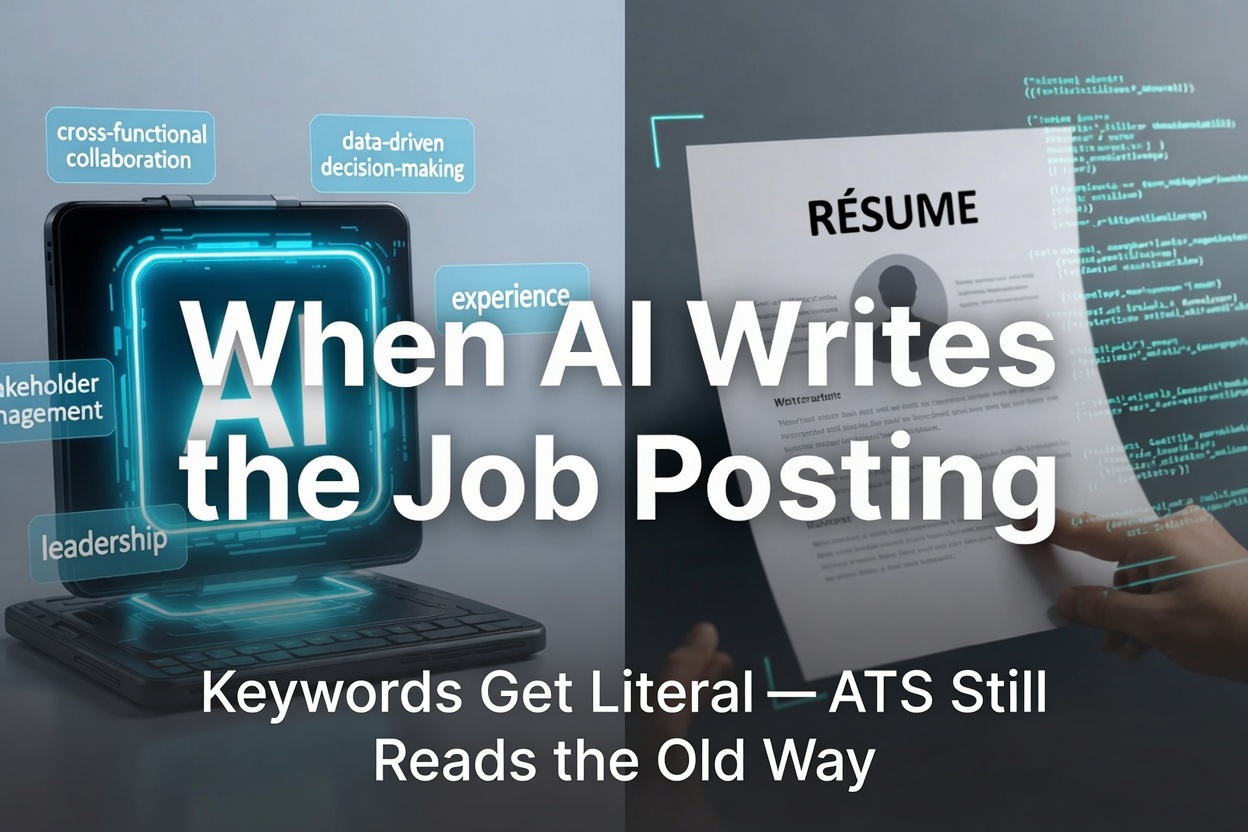 If you've noticed that job postings lately feel a little... polished, you're not imagining things. Employers are increasingly using AI tools to write and refine their job listings, and that shift has real consequences for anyone trying to get their résumé in front of a human being.
A recent report highlighted that AI-generated job postings are becoming the norm, not the exception. Companies use these tools to standardize language, surface the "right" keywords, and make listings more searchable. The result is job descriptions that are more consistent, more keyword-dense, and in some ways more formulaic than ever before.
So what does that mean for you as a job seeker? Quite a bit, actually.
When AI Writes the Job Description, Keywords Get Even More Literal
Human hiring managers often write job postings from memory. They use shorthand, skip obvious skills, or describe a role in ways that reflect how they think about the job. AI tools do the opposite. They pull from large datasets of similar roles and populate listings with standardized terms.
That means the gap between "what the posting says" and "what the role actually needs" can shrink, but it also means the specific phrasing matters more. An AI-generated posting might say "cross-functional collaboration" where a human manager would have just typed "works well with other teams." If your résumé says the latter and the ATS is scanning for the former, you might not get the match.
The practical takeaway: you can't paraphrase your way through keyword matching anymore. You need to mirror the language in the posting, not just the concept.
ATS Systems Are Still Reading Your Résumé the Old-Fashioned Way
Here's the irony. While employers are using AI to write smarter job postings, most Applicant Tracking Systems are still parsing your résumé with older, more rigid logic. They're looking for exact or near-exact keyword matches. They get confused by tables, columns, headers in text boxes, and creative formatting.
So you have a situation where:
- Job postings are more keyword-precise because AI wrote them
- ATS parsers are still pretty dumb about pulling information from your résumé
- The gap between what you submit and what gets read is wider than most people realize
This is exactly the kind of problem the Audit the Bots tool on Past the Bots was built for. It shows you how different parsers actually read your résumé, not how you think they read it. You might be surprised how much gets lost or mangled in translation.
What You Should Actually Do Right Now
Given that both sides of the hiring process are increasingly automated, here's a concrete game plan:
1. Treat every job description as a keyword map. Copy the posting into a tool that can show you matched and missing keywords against your résumé. Look specifically for skills and phrases that appear multiple times in the listing. Those repetitions are signals, whether a human or an AI wrote the posting.
2. Check what the ATS actually extracts from your résumé. Before you apply anywhere, run your résumé through a parser check. Confirm that your name, contact info, skills, and section headers are being read correctly. A résumé that looks great in Google Docs can be a mess after an ATS processes it.
3. Tailor bullets to match the job's language, not just the job's theme. If the posting says "stakeholder management" and your résumé says "worked with clients and leadership," that's a miss. You can rewrite that bullet to match without changing what actually happened. That's tailoring, not fabricating, and it matters.
4. Make sure your résumé is structurally ATS-safe. Single column, standard fonts, no text boxes or graphics, clean section headers. If you're not sure whether yours qualifies, a quick rebuild into an ATS-safe format can remove a huge variable from the equation.
The Bigger Picture
The hiring process is getting more automated on both ends, and that's not going to reverse. Employers will keep using AI to write and screen. Job seekers who understand how that system works will have a real edge over those who don't.
The good news is that knowing the rules of the game is most of the battle. When you understand that an AI wrote the job posting, that an ATS is scanning your résumé with literal pattern-matching, and that there's a real difference between what your résumé looks like and what a system actually reads, you can make smarter decisions at every step.
You're not trying to trick anyone. You're just making sure the work you've actually done gets read and recognized the way it deserves to be.