Building a Multi-Job Application System Without Losing Your Mind
September 19, 2026 · 4 min read · Past the Bots
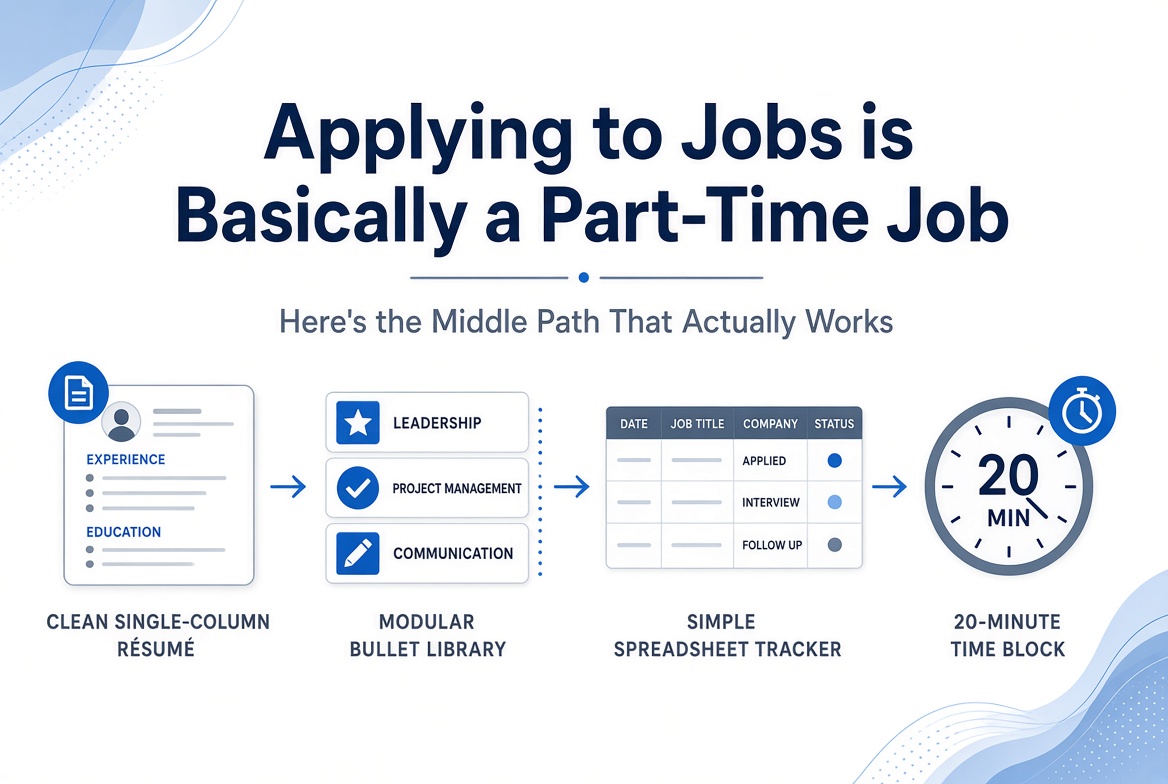 Applying to jobs is basically a part-time job. Between researching companies, tailoring your résumé, writing cover letters, and tracking everything, it's easy to either burn out and send the same generic résumé everywhere, or spend three hours on one application and apply to five roles a week.
Neither extreme works. Here's a middle path: a repeatable system that keeps your applications specific without starting from scratch every single time.
Start With One Strong Base Résumé
Before you think about customization, you need a solid foundation. Your base résumé should:
- Be ATS-friendly in structure (single column, standard section headers like Work Experience, Skills, Education)
- Include your strongest, most transferable bullets written in achievement language
- Pass a basic parse test so your name, contact info, and skills actually extract correctly
This is the document you never send directly. It's your source of truth that you pull from when building role-specific versions.
If you're not sure whether your base résumé is parsing correctly, run it through an ATS scanner before you do anything else. Fixing structural problems once on your base file saves you from carrying those errors into every application.
Batch Your Job Research
Instead of finding one job, applying, finding another, applying, treat research and application as separate phases.
Set aside 30 to 45 minutes every few days to collect job postings. Copy the full job description into a doc or a spreadsheet column. Don't apply yet. Just collect.
For each role, note:
- The job title and company
- 2 to 3 required skills or qualifications that repeat across listings (these are your must-match keywords)
- Any knockout requirements (specific certifications, years of experience, location) that could disqualify you automatically
- A rough sense of whether it's a strong, medium, or reach fit
Batching research means you start to see patterns. If every posting asks for Salesforce and you haven't added it to your résumé yet, that's your signal.
Build a Modular Bullet Library
This is the step most people skip, and it makes the biggest difference.
Go through your base résumé and write two or three variations of each bullet for your most recent or most relevant roles. One version might emphasize team leadership, another might lead with a metric, another might use the language of a specific industry.
Store these in a simple doc. When you're tailoring for a specific role, you're swapping bullets in and out, not rewriting from scratch.
For example:
- Version A: "Managed onboarding for 12 enterprise clients, reducing time-to-value by 30%"
- Version B: "Led cross-functional implementation projects for SaaS clients across healthcare and finance verticals"
Same experience, different emphasis. One lands better for a customer success role, one for a project management role.
The 20-Minute Tailoring Routine
Once you have your base résumé and bullet library, customizing for a specific job description should take about 20 minutes. Here's the flow:
- Paste the job description into a match tool or read it carefully and highlight the top 8 to 10 skills and requirements
- Check your current résumé against that list. What's missing? What's buried?
- Swap in the right bullets from your library based on what the role emphasizes
- Mirror the job description's language in your summary and skills section (if they say "client-facing," use that phrase, not "customer-facing")
- Check for knockout gaps before you apply. If the role requires a PMP certification and you don't have one, decide whether to apply or skip
Past the Bots has a skill-weighted match score that does a lot of this work automatically: paste in the job description and it shows you matched keywords, missing ones, and any red-flag gaps. That cuts the manual scanning time significantly.
Track Everything in One Place
A simple spreadsheet is enough. Columns that actually help:
- Company, role title, date applied
- Link to the job posting (these disappear fast)
- Version of your résumé you used
- Follow-up date
- Status
When you get to interviews, you'll want to know exactly what you submitted. And if you get a callback two weeks later, you won't be guessing which version of your résumé they have.
Set a Realistic Volume Target
Quality over quantity is real, but you also need volume to get traction. A reasonable target for most job seekers is 8 to 15 tailored applications per week, not 50 identical ones.
If you're spending more than 45 minutes per application, your system isn't efficient enough yet. If you're spending less than 15, you're probably not customizing enough to stand out.
The goal is applications that are genuinely targeted and structurally sound, sent consistently. That combination beats both the spray-and-pray approach and the one-application-a-week perfectionism trap.
Build the system once. Then let it work for you.