Elon Musk Is Hiring Engineers and Tradespeople With Just 3 Bullet Points. Here's How to Actually Get That Application Read.
August 4, 2026 · 4 min read · Past the Bots
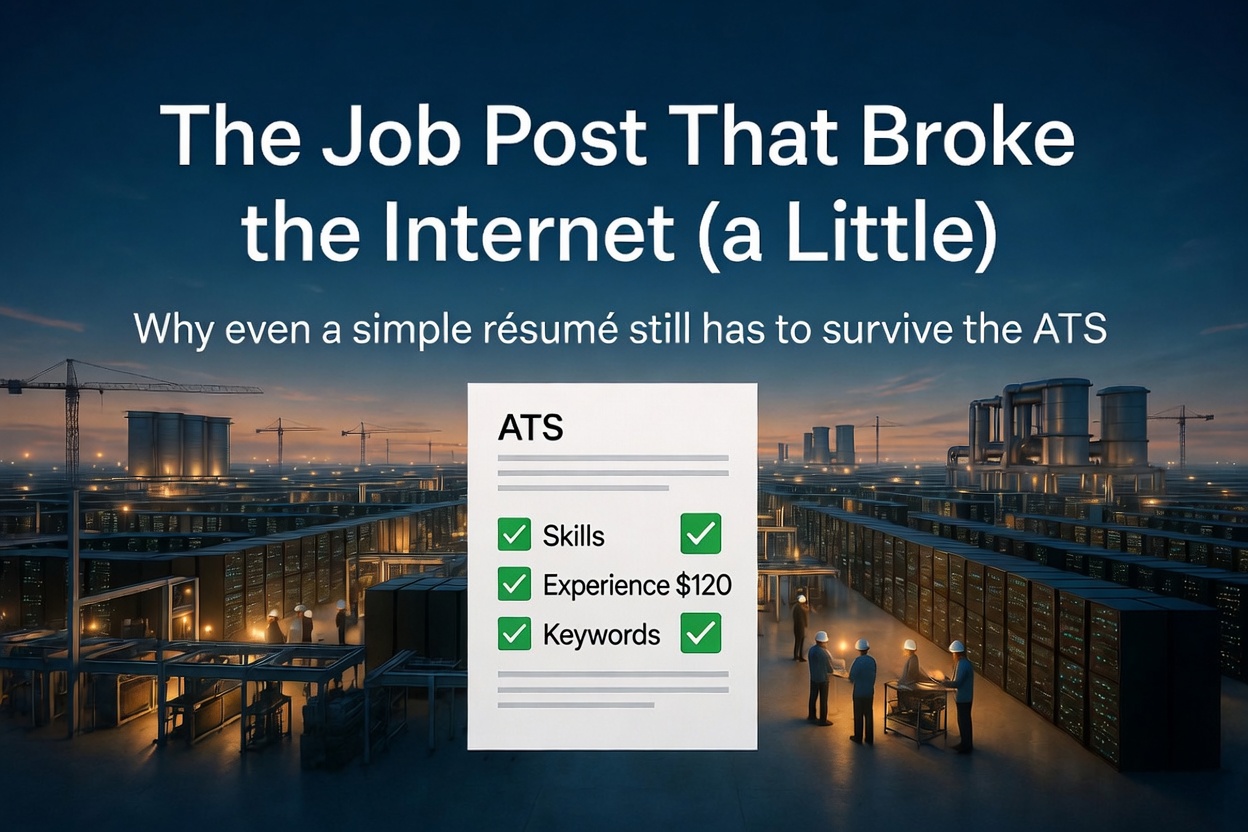
The Job Post That Broke the Internet (a Little)
Elon Musk recently put out a remarkably stripped-down call for talent to build what his team is describing as the best data centers on Earth. The pitch? Send three bullet points, a résumé, and show that you want to build something extraordinary. No lengthy applications, no cover letter hoops. Just signal, fast.
The roles reportedly span electrical engineers, mechanical engineers, HVAC specialists, construction managers, and skilled tradespeople. In other words, this isn't just a software hiring push. It's a broad call for people who can physically build and run massive infrastructure at a pace most companies never attempt.
Sounds exciting. But here's the part nobody is talking about: even when a hiring team says they want a simple application, your résumé almost certainly still goes through an Applicant Tracking System before a human ever sees it. And if the ATS can't parse it cleanly, those three bullet points you agonized over might never reach Musk's inbox.
Why "Just Send a Résumé" Is Trickier Than It Sounds
A lot of job seekers read "just send your résumé" and think formatting doesn't matter anymore. It does. Possibly more than ever, because a short application means there's no extra context to save you if your résumé is hard to read.
ATS software extracts specific things: your name, contact information, job titles, dates, skills, and section headers. If your résumé uses a two-column layout, text boxes, or headers buried inside a table, a parser can scramble all of that. Your five years of electrical systems experience might get attached to the wrong job, or disappear entirely.
For a hiring push like this one, where the volume of applications is almost certainly enormous, a résumé that confuses the parser is a résumé that gets filtered out before anyone reads it.
What Your Résumé Actually Needs for a Role Like This
Let's get specific. If you're applying for an engineering or trades role at a data center buildout, here's what matters:
- Exact skill keywords from the job description. ATS systems match terms literally. If the posting says "high-voltage systems" and your résumé says "HV infrastructure," that can be enough to miss a match. Use the language the job uses.
- Quantified bullets. "Managed electrical installation" is forgettable. "Led electrical installation across 40,000 sq ft of industrial facility, completing 3 weeks ahead of schedule" is not. Numbers help both the parser and the human reader.
- Clean, single-column formatting. No graphics, no sidebars, no icons. A plain, well-structured document is the most ATS-safe format that exists.
- Relevant section headers. Use standard labels like Work Experience, Skills, and Education. Custom headers like "Where I've Crushed It" are clever in theory and invisible to parsers in practice.
How Past the Bots Can Help You Move Fast
When a high-profile job posting drops, speed matters. You don't want to spend three days tweaking your résumé manually. That's exactly what Past the Bots is built for.
Here's a practical workflow for an application like this:
- Run the ATS scan first. Upload your current résumé and see exactly what the parser extracts: your name, contact info, skills, and job history. If anything is missing or garbled, fix it before you apply anywhere.
- Paste the job description and get a match score. The skill-weighted match tool shows you which keywords from the posting appear in your résumé, which ones are missing, and whether any gaps are potential knockouts. For a technical role, missing a core skill like "electrical code compliance" or "cooling system design" is a real problem worth catching before you hit submit.
- Let the AI tailor your bullets. The tailoring tool rewrites your existing experience to better reflect the language of the specific job. It won't invent credentials you don't have, but it will help you surface relevant experience you might have undersold.
- Rebuild in a clean single-column format. If your current résumé has a fancy template, the one-click ATS-safe rebuild gives you a clean version that any parser can read without breaking a sweat.
Then write your three bullet points. Keep them specific, honest, and results-focused. That's what will actually catch a recruiter's eye once your résumé makes it through.
The Bigger Takeaway
Fast-moving hiring pushes like this one are a reminder that the basics of a strong résumé don't change based on how casual the application process sounds. Clean formatting, the right keywords, and quantified accomplishments are what get you through the automated layer and onto a real person's desk.
If you're a skilled engineer or tradesperson and this kind of opportunity excites you, don't let a fixable formatting problem be the reason you don't hear back. Take 20 minutes, run the scan, tighten your bullets, and apply with confidence.