Future-Proof Your Career (And Make Sure Recruiters Can Actually Find You)
July 27, 2026 · 4 min read · Past the Bots
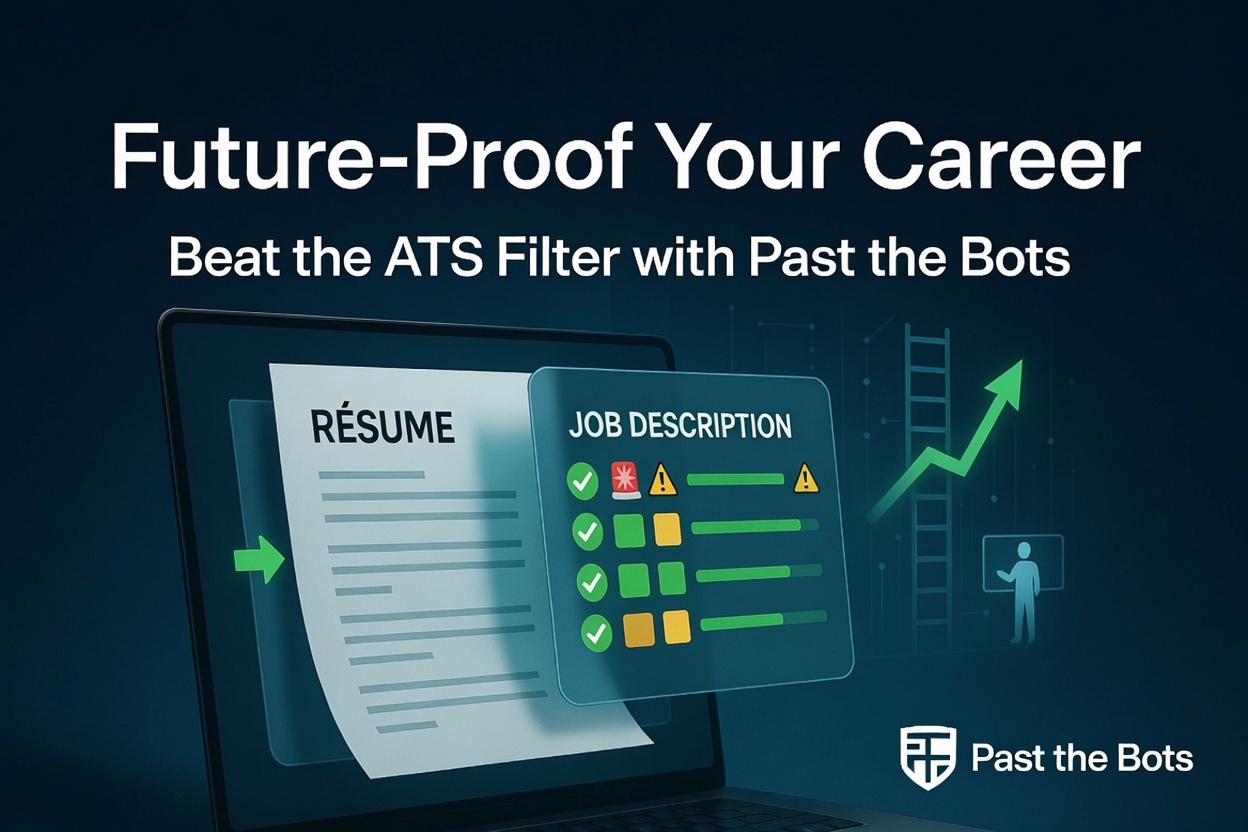 The conversation around future-proofing your career usually goes something like this: learn new skills, build your network, stay adaptable. All solid advice. But there's a gap that doesn't get talked about enough -- even if you have the right skills, a broken or poorly optimized résumé means automated systems will filter you out before a human ever sees your name.
Let's fix that.
What Future-Proofing Actually Looks Like
Future-proofing your career comes down to a few core moves:
- Keep your skills current. Technology shifts fast. Staying relevant means regularly auditing what you know versus what the market wants.
- Build transferable experience. Employers want people who can adapt, not just people who've done one thing for 20 years.
- Manage your professional visibility. Being findable -- by recruiters, hiring managers, and algorithms -- matters more than ever.
- Communicate your value clearly. It's not enough to have the skills. You have to show them in a way that lands.
That last two points are where most job seekers quietly lose ground.
The Invisible Filter You're Up Against
Before any human reads your résumé, an Applicant Tracking System (ATS) parses it. That system is pulling out your name, contact info, job titles, dates, skills, and education. If your formatting confuses the parser -- or if your skills aren't written the way the job description phrases them -- you'll get filtered out automatically.
This isn't a scare tactic. It's just how the pipeline works. And it means that a résumé that looks beautiful as a PDF can still perform terribly in an ATS.
The fix isn't to game the system. It's to understand it.
When you run your résumé through Past the Bots' ATS scan, you can see exactly what a parser extracts: your name, email, phone, skills, and each section. Critical issues get flagged in red, warnings in yellow, and things that look good show up in green. That kind of visibility lets you fix real problems instead of guessing.
Matching Your Skills to What the Market Wants
One of the most practical future-proofing habits is regularly comparing your résumé to active job postings in your target role. Not to copy-paste keywords, but to understand how the industry is describing the work you do.
For example: maybe you've been calling it "data analysis" on your résumé for years, but the jobs you're targeting now say "business intelligence" or "data storytelling." Same skillset. Different language. The ATS doesn't know they're the same thing.
The skill-weighted match score in Past the Bots shows you exactly which keywords from a job description appear in your résumé and which ones are missing. It also flags knockout gaps -- requirements that are so central to the role that missing them likely disqualifies you outright. That's the kind of specific feedback that actually helps you decide whether to tailor your résumé or move on to a better-fit role.
Tailoring Without Fabricating
Here's where a lot of job seekers either give up or go too far. Tailoring every application sounds exhausting. And rewriting your bullets to stuff in keywords -- without those bullets still sounding like you -- can make your résumé feel hollow.
Good tailoring means reframing real experience in language that matches what the employer is looking for. If you led a project that cut processing time, and the job posting emphasizes operational efficiency, you can absolutely say that more directly. That's not fabricating -- that's translating.
Past the Bots' AI tailoring rewrites your bullets to reflect the job description without inventing experience you don't have. The goal is always to surface what's already true about your background in the clearest, most relevant way.
Being Findable Matters Too
Future-proofing isn't just about the next application. It's about building a career that attracts opportunity over time. Recruiters actively search for candidates -- on LinkedIn, in résumé databases, through referrals. If your profile and résumé don't reflect your current skills and experience clearly, you're invisible to that pipeline.
The "Get found" talent profile in Past the Bots is built specifically for this: a clean, ATS-readable snapshot of your skills and background that makes it easier for recruiters to find and contact you.
The Practical Takeaway
Future-proofing your career is an ongoing process, not a one-time project. New skills matter. So does making sure the systems and people evaluating you can actually see what you bring.
Start with a quick audit:
- Can an ATS correctly parse your résumé? Run a scan and find out.
- Does your skills section match how your target roles are described today? Compare against a few real postings.
- Are your bullets communicating outcomes, not just tasks? If not, rewrite them with context and results.
The job market keeps changing. Your résumé should too.