Future-Proof Your IT Career (and Make Sure Your Résumé Keeps Up)
August 1, 2026 · 4 min read · Past the Bots
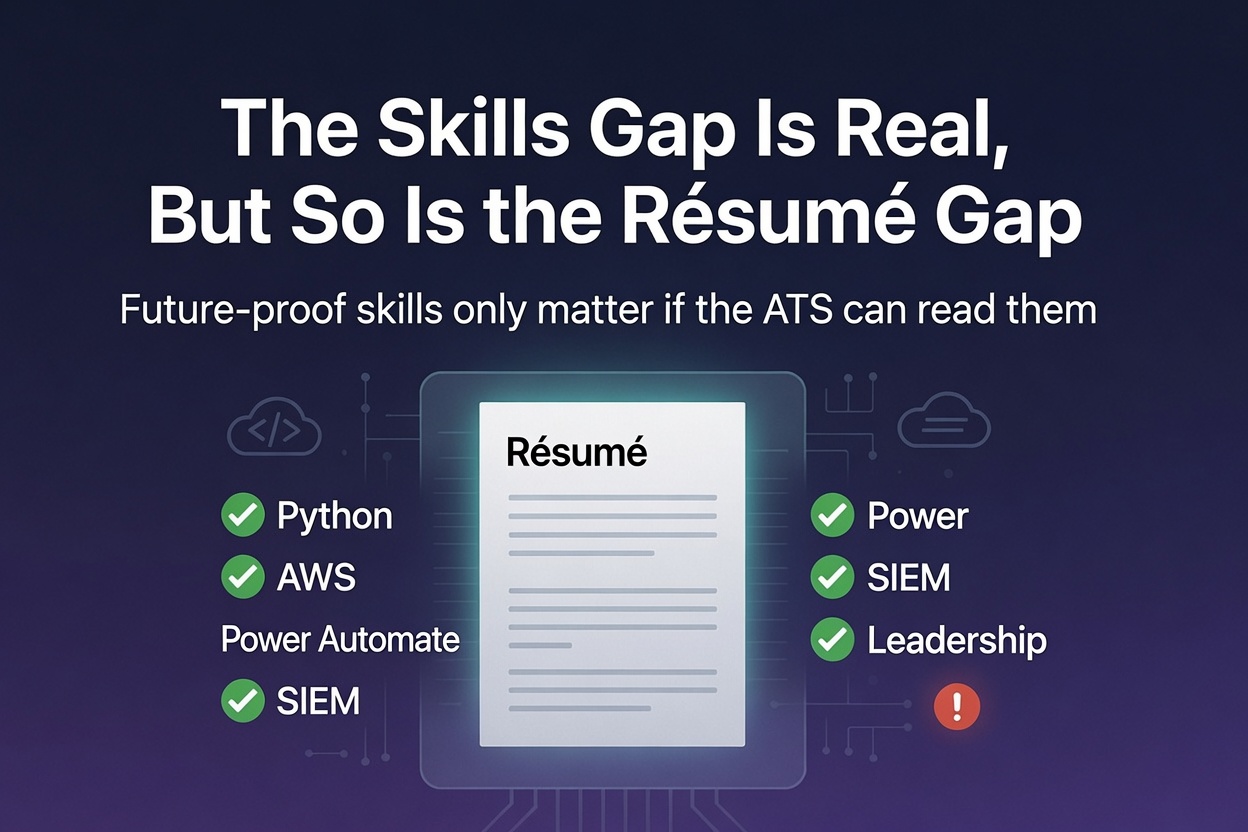 The tech industry is in a weird spot right now. Layoffs at big names, AI eating certain roles, and yet a genuine shortage of people with the right skills. A recent piece on MSN laid out some smart moves for future-proofing an IT career: lean into AI and automation skills, get cloud-certified, develop soft skills like communication and leadership, and build a specialty rather than staying a generalist.
Solid advice. But here is the part that rarely gets mentioned: none of those moves matter if the Applicant Tracking System screening your résumé can not read what you have done.
The Skills Gap Is Real, But So Is the Résumé Gap
Let's say you took the advice seriously. You earned an AWS certification, picked up some Python for automation, and led a cross-functional migration project. You update your résumé and apply to 20 jobs. You hear back from two.
Was it your skills? Probably not. It was likely how your résumé presented those skills to a machine that scanned it before any human ever saw it.
ATS platforms parse your résumé into fields: name, contact info, job titles, dates, skills, education. If your formatting trips up the parser, or your bullet points bury the keywords a recruiter searched for, your résumé effectively disappears.
What Future-Proof Skills Actually Look Like on a Résumé
Here are the specific moves the MSN article recommended, and how to make sure an ATS actually captures them:
AI and automation skills Do not just list "AI" in a skills section. Mention specific tools: Python, TensorFlow, Power Automate, GitHub Copilot, whatever you actually used. Then write a bullet that shows impact, like reducing a manual process from 4 hours to 20 minutes. The keyword needs to appear, but the story around it is what gets a human excited.
Cloud certifications This is one area where ATS systems are surprisingly inconsistent. "AWS Certified Solutions Architect" might get picked up, or it might not, depending on how your PDF renders. A quick way to check: paste your résumé into an ATS parser and see if your cert shows up under skills or education. If it is missing, that is a critical fix.
Soft skills and leadership ATS systems are not great at evaluating these, but recruiters search for terms like "cross-functional," "stakeholder management," and "team lead." If you led something, say so explicitly in your bullet points. "Collaborated with" is weaker than "Led a team of 5 to deliver."
Specialization over generalization This is actually an ATS advantage. The more specific your skills list, the more likely you are to match the exact keywords in a job description. A generalist résumé that lists "networking, security, cloud, support" matches nothing precisely. A résumé focused on cloud security with specific tools listed matches a lot.
How to Check If Your Résumé Is Actually Getting Through
This is where a tool like Past the Bots becomes genuinely useful. Here is what you can do:
- Run the ATS scan. It shows you exactly what a parser extracts from your résumé: your name, contact info, skills, and section headers. If your cloud certifications are not showing up, you will see it immediately.
- Check your match score against a real job description. Paste in a job posting and see which keywords you hit and which ones are missing. For IT roles, the gap between "DevOps" and "CI/CD pipeline" or between "security" and "SIEM" can mean the difference between a match and a miss.
- Use the AI tailoring tool. It rewrites your bullets to better reflect the language of a specific job description, without inventing anything. If you did automation work but described it vaguely, this helps you say it in the way a hiring manager actually searches for it.
- Rebuild into an ATS-safe format. Fancy two-column IT résumés with icons and sidebar skills sections often break parsers entirely. A clean single-column rebuild fixes that without making your résumé look boring.
The Bottom Line
Future-proofing your IT career with real skills is the right long-term play. Cloud expertise, AI fluency, and strong communication will absolutely make you more hireable over time.
But right now, in this market, you also need your résumé to survive the first 30 seconds of automated screening. That means the right keywords in the right places, a format parsers can actually read, and bullets that connect your skills to real outcomes.
Do both. Build the skills and make sure your résumé communicates them clearly. One without the other leaves a lot of interviews on the table.