Gen Z Is Job Hunting on TikTok and Instagram (And It's Actually Working)
October 5, 2026 · 4 min read · Past the Bots
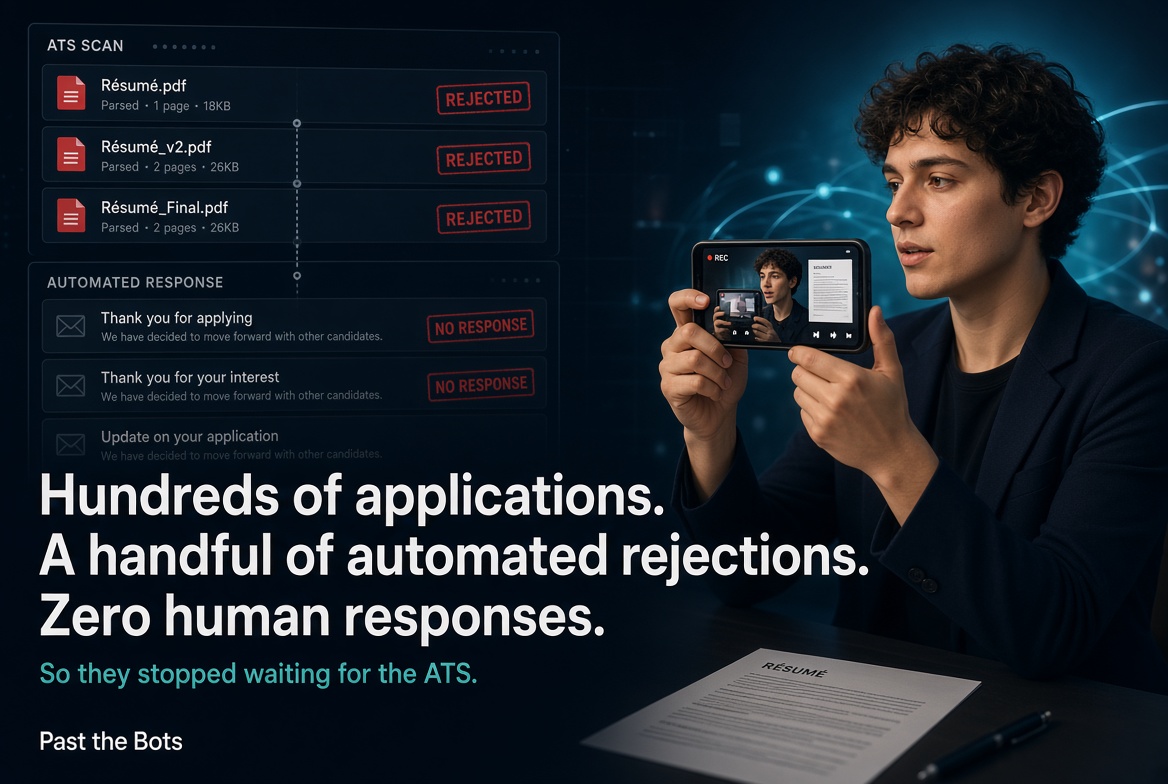 Hundreds of applications. A handful of automated rejections. Zero human responses.
If that sounds familiar, you're not alone, and some Gen Z job seekers have stopped waiting for the ATS to bless their résumé and started going around it entirely.
They're posting résumé walkthroughs on TikTok. They're filming "day in my job search" vlogs on Instagram Reels. A few have pulled off full-on stunts, like showing up outside a company's office with a sign, or cold-emailing a CEO and posting the exchange. The results? Coffee chats, referrals, and yes, actual job offers.
So is this a real strategy, or just viral content that works for a lucky few? Let's break it down honestly.
Why the ATS Wall Is Pushing People to Social
Applicant Tracking Systems are a real barrier. Most large companies run every résumé through software that parses your file, extracts keywords, and scores you against the job description before a human ever sees your name. If your résumé isn't formatted correctly or doesn't include the right terms, you get filtered out automatically.
That's not a conspiracy theory, it's just how modern recruiting infrastructure works. And when candidates feel invisible, some of them decide to become very visible somewhere else.
Platforms like TikTok and Instagram have massive organic reach for individual creators in a way LinkedIn simply doesn't anymore. A well-made Reel from a nobody can land in front of thousands of people, including recruiters and hiring managers who are just... scrolling.
What's Actually Working (With Examples)
Here are the formats that have led to real outcomes for real people:
Résumé walkthroughs. Candidates film themselves talking through their résumé, explaining the story behind each role, what they're looking for next, and what they bring to the table. This works because it turns a flat document into a personality. A recruiter who watches a two-minute video knows infinitely more about you than one who skims a PDF.
Job search vlogs. Weekly or daily videos documenting the search, applications sent, responses received, interviews scheduled, rejections faced. These build an audience of people who are rooting for you, and that audience sometimes includes people who can help.
Direct company callouts. Some candidates post videos specifically addressed to a company they want to work for. "Hey @Patagonia, here's why I want to work on your marketing team." It's bold, but it forces the algorithm to surface your content to people who follow that brand, including employees.
Skill demonstration clips. Instead of saying you're a great video editor, post a great video. Instead of claiming strong data skills, post a breakdown of an interesting dataset. Show, don't tell.
What to Keep in Mind Before You Post
This strategy isn't magic, and it comes with real tradeoffs.
- Your current employer might see it. If you're employed and searching quietly, think carefully about what you share and when.
- Not every industry will respond positively. Finance, law, and highly regulated fields tend to be more conservative. What impresses a DTC brand's recruiter might raise eyebrows at a law firm.
- Consistency matters more than virality. One post rarely does it. The people who've gotten results usually posted regularly for weeks or months before something clicked.
- You still need a solid résumé. Social content gets you the conversation. Your résumé closes it. When a recruiter DMs you after your TikTok blows up, they're going to ask for your résumé within the next two messages.
Don't Abandon the Fundamentals
Going viral is great. But the moment a recruiter or hiring manager asks for your résumé, you're back in ATS territory. Your document needs to be clean, parseable, and keyword-matched to the roles you're targeting.
That means a single-column layout, standard section headers, and skills that actually reflect the language in the job descriptions you're applying to. Tools like Past the Bots can show you exactly how an ATS reads your résumé, where it's losing information, and how well your skills match a specific job description before you apply.
Think of it this way: social content is your way of getting a human to champion your application inside the company. Your résumé is what they hand to HR when they do.
The Real Takeaway
The job market is competitive enough that creative approaches are worth taking seriously. Going social won't work for everyone, and it isn't a replacement for a strong application. But if you've been sending out applications for months and hearing nothing back, experimenting with visibility in a new place is a reasonable bet.
The candidates who are landing opportunities this way aren't just lucky. They're combining genuine content with genuine skills and a résumé that can hold up once a door opens.
Get both sides right, and you're in a much better position than someone doing only one.