Ghost Jobs Are a Real Problem. Here's How to Stop Wasting Time on Them.
August 21, 2026 · 4 min read · Past the Bots
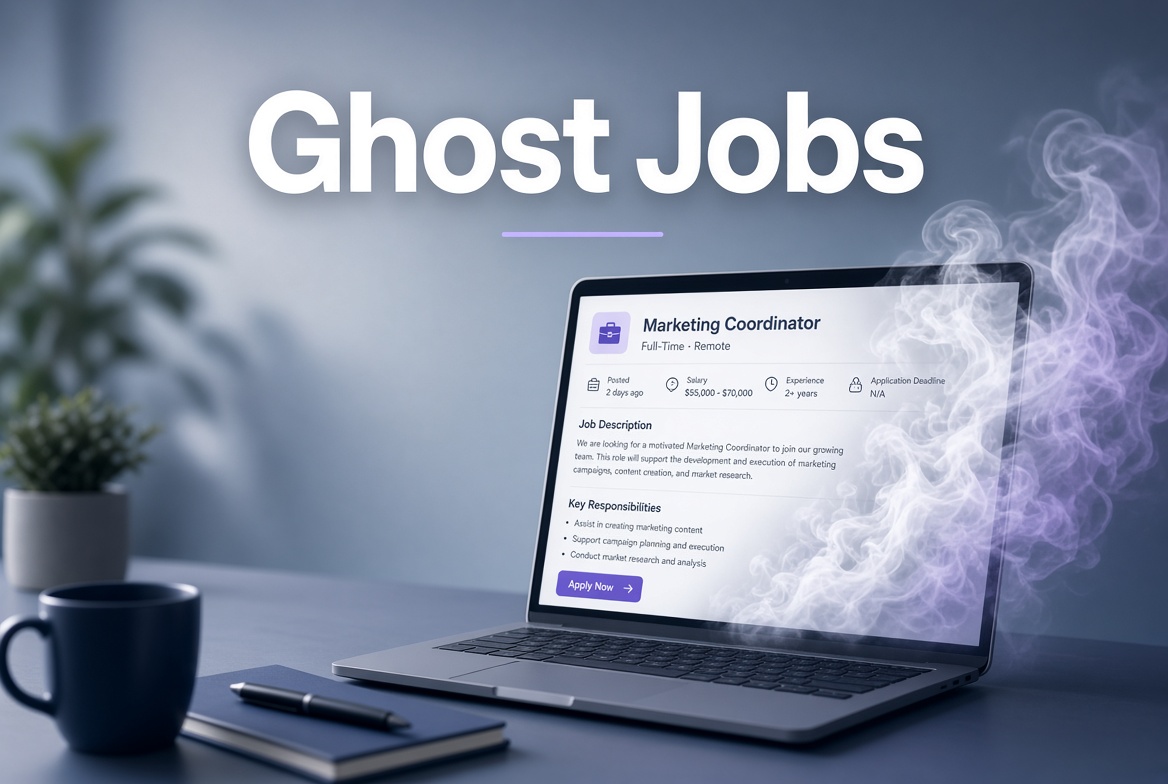 If you've ever applied to a job, heard nothing for weeks, and then watched the listing quietly disappear, you may have applied to a ghost job. And you're far from alone.
Legislators in several states are now pushing to ban the practice outright, according to recent reporting. The proposals would require employers to take down listings within a set number of days if they're not actively hiring. That's a meaningful shift, but until any of those bills actually become law, job seekers are on their own.
So let's talk about what ghost jobs actually are, why companies post them, and what you can do to protect your time and energy.
What Exactly Is a Ghost Job?
A ghost job is a listing that a company has posted but has no real intention of filling right now, or possibly ever. Estimates vary, but some surveys suggest that nearly half of all job postings at any given time may fall into this category.
The reasons companies do this range from frustrating to understandable:
- Building a passive pipeline so they have candidates ready when budget opens up
- Keeping a role posted even after an internal hire has already been made
- Testing salary expectations in the market without committing to a hire
- Compliance or HR requirements that mandate posting externally even when the outcome is already decided
- Forgetting to take down a listing after the role is filled
None of these explanations make it feel any less demoralizing when you've spent two hours tailoring your resume and writing a cover letter.
How to Spot a Ghost Job Before You Apply
You can't always tell, but there are some reliable signals worth checking before you invest significant effort.
Check the posting date. Most job boards let you filter by date. If a listing is more than 30 days old and still showing no movement, treat it with skepticism. Roles that are genuinely urgent get filled fast.
Look for LinkedIn activity. Does the company have employees in similar roles who were recently hired? Are people actually leaving the team? LinkedIn's "People" tab on a company page can tell you a lot.
Search for the role elsewhere. If a job shows up on Indeed but not on the company's own careers page, that's a red flag. Companies that are actively hiring almost always maintain their own listings.
Try to find the hiring manager. A real open role usually means a real person managing the search. If you can find a hiring manager or team lead on LinkedIn and they haven't posted anything about building their team, that's worth noting.
Call the company. This sounds old-fashioned, but it works. A quick call to ask whether the role is actively being filled takes two minutes and can save you hours.
What to Do When You're Not Sure
Here's the honest truth: you can't always know. Some legitimate roles take a long time to fill. Some ghost jobs accidentally convert into real ones when a great candidate shows up. The goal isn't to avoid applying to anything uncertain. It's to calibrate how much effort you invest.
For listings you're not sure about, apply with a solid base version of your resume rather than spending hours on a fully customized version. Save the deep tailoring for roles where you can confirm active hiring.
That's where a tool like Past the Bots can help you work smarter. Instead of rebuilding your resume from scratch for every application, you can paste in a job description, get a skill-weighted match score, and see exactly which keywords and gaps matter most. The AI tailoring feature rewrites your bullets to fit the role without fabricating anything, so a well-targeted application takes minutes instead of an hour.
You protect your best effort for the roles most likely to be real.
The Bigger Picture
The push to legislate against ghost jobs reflects how seriously this problem has gotten. Job searching is already exhausting. Adding hundreds of thousands of fake listings into the mix means people are burning out faster, losing confidence, and sometimes giving up on roles they were genuinely qualified for.
Until the rules change, the best defense is awareness. Be skeptical of old listings. Do a little homework before you apply. And build a process that lets you apply efficiently without treating every listing like it deserves your full Sunday afternoon.
The companies that are actually hiring right now need to find you. Make sure your resume is set up to get through when one of those real opportunities comes across your path.