Job Huggers Beware: Why Staying in a Bad Job Is Riskier Than You Think
August 26, 2026 · 4 min read · Past the Bots
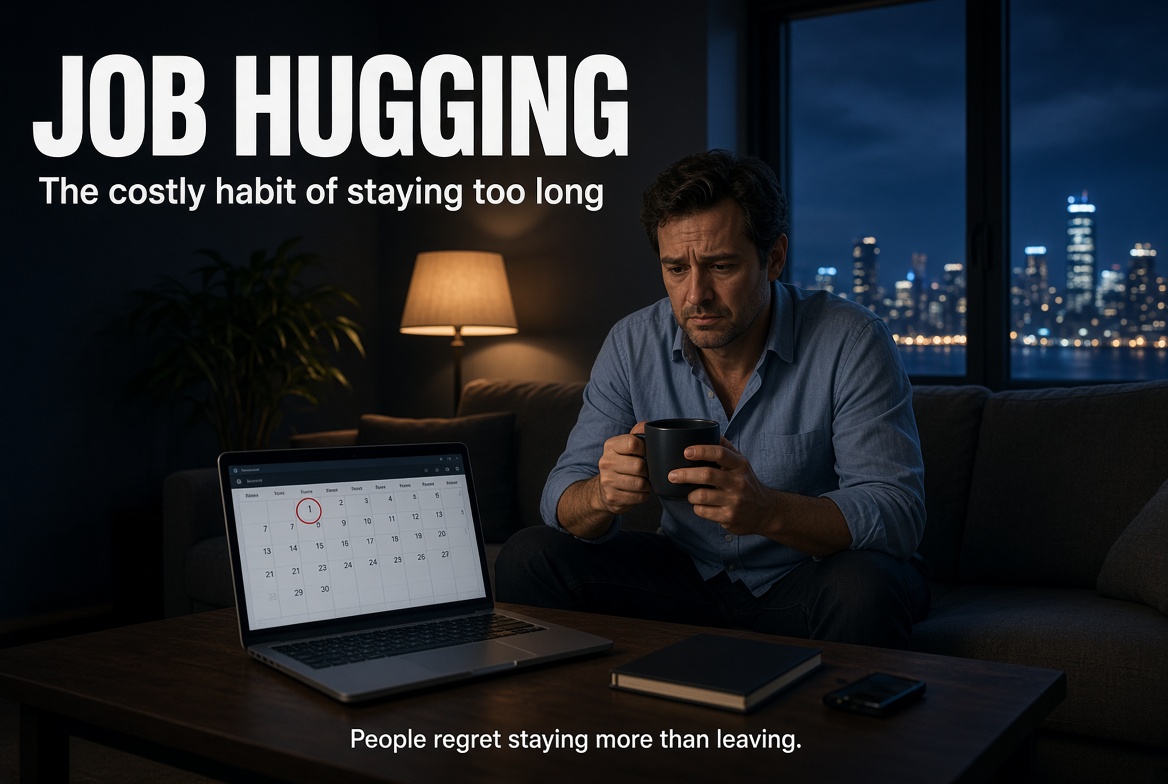 You know that feeling. Sunday evening rolls around and your stomach drops thinking about Monday. You've been telling yourself to start looking for months, maybe years. But you haven't pulled the trigger yet.
There's a name for this: job hugging. And new research suggests it's far more costly than most people realize.
A study highlighted by researchers and widely reported in financial media found that people are significantly more likely to regret staying in a bad job than they are to regret leaving one. In other words, the safe-feeling choice (staying put) tends to produce more lasting regret than the scary one (quitting or actively searching).
That's worth sitting with for a second.
Why We Cling to Jobs That Aren't Working
It's not laziness or lack of ambition. There are real psychological forces at work:
- Loss aversion -- we feel the pain of losing something (a paycheck, benefits, familiarity) more sharply than we feel the potential gain of something better
- The sunk-cost trap -- "I've already put five years into this place"
- Uncertainty paralysis -- the job market feels like a black box, so staying feels like the known quantity
- Resume dread -- updating a resume is genuinely annoying, and most people don't know if theirs will even get through automated screening
That last one is more of a barrier than people admit out loud. If you're not sure your resume will get past an Applicant Tracking System, starting a job search feels futile before it even begins.
The Hidden Cost of Waiting
Every month you stay in a role that's making you miserable has a price tag, even if you can't see it on a pay stub:
- Skills stagnate. If you're not being challenged, your marketability quietly erodes.
- Your network goes cold. You stop nurturing connections because you're not actively in the market.
- Confidence shrinks. A bad job environment can make you feel less capable than you actually are, which affects how you interview.
- The market moves without you. Job titles evolve, new tools become standard, and the gap between your experience and what hiring managers want can quietly widen.
None of this is meant to panic you. It's meant to make the case that starting your search is genuinely lower-risk than it feels.
What "Starting Your Search" Actually Looks Like
Here's the thing about a modern job search: you don't have to go public or quit anything to begin. You can run a quiet, behind-the-scenes search while you're still employed, and you probably should.
Some concrete first steps:
1. Get your resume ATS-ready. Most medium and large companies use Applicant Tracking Systems that parse and score your resume before a human ever sees it. A beautifully formatted resume with tables, columns, or graphics can fail parsing completely. Run your resume through an ATS checker (like the Audit the Bots tool on Past the Bots) to see exactly what a parser extracts -- your name, contact info, skills, and work history -- before you start applying.
2. Find the keyword gaps. Pull two or three job descriptions from roles you'd actually want and compare them to your current resume. What skills are showing up repeatedly that you're not mentioning? You may have those skills but just haven't used the right language. Matching your resume's vocabulary to the job description is one of the highest-leverage things you can do.
3. Reframe your bullets. Most people write resume bullets that describe duties. Hiring managers want to see impact. Instead of "Managed social media accounts," try "Grew Instagram engagement 40% in six months by shifting to short-form video content." If you're not sure how to reframe yours, an AI tailoring tool can help you rewrite bullets to match a specific role without inventing experience you don't have.
4. Make a short list, not a massive one. Spray-and-pray applications are exhausting and demoralizing. Pick 10 to 15 companies you'd genuinely want to work for and research them properly. A targeted approach usually outperforms volume.
5. Tell a few trusted people. You don't need to post on LinkedIn that you're open to opportunities. Just let two or three people in your network know you're quietly exploring. Referrals still beat cold applications by a wide margin.
The Regret Math Is Clear
The research keeps pointing in the same direction: action produces less regret than inaction, even when the action doesn't work out exactly as planned. People who leave bad jobs and land somewhere better obviously feel good about it. But even people who leave and have a bumpy transition tend to report less regret than people who stayed too long.
Your resume is fixable. Your skills are marketable. The job market, while imperfect, has openings every single day.
The riskiest move might just be the one that feels the safest.