LinkedIn vs. Résumé Mismatches That Quietly Kill Applications
November 23, 2026 · 4 min read · Past the Bots
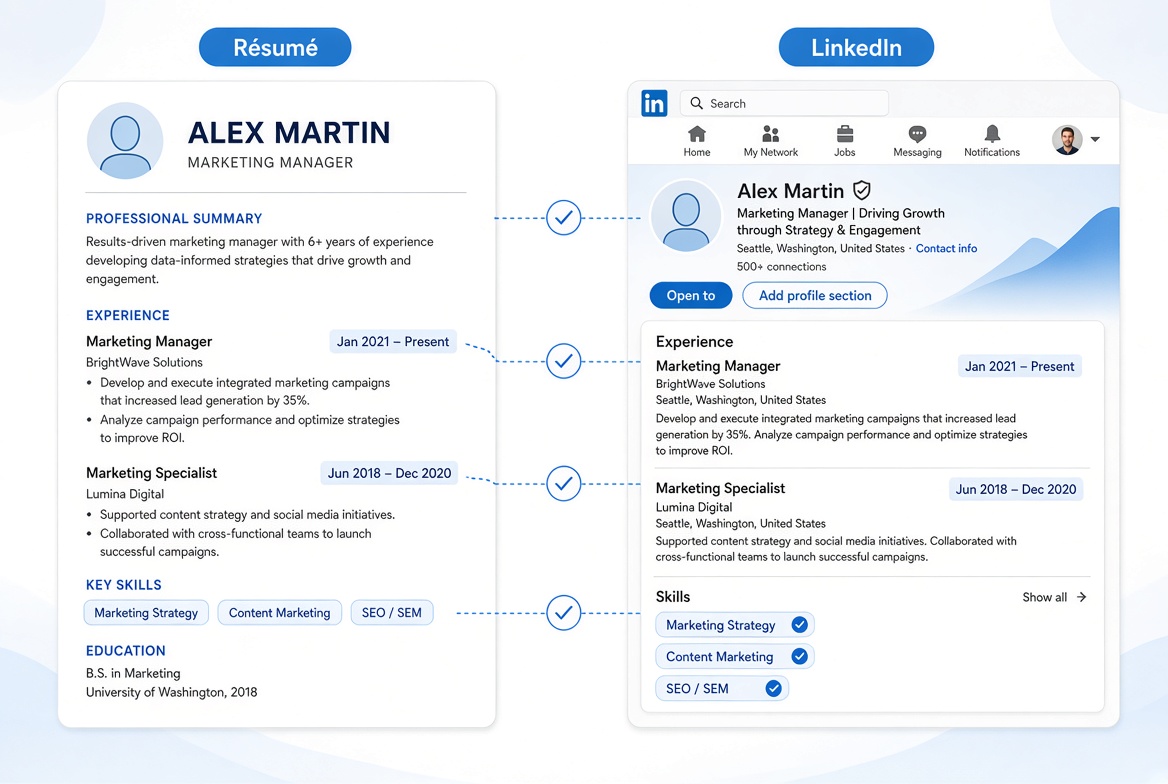 You spent hours polishing your résumé. You tailored it to the job description, cleaned up your bullets, and hit submit. But there's another document recruiters are almost certainly looking at alongside it: your LinkedIn profile.
Here's the thing most job seekers don't realize. When a recruiter shortlists you, one of the first things they do is pull up your LinkedIn to cross-reference what you submitted. If the two documents tell slightly different stories, that inconsistency can quietly move you from the "yes" pile to the "maybe" pile, or worse, the trash.
Let's walk through the most common mismatches and why they matter more than you'd expect.
Job Titles That Don't Quite Match
This one is surprisingly common. Your résumé says "Senior Marketing Manager" but LinkedIn lists "Senior Manager, Brand and Content." You figure it's the same job, just phrased differently. And it is. But to a recruiter skimming both documents, it looks like a discrepancy.
Some applicant tracking systems also pull your LinkedIn data automatically, especially if you applied through Easy Apply or a platform that imports profile information. When the parsed title from LinkedIn doesn't match the title on your résumé, it can create duplicate or conflicting records that make your application harder to process.
The fix is simple: pick one version of each title and use it consistently across both documents. If your official company title was something internal and weird, it's fine to clarify, but keep the language parallel.
Dates That Are Off by a Month or More
Employment dates are where things get sticky fast. If your résumé says you left a job in December 2022 but LinkedIn shows February 2023, a recruiter is going to notice. Even a one-month difference can prompt a question about whether you're trying to hide a gap or overlap.
Date mismatches often happen innocently. You updated one document and forgot the other. But in a background check, employment dates are verified, and if what you've submitted doesn't match what your former employer confirms, that's a problem that goes beyond the application stage.
Audit both documents side by side. Make sure every start date, end date, and job duration lines up exactly.
Skills Listed in One Place but Not the Other
Your résumé might have a tightly curated skills section built around a specific job description. Your LinkedIn skills section, meanwhile, might be a years-old list of whatever endorsements accumulated. Neither is wrong on its own, but the gap between them can work against you.
If a recruiter sees Salesforce, HubSpot, and Marketo on your résumé but your LinkedIn skills section is full of things like "Microsoft Office" and "Team Player," it looks inconsistent. It can also affect whether you show up in LinkedIn recruiter searches for the skills you actually have.
It's worth syncing your core technical and role-specific skills across both. You don't need to copy your résumé verbatim, but the important skills should appear in both places.
Projects and Accomplishments That Tell Different Stories
Sometimes the mismatch is subtler. Your résumé bullet says you "led a team of eight engineers" but your LinkedIn summary describes you as a contributor on the same project. Or your résumé claims a revenue impact your LinkedIn doesn't mention at all.
Recruiters are trained to notice when the two versions of your story don't add up. If your résumé is more impressive than your LinkedIn in ways that feel selective or curated, it raises questions about accuracy.
This doesn't mean your résumé can't be more detailed than LinkedIn. It absolutely should be. But the core facts, scope, and outcomes should be consistent.
Why This Matters More Now
ATS software is getting better at cross-referencing data, and some platforms already pull LinkedIn information into candidate records automatically. Even when they don't, the human review stage almost always involves a LinkedIn lookup.
When you use a tool like Past the Bots to check how an ATS reads your résumé, you're making sure the machine processes your application correctly. But aligning your LinkedIn is how you make sure the human who comes after the machine doesn't pump the brakes.
A Quick Checklist Before You Apply
- Job titles: Same across both documents
- Employment dates: Month and year match exactly
- Company names: Consistent spelling and formatting
- Core skills: Key technical skills appear on both
- Accomplishments: Facts, numbers, and scope are consistent
- Education: Degree, institution, and graduation year all match
Take twenty minutes before a big application to do a side-by-side read of your résumé and LinkedIn profile. It's one of the lowest-effort, highest-impact things you can do to protect your candidacy once it moves past the bots and into human hands.