Overqualified? Here's How to Stop Getting Filtered Out Before a Human Ever Reads Your Résumé
July 23, 2026 · 4 min read · Past the Bots
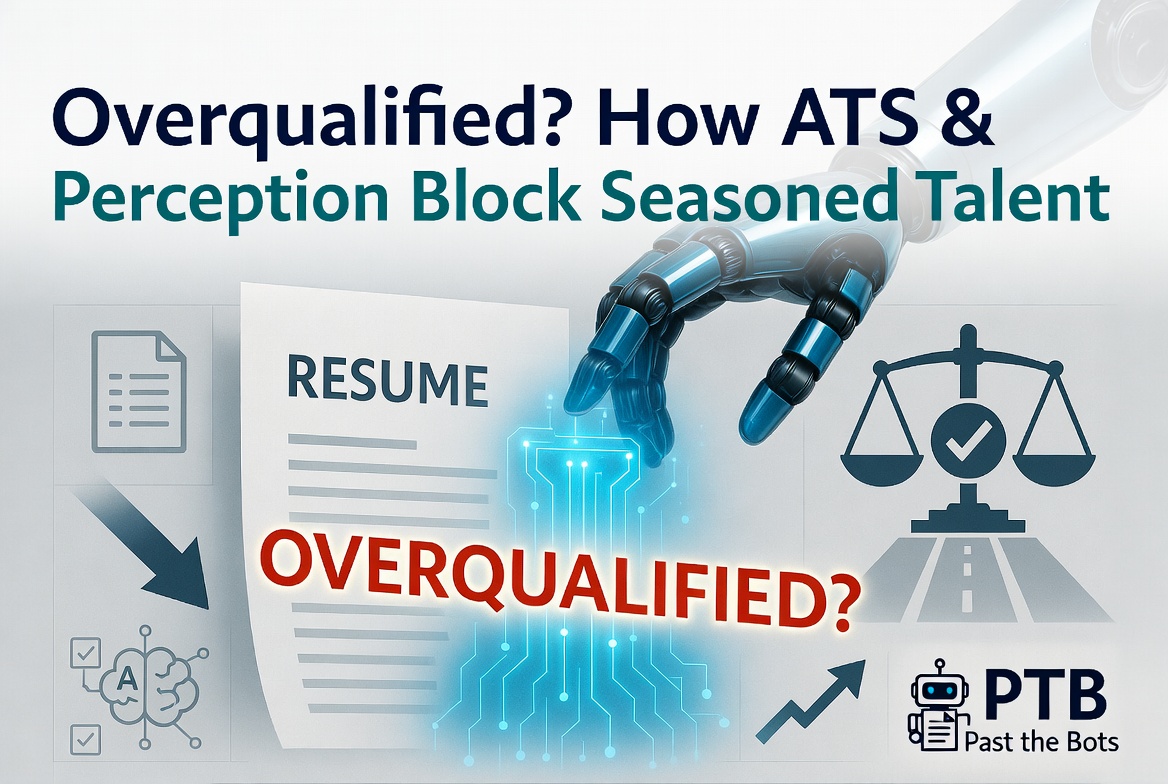 A recent study making the rounds highlights something a lot of experienced job seekers already feel in their gut: being perceived as overqualified is a real liability. Hiring managers worry that candidates who seem too senior will get bored, leave quickly, or demand more than the role offers. So they screen them out early.
Here's the part that stings: most of that screening happens before a human even glances at your résumé.
Applicant Tracking Systems (ATS) parse your résumé first, rank it against the job description, and hand a shortlist to recruiters. If your résumé is loaded with senior-level language, inflated titles, and skills far beyond what the role requires, the ATS may still pass you through technically -- but the human reading that parsed profile sees "overqualified" written all over it and moves on.
So if you're a seasoned professional targeting roles that feel like a step back (or a deliberate pivot), you have two problems to solve: the bot problem and the perception problem. Let's talk about both.
Why the ATS Isn't Actually Your Friend Here
Most advice about ATS optimization focuses on getting your score up. Match more keywords, include the right skills, format cleanly. All of that is still true and still matters.
But for overqualified candidates, blind keyword stuffing can backfire. If your résumé screams "VP-level" for a manager role, you might score well on the match but raise red flags the moment a recruiter opens your file.
The real goal isn't just to pass the ATS. It's to pass the ATS and land in the "worth a call" pile, not the "why are they applying here?" pile.
How to Frame Your Experience Without Shrinking Yourself
You don't need to lie or strip your résumé down to nothing. You need to be intentional about what you emphasize.
A few things that actually help:
Lead with relevance, not seniority. Your summary or headline should speak directly to what this specific role needs. If you're a former CMO targeting a senior marketing manager position, your summary shouldn't open with "Executive marketing leader with P&L ownership." Try something like "Marketing strategist with a track record of building and executing campaigns that drive pipeline growth" -- same skills, different frame.
Tailor your bullets to the job description. This is where most people underinvest. Read the job posting carefully. What does it actually ask for? Rewrite your bullets to reflect those priorities, using the language the employer used. This isn't dishonest -- it's communication.
Don't list every title you've ever held at full scale. If you led a team of 200 people but the role you want manages 5, you don't need to lead with headcount. Emphasize the work itself, not the organizational size.
Watch your skill list. If you're drowning the skills section with executive-level tools and frameworks that have nothing to do with the role, trim them. Include what's relevant. A bloated skill section signals mismatch as much as a bloated title does.
Where Past the Bots Can Help
This is exactly the kind of nuanced problem that a tool like Past the Bots is built for.
The skill-weighted match score compares your résumé against the job description and shows you exactly which keywords you're hitting, which you're missing, and which gaps might be knockouts. For an overqualified candidate, this is useful in reverse: it shows you where you might be over-indexing on skills the job doesn't mention, which can be a signal to pull back.
The AI tailoring feature rewrites your bullets to fit a specific job description without fabricating experience. That's the key distinction -- it's not making things up, it's reframing what you actually did in language that resonates with what this employer is looking for. That's exactly the kind of editorial work that takes experienced candidates from "too senior" to "perfect fit."
And if your formatting is causing parse errors on top of everything else, the ATS-safe single-column rebuild makes sure the right information is actually reaching the recruiter in readable form.
The Bigger Picture
The study's finding that overqualified employees can create hidden risks for employers is worth taking seriously -- not because you should hide who you are, but because your job application is a communication exercise. You're answering the question: "Why do you want this, and why are you the right fit right now?"
Your résumé needs to answer that question clearly and quickly, before the bot filters you and before the recruiter moves on.
Tailoring isn't selling out. It's showing that you actually read the job description and you understand what they need. That alone puts you ahead of most applicants, overqualified or not.