Return to Office Is Shortsighted: Remote Work Was Never Just About COVID
September 16, 2026 · 4 min read · Past the Bots
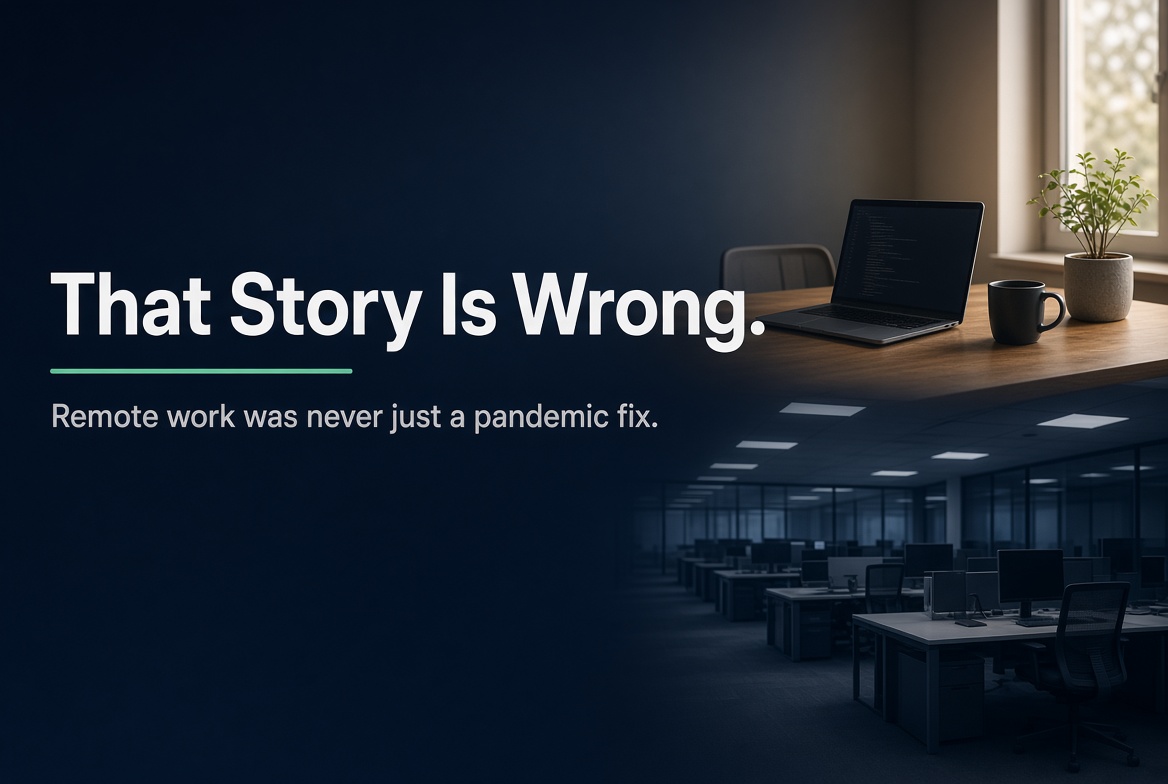 There's a story being told right now in a lot of corporate press releases and CEO memos. It goes something like this: remote work was an emergency measure we used during the pandemic, and now that the emergency is over, it's time to come back to the office.
That story is wrong. And if you're a job seeker trying to figure out where to focus your energy, it's worth understanding why.
Remote Work Has a Much Longer History Than COVID
Remote and flexible work arrangements were growing steadily for years before anyone had heard of a coronavirus. The percentage of Americans working from home at least part-time was climbing through the 2010s. Companies like Automattic, GitLab, Basecamp, and Zapier built entirely distributed teams and thrived. The technology, the workflows, and the culture were already there.
Why? Because it solved real problems that had nothing to do with a pandemic:
- Talent access. If you only hire people within commuting distance, you're fishing in a small pond. Remote work let companies hire the best person for the job, full stop.
- Disability and chronic illness. For millions of workers, commuting to an office five days a week is genuinely difficult or impossible. Remote work wasn't a perk for these folks, it was access.
- Caregiving. Parents, especially mothers, and people caring for aging relatives, built careers around flexible arrangements that didn't require them to choose between family and work.
- Geographic equity. Not everyone can afford to live in San Francisco or New York. Remote work opened up well-paying jobs to people in smaller cities and rural areas.
- Productivity and focus. Open-plan offices are notoriously bad for deep work. A lot of people simply do their best thinking outside of them.
Mandating a return to office doesn't make any of these realities disappear. It just makes them the employee's problem again.
What This Means for Your Job Search Right Now
If you're currently job hunting, the RTO wave is something you need to actively navigate, not just react to.
Be specific about what you need, early. Don't wait until you have an offer to ask about remote flexibility. Look for signals in job postings: words like "in-office," "hybrid," or "remote-first" tell you a lot about a company's culture before you apply. If the listing is vague, that's worth noting too.
Pay attention to why a company is asking for in-office work. There's a difference between a role that genuinely requires physical presence (lab work, hands-on manufacturing, client-facing retail) and a knowledge-worker role where the RTO policy exists because leadership doesn't trust their employees. One is a reasonable business need. The other is a management philosophy that might affect you in other ways.
Look at who is actually staying remote. Tech companies, startups, and companies with globally distributed teams tend to be more flexible. Older, more hierarchical organizations in finance, law, and government tend to be pushing harder for full in-office return. Neither is universally true, but it's a useful starting point.
Factor commute cost into your compensation math. If a job requires five days a week in an office, price it in. Commuting costs, whether that's gas, transit, parking, or the childcare gap that appears when you're no longer home, can easily run $5,000 to $15,000 a year. A "competitive salary" can look very different once you run those numbers.
Your Résumé Should Reflect Where You're Applying
This is practical: if you're targeting remote-first companies, it's worth signaling that you're comfortable working independently and asynchronously. Phrases like "led cross-functional collaboration across four time zones" or "managed project delivery without in-person oversight" tell a remote-friendly employer something useful about you.
On the flip side, if you're applying to companies that are actively returning to office, leaning into collaboration and in-person teamwork in your bullets can help you match their language. Tools like Past the Bots can show you exactly how well your résumé's language is landing against a specific job description, so you're not guessing.
The Bigger Picture
RTO mandates aren't inherently evil, and some roles and teams do genuinely function better with in-person time. But treating remote work as a COVID aberration that we're now correcting is a failure of institutional memory.
For job seekers, the takeaway is simple: know what you need, know why you need it, and don't apologize for it. The companies worth working for are the ones who understand that flexibility isn't a favor they're doing you. It's a tool that helps them hire and keep good people.
And there are still plenty of those companies out there. You just have to find them.