Self-Promotion Isn't Bragging — It's a Job Search Survival Skill
August 31, 2026 · 4 min read · Past the Bots
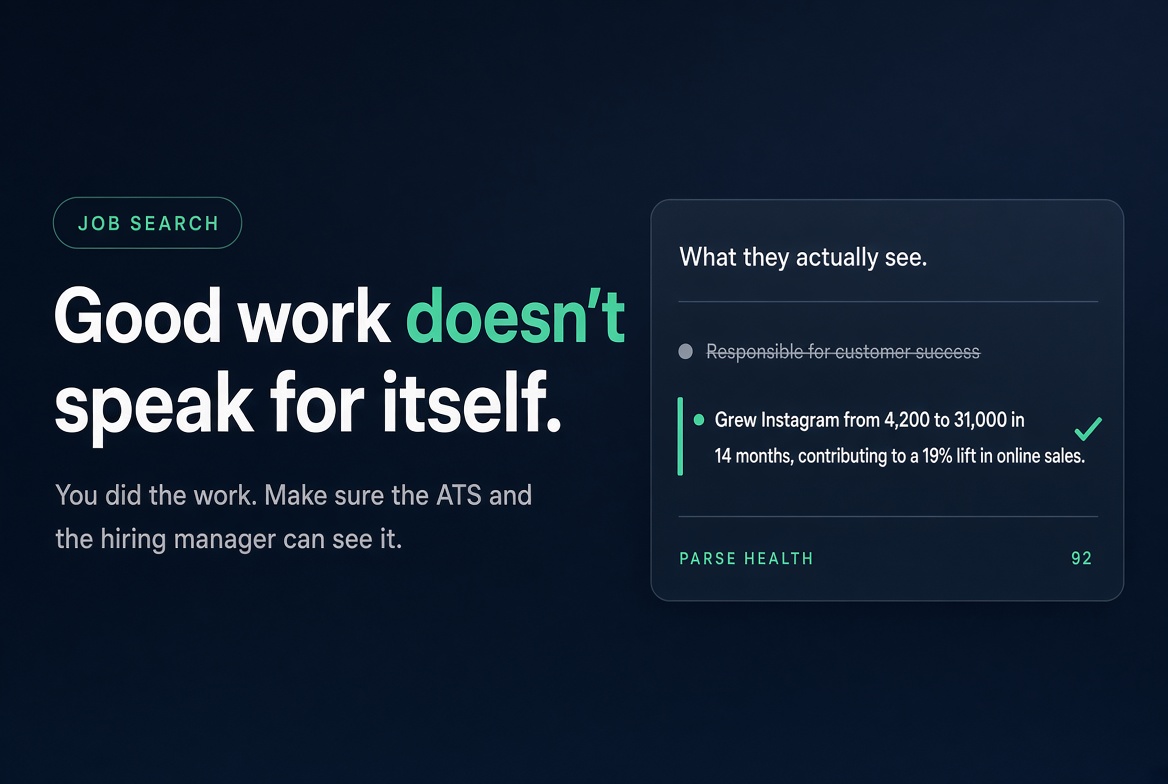 Most of us were taught that good work speaks for itself. Put your head down, do great things, and the right people will notice. It's a nice idea. It's also mostly wrong — especially in a job search.
Research consistently shows that people who actively communicate their accomplishments are seen as more competent, more promotable, and more hireable than equally skilled peers who stay quiet. The problem isn't that self-promotion is distasteful. The problem is that most people either skip it entirely or do it in a way that actually feels gross to them.
There's a middle ground, and it matters a lot when you're trying to get a new job.
Why Staying Quiet Hurts You Before You Even Get an Interview
Here's the thing about a modern job application: a human rarely sees your résumé first. An Applicant Tracking System (ATS) scans it, parses it, and scores it against the job description — often before a recruiter ever opens the file. That means your accomplishments have to survive two audiences: the bot and the hiring manager.
If your résumé is full of vague phrases like "responsible for customer success" or "helped with sales initiatives," neither audience is impressed. The ATS doesn't score soft language highly against a job description, and a recruiter skimming 200 résumés in an afternoon won't remember you.
Self-promotion on a résumé isn't about puffing yourself up. It's about being specific and honest about what you actually did.
The Résumé Version of Self-Promotion
Think about the last time you described your job to someone at a dinner party. You probably said something like, "I manage social media for a retail brand." That's fine for small talk. It's terrible for a résumé.
The self-promoting version of that same experience sounds more like: "Grew Instagram following from 4,200 to 31,000 in 14 months by launching a weekly UGC series, contributing to a 19% lift in online sales."
Same job. Completely different impact on the reader.
Here's a simple formula to turn any responsibility into an accomplishment:
- What you did (the action)
- How you did it (the method or skill)
- What happened because of it (the result, ideally with a number)
You don't need a number for every bullet. But if you can estimate one — even a rough range -- use it. "Reduced onboarding time by roughly 30%" is still far stronger than "improved the onboarding process."
You're Not Making Things Up — You're Making Things Clear
A lot of job seekers resist this kind of rewriting because it feels like exaggerating. It's not. You're not adding experience you don't have. You're translating your real experience into language that actually communicates its value.
Think of it this way: if your manager were writing a recommendation letter about your work, they would naturally describe the impact you had. They wouldn't just list your job duties. Your résumé should sound more like that letter and less like a job posting.
When you tailor your résumé to a specific job description, you're doing another layer of legitimate self-promotion: you're showing the hiring manager that your particular experience is relevant to their particular problem. That's not manipulation. That's good communication.
Self-Promotion Beyond the Résumé
Once your résumé is solid, self-promotion doesn't stop there. A few other places where advocating for yourself pays off during a job search:
- Your LinkedIn headline and summary. Don't just list your title. Say what you do and who you help. Recruiters search LinkedIn constantly, and a generic headline makes you invisible.
- Your cover letter. Pick one or two specific stories that connect your background to the role. Not a summary of your résumé — an actual reason why this job, this company, this moment.
- Recruiter outreach. If you're cold-messaging a recruiter or hiring manager, lead with something relevant and specific about your background. "I saw you're hiring for X and I've spent the last three years doing exactly that" beats "I'm very interested in opportunities at your company" every time.
- Interviews. Prepare two or three accomplishment stories you can adapt to behavioral questions. The STAR format (Situation, Task, Action, Result) gives you a clean structure that doesn't feel like bragging because it's grounded in facts.
The Bottom Line
Self-promotion in a job search isn't about pretending to be something you're not. It's about making sure the real value of your work is visible — to the ATS, to the recruiter, and to the hiring manager who's trying to figure out in 30 seconds whether you're worth a phone call.
You did the work. Make sure people can actually see it.