She Applied to 500 Jobs and Heard Nothing. Then a Facebook Meme Got Her Hired.
October 12, 2026 · 4 min read · Past the Bots
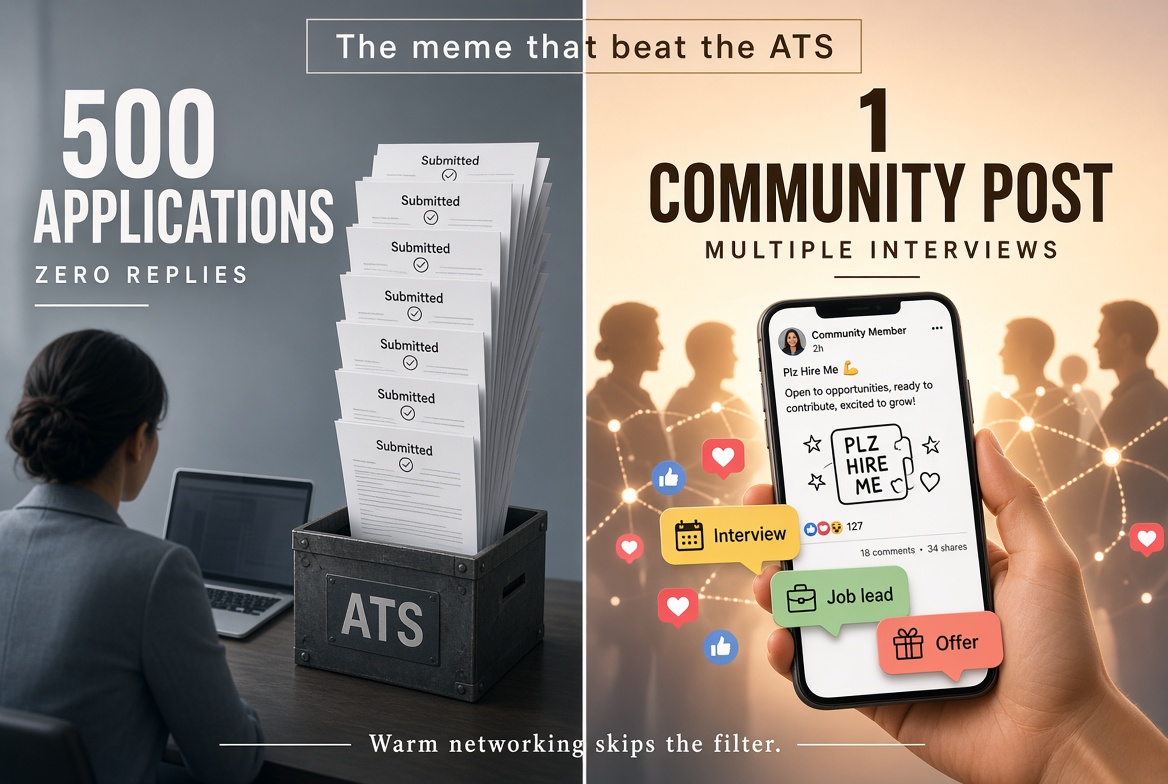 You've probably heard some version of this story by now. A Chicago-area woman spent months grinding through online applications, somewhere north of 500 of them, and got almost nothing back. No calls, no emails, barely a rejection. Then she posted a simple, self-deprecating meme in a local Facebook group for women, essentially a "hey, I'm desperate, please hire me" joke with her resume attached, and within 48 hours she had multiple interview requests and a studio manager job offer in hand.
The internet collectively lost its mind over it. And honestly? There are real lessons here, both about what she did right and about what the 500 silent applications tell us.
Why 500 Applications Went Nowhere
Before we talk about the meme magic, let's talk about the wall she hit first, because it's the same wall millions of job seekers slam into every single day.
When you apply to a job online through a company's career portal or an aggregator like Indeed, your resume almost always hits an Applicant Tracking System before a human ever sees it. ATS software parses your resume, pulls out skills and job titles and contact info, and scores you against the job description. If your resume doesn't parse cleanly or your keywords don't match, you're filtered out before anyone reads a single word you wrote.
Here's what typically goes wrong:
- Formatting issues like tables, columns, text boxes, or unusual fonts confuse parsers and scramble your information
- Missing keywords that the job description uses, even if you have the actual skill
- Misread section headers that cause the ATS to file your work history under the wrong category
- Contact info in headers or footers, which many parsers skip entirely
None of this reflects your ability to do the job. It's just a system failing to read your document correctly. After 500 applications with no traction, it's very likely something structural was working against her resume every single time she hit submit.
What the Meme Actually Did
When she posted in that Facebook group, she bypassed every single one of those filters. There was no parser. No keyword scoring. No automated rejection. A real human being, someone who already felt some sense of community connection with her, saw her post, read it, and thought "I know someone who should talk to her."
That's not luck. That's warm networking, and research has consistently shown it's responsible for somewhere between 70 and 85 percent of jobs filled. The meme was just an unusually charming delivery mechanism.
The other thing the meme did was signal her personality immediately. Studio manager roles, creative director positions, operations jobs in people-heavy environments, these often come down to "will this person mesh with our team?" A funny, self-aware post in a community space answered that question before the interview even happened.
What You Can Actually Steal From This
You don't need to go viral. You just need to borrow the underlying strategy.
1. Find your local or niche community and show up in it. Facebook groups, LinkedIn local professional groups, Slack communities, subreddits for your industry or city. Post thoughtfully. Answer questions. Let people see what you know and how you communicate.
2. Be specific about what you're looking for. Her post worked partly because it was clear. "I'm looking for X type of role in Y area" is infinitely more shareable than "open to opportunities." People can't refer you if they don't know what you need.
3. Make it easy to pass your resume along. When someone wants to refer you, the last thing you want is for your resume to get filtered out when it arrives. A clean, ATS-friendly, single-column resume without fancy formatting is what actually makes it through. Tools like Past the Bots can show you exactly how a parser reads your current resume and flag what's getting mangled, so you can fix it before you share it anywhere.
4. Match your resume to each role before applying directly. For the applications you do send through portals, run a keyword match against the job description. Figure out what terms the employer is actually scanning for and make sure your resume speaks that language, without making anything up.
5. Don't let the ATS be your only strategy. This is the big one. Online applications should be one lane, not the whole highway. Referrals, direct outreach to hiring managers, community connections, and yes, even a well-timed social media post, these routes skip the filter entirely.
The Real Takeaway
Her story went viral because it felt like a fluke. But it wasn't. She did something specific, in a specific community, with a clear and human ask, and she made it easy for people to help her.
The 500 rejections weren't about her qualifications. They were about a broken process that she finally routed around. You can do the same thing, meme optional.