Six Jobs, 25 Hours a Week: How to Land Fractional Work When the Bots Are Standing in Your Way
August 16, 2026 · 4 min read · Past the Bots
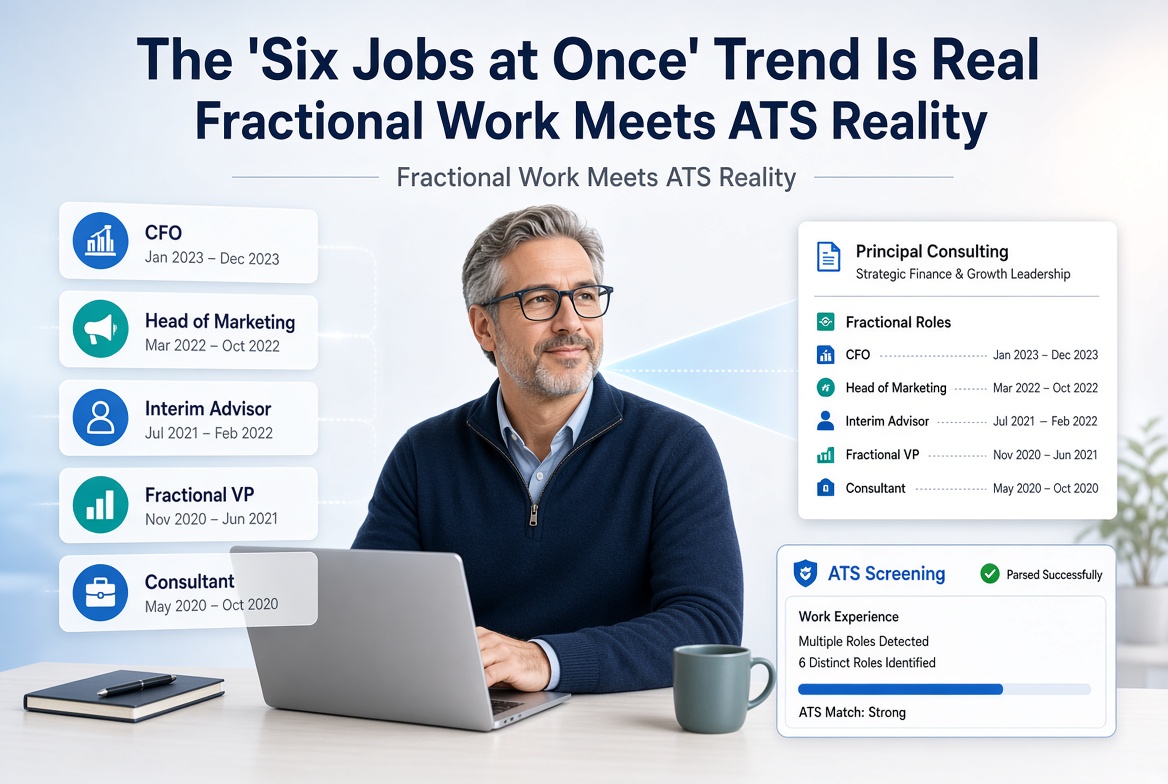
The "Six Jobs at Once" Trend Is Real
A recent MSN/Money feature profiled professionals who hold multiple fractional roles simultaneously, logging maybe 25 hours a week total while pulling in solid income. A CFO here, a head-of-marketing there, a few advisory retainers on the side. It sounds like a hustle-culture fantasy, but it's increasingly mainstream, especially for senior professionals whose expertise is genuinely valuable in four-hour-a-week slices.
The appeal is obvious: flexibility, variety, and often better total pay than a single salaried role. The problem is equally obvious if you've ever tried to explain this arrangement to an automated résumé screener.
Applicant Tracking Systems were designed for linear careers. One employer, one title, a start date, an end date. They parse your work history looking for patterns that match a job description, and "Fractional CMO | Three Clients Simultaneously | 2021-Present" does not fit neatly into those patterns.
Why Fractional Résumés Get Mangled by ATS
Here's what tends to go wrong:
- Overlapping dates confuse parsers that assume one job ends before the next begins. Some systems flag this as an error or simply drop one of the roles entirely.
- Vague company names like "Independent Consulting" or "Self-Employed" often don't match any known employer database, so the system may skip or misread the entry.
- Scattered keywords across many short engagements get diluted. You might have deep expertise in financial modeling, but if it only shows up once across six bullet points spread over multiple entries, the match score suffers.
- Non-standard titles like "Fractional VP" or "Interim Advisor" may not match the exact title in the job description, costing you points in a skill-weighted keyword match.
The result: a genuinely impressive career can scan as jumpy, underqualified, or incomplete.
How to Structure a Fractional Résumé That Parsers Can Actually Read
The good news is that small structural changes make a big difference. Here's what works:
Group your fractional roles under one umbrella entry. Instead of listing five clients as five separate jobs, create a parent entry:
Principal, [Your Name] Consulting | 2020-Present Fractional CFO and finance advisory services across SaaS, healthcare, and e-commerce clients
Then use sub-bullets to call out notable clients and accomplishments. This keeps your date range clean and your title consistent.
Front-load your most relevant skills. ATS systems read top to bottom. Put a concise skills summary or "Core Expertise" section near the top with the specific keywords that appear in the roles you're targeting. Don't make the parser dig through six client entries to find that you know GAAP reporting or Salesforce.
Mirror the language in each job description. This sounds obvious, but it's where most fractional candidates lose ground. If a posting says "revenue operations" and your résumé says "sales process improvement," many ATS tools won't connect the dots. Running a quick match before you apply reveals these gaps instantly.
Stick to a single-column layout. Multi-column résumés with sidebars are popular with designers and career changers, but most ATS parsers read left to right and top to bottom. Anything in a sidebar column often gets read out of order or missed entirely.
Where Past the Bots Actually Helps Here
If you're building or refreshing a fractional résumé, a few specific tools are worth your time.
The ATS scan will show you exactly what a parser extracts from your résumé: your name, contact info, job titles, dates, and skills. If your grouped consulting entry is being misread or your dates are flagging as overlapping, you'll see it before a recruiter does.
The skill-weighted match score is especially useful for fractional candidates because you can paste a specific job description and immediately see which of your keywords landed and which are missing. Since your expertise is spread across many roles, you might be surprised which terms aren't registering.
The AI tailoring tool can rewrite your bullets to reflect the language of a specific role without inventing anything. It works with what you've actually done and surfaces the framing that's most relevant to that particular posting.
And if your résumé currently lives in a multi-column template, the ATS-safe single-column rebuild gives you a clean version that parsers can read reliably.
The Bottom Line
Fractional work is a legitimate and growing career model. The professionals doing it well aren't working less, they're working smarter, selling targeted expertise instead of trading time for a salary. But the hiring infrastructure hasn't caught up yet.
Until it does, the workaround is simple: structure your résumé for the parser first, then let your actual experience do the talking in the interview. The goal is just to get there.