Suits, Hoodies, and the Unspoken Rules Nobody Tells You About
September 7, 2026 · 4 min read · Past the Bots
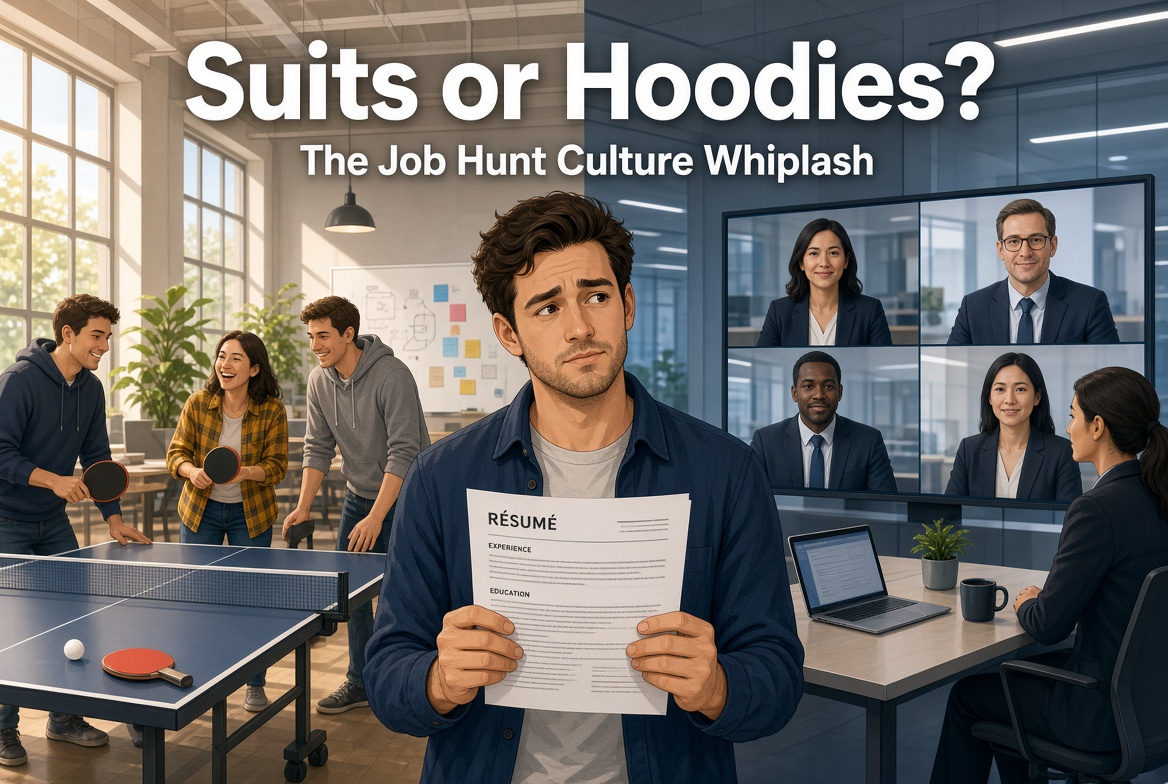 If you've job hunted recently, you've probably felt the whiplash. One company's career page is full of ping-pong tables and people in flannel. The next wants you on a video call in business casual. And somehow you're supposed to just know which is which before you show up.
A recent article from MSN Money captured this perfectly: job candidates are genuinely caught between suits and hoodies right now, and the anxiety is real. Post-pandemic work culture fractured into a dozen different norms, and companies haven't done a great job communicating which camp they're in. That leaves applicants guessing, sometimes expensively.
But here's the thing. The dress code confusion is actually a symptom of a bigger problem: companies are bad at signaling what they actually want, and job seekers are left doing archaeology.
The same thing happens with résumés. And that's where it gets fixable.
Culture Fit Starts Before the Interview
Before you ever pick out an outfit, you go through a screening process that's almost entirely invisible to you. Your résumé gets parsed by an Applicant Tracking System, scored against the job description, and often ranked before a human lays eyes on it. The vibe of a company, what they value, what language they use, is baked into that job description. Most people don't read it that carefully. They should.
A few things worth looking for in a job posting:
- The language itself. Does it say "self-starter" and "fast-paced" or "collaborative" and "sustainable pace"? That's a real signal about culture.
- What they emphasize first. Skills before credentials usually means they care more about what you can do. The reverse suggests a more traditional environment.
- What they leave out. No mention of remote or hybrid usually means they want you in office and don't want to say it yet.
These same signals tell you how to dress, how to talk, and honestly, whether you even want the job.
Your Résumé Should Speak Their Language
Once you've decoded the posting, your résumé needs to reflect it back. Not in a fake way, but in the way that any good communication works: you meet people where they are.
A startup that talks about "moving fast" and "ownership" is going to respond better to bullets about what you built and shipped than a list of responsibilities. A financial services firm that uses formal, credential-forward language in its posting probably wants to see your certifications front and center.
This is where a tool like Past the Bots earns its keep. The skill-weighted match score shows you exactly which keywords from a job description appear in your résumé and which are missing. That gap list isn't just about beating the ATS, it's a cheat sheet for understanding what the company actually cares about.
The AI tailoring feature takes it a step further by rewriting your bullets to match the job's language and priorities, without inventing experience you don't have. Think of it as translation: you did the work, it just helps you describe it in terms the employer is already listening for.
The "Audit the Bots" Problem Is the Same as the Dress Code Problem
Here's the parallel that struck me reading the MSN piece. Job seekers feel like they're supposed to intuit norms that companies haven't clearly stated. Whether it's "is this a hoodie company or a blazer company" or "am I supposed to have AWS on my résumé or not," the information asymmetry is exhausting.
The Audit the Bots feature on Past the Bots is designed to close exactly that gap for résumés. It shows you what different parsers actually extract from your document: your name, contact info, skills, section headers. You can see where the machine gets confused, where it misreads a column layout, where it drops your skills entirely. That's information you'd otherwise never have access to.
Same energy as finally asking the recruiter "is this a jeans-and-sneakers office or not" instead of guessing. You're just getting the answer before it's too late.
What You Can Actually Do Right Now
- Read job descriptions like a cultural document, not just a checklist. The words they choose matter.
- Check LinkedIn and Glassdoor photos to see how employees actually dress and talk about the company.
- Run your résumé through a match scan against the job description before you apply. The gaps will surprise you.
- Tailor your language to match the company's tone, formal or casual, without changing who you are.
- Ask in the interview. "How would you describe the culture here?" is not a weird question. It shows self-awareness.
The post-pandemic job market is genuinely messier to navigate than it was five years ago. But most of that mess comes down to information gaps. Close the gaps where you can, and you'll spend a lot less time showing up in the wrong outfit, literal or metaphorical.