The Great Job Rethink Is Here: What to Do If You're Finally Ready to Leave
July 24, 2026 · 4 min read · Past the Bots
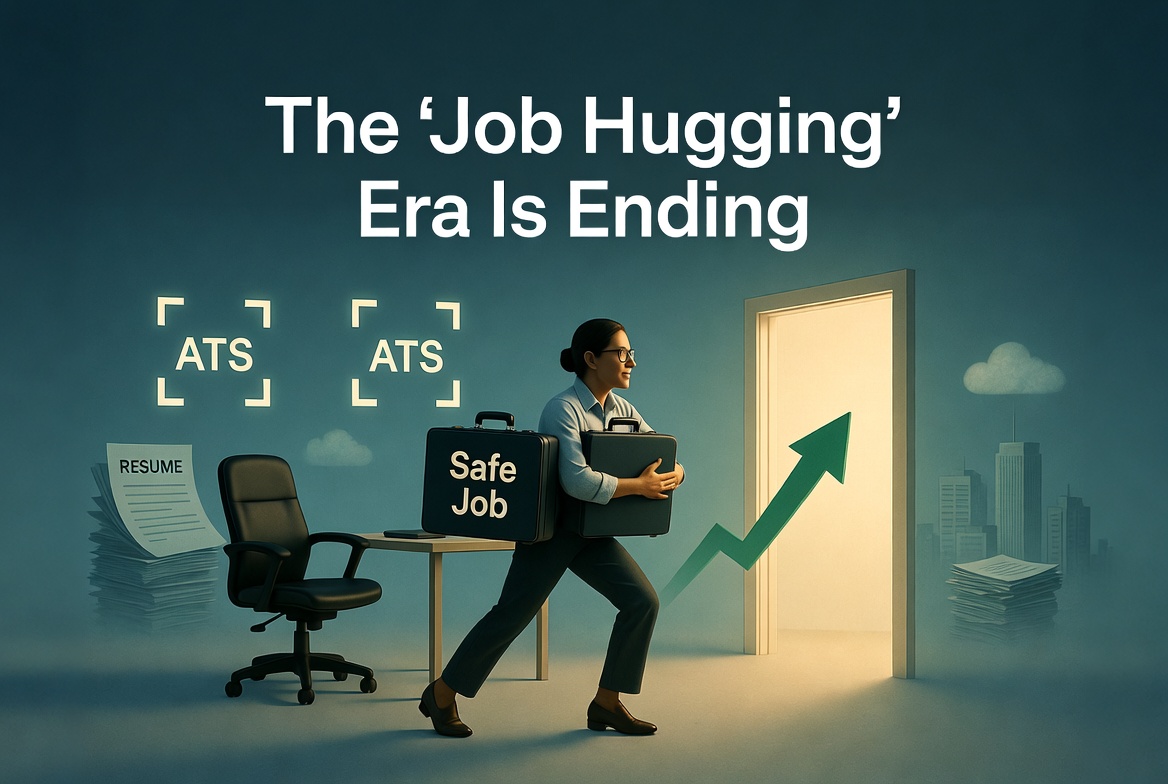
The 'Job Hugging' Era Is Ending
For the past couple of years, a lot of workers did something pretty rational: they held on tight to the jobs they had. Economic uncertainty, layoff headlines, and a cooling hiring market made staying put feel like the smart play. Researchers even gave it a name -- job hugging.
But that's starting to crack. A recent report found that roughly half of employees are now actively looking to leave their current roles. Pent-up frustration, stalled salaries, and the slow return of hiring activity are pushing people back into the market -- sometimes for the first time in two or three years.
If you're in that group, welcome back. The job market has missed you. But it has also changed, and your résumé probably hasn't kept up.
Why Coming Back to the Market Feels So Hard
There's a specific kind of anxiety that comes with re-entering the job search after a long gap. Your résumé is sitting there from 2021 or 2022, your LinkedIn hasn't been touched, and you're not totally sure how to pitch yourself for roles that have evolved since you last applied.
Layer on top of that the reality that most large employers now use Applicant Tracking Systems (ATS) to screen résumés before a human ever sees them. If your file doesn't parse correctly, or your skills don't match the keywords in the job description, you're invisible -- regardless of how qualified you actually are.
That's the frustrating part. You might be a genuinely strong candidate who gets filtered out because your résumé uses a two-column layout, buries your skills in a graphic, or simply doesn't use the same language the job posting does.
The First Thing to Do: Find Out What the Bots Actually See
Before you send a single application, it's worth understanding how an ATS reads your résumé right now. Not how it looks to a human -- how a parser actually extracts your name, contact info, job titles, dates, and skills.
This is exactly what the Audit the Bots tool on Past the Bots is built for. You upload your résumé and it shows you what different parsers pull out -- and where they get confused. A surprising number of résumés have issues like:
- Contact info that doesn't extract correctly (especially with certain header designs)
- Job titles that get scrambled because of unconventional formatting
- Skills that are present in the document but completely missed by the parser
Seeing this in black and white is genuinely useful. It turns a vague worry ("I don't know if my résumé is working") into a specific fix list.
Match Your Résumé to the Job, Not Just in General
One of the biggest mistakes returning job seekers make is sending a generic résumé to every application. ATS systems score your résumé against the specific keywords and requirements in each job description. A strong general résumé can still score poorly for a specific role.
Past the Bots has a skill-weighted match score that takes your résumé and a job description you paste in, then shows you exactly which skills matched, which are missing, and whether there are any knockout gaps -- requirements so fundamental that missing them likely means an automatic rejection.
This doesn't mean stuffing keywords in randomly. It means looking at the gaps and asking honestly: do I actually have this skill but just didn't mention it? If yes, add it. If no, is this role actually a fit?
Rewrite Your Bullets Without Making Stuff Up
If you've spent two or three years job hugging, you've probably done meaningful work -- you just might not have documented it in a way that translates to a new employer. Vague bullets like "responsible for managing projects" don't do you any favors.
The AI tailoring feature in Past the Bots can help you rewrite your experience bullets to be more relevant to a specific job description. Critically, it works with what you actually did -- it won't fabricate experience or invent metrics you don't have. It helps you say what's true more clearly and in language that resonates with the role.
A Practical Starting Point
If you're ready to start your search, here's a simple first sequence:
- Run your current résumé through the ATS scan to find any critical formatting or parsing issues
- Pick a target role and run the match score to see your keyword gaps
- Fix the gaps you legitimately can, using the AI tailoring to tighten your bullets
- Export a clean, ATS-safe version as a .docx that you can submit with confidence
The hiring market is opening back up. If you've been holding on out of caution, it might finally be time to see what's out there -- but go in with a résumé that's actually ready to be seen.