The Hidden Cost of the Remote Job Search (And How to Not Go It Alone)
August 12, 2026 · 4 min read · Past the Bots
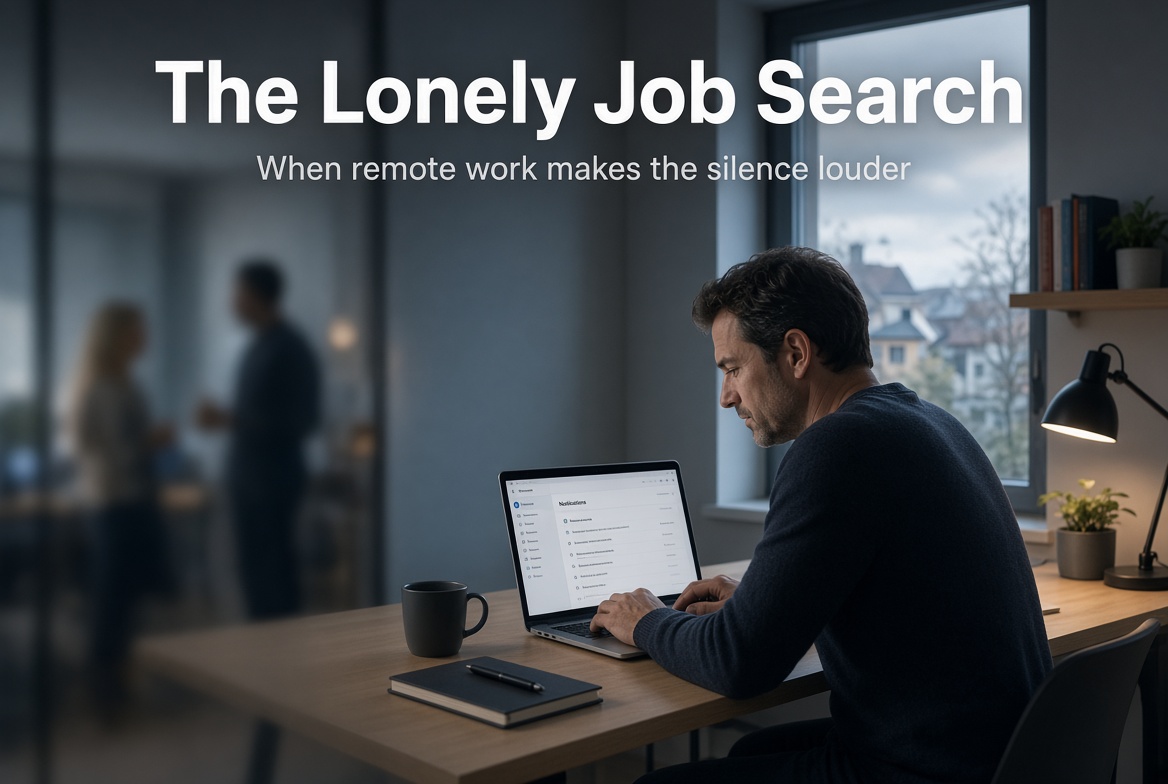 A recent report highlighted something a lot of people feel but rarely say out loud: working from home has triggered a surge in loneliness, particularly among men. Isolation at home means fewer casual hallway conversations, fewer spontaneous lunches, fewer moments where someone just... notices you. And when you layer a job search on top of that? The silence gets louder.
If you're currently job hunting while working remotely (or searching while unemployed and home alone), this one's for you.
Loneliness Makes a Hard Process Harder
Job searching is already emotionally brutal. You send applications into the void, you wait, you hear nothing, you refresh your inbox, you wonder if something is wrong with your résumé. When you're isolated, there's no coworker to commiserate with, no friend nearby to say "hey, that company ghosted me too, it's not you."
The research points to remote men specifically losing the weak-tie relationships that used to happen naturally at the office. Those weak ties matter because they're often how people actually find jobs. A former colleague mentions an opening. A guy from your old team recommends you to his new manager. That stuff doesn't happen when you've been working from your spare bedroom for two years.
So what do you do?
Build Your Visible Professional Presence
The antidote to weak-tie isolation is intentional visibility. That means:
- LinkedIn activity: Comment on posts in your field. Not generic "great post!" comments. Actual takes. People remember thoughtful commenters.
- Community involvement: Industry Slack groups, Discord servers, subreddits. Show up consistently.
- Informational interviews: Ask for 20 minutes with someone doing work you admire. Most people say yes.
- A profile that does work for you: A well-optimized talent profile means recruiters can find you even when you're not actively applying.
Past the Bots has a "Get Found" talent profile feature for exactly this reason. It's not just about optimizing the résumé you send out -- it's about making sure the right people can discover you when you're not in the room.
Don't Let Your Résumé Be the Reason You're Stuck
Here's the frustrating truth about the remote job market: it's more competitive than ever, which means more companies are relying on Applicant Tracking Systems to filter applicants before a human ever sees them. If your résumé isn't formatted and keyword-matched correctly, it's getting filtered out before anyone even has the chance to be impressed by you.
When you're already feeling invisible, getting silently rejected by a bot is demoralizing in a specific way. You don't even know it happened.
That's the problem Past the Bots was built to solve. The ATS scan shows you exactly what a system extracts from your résumé: your name, contact info, skills, section headers. You can see the critical errors, the warnings, the things that are fine. No guessing.
The skill-match tool lets you paste in a job description and see:
- Which of your skills match what the employer wants
- Which keywords are missing from your résumé
- Whether there are any knockout gaps that could automatically disqualify you
And if your résumé needs to be rewritten to better fit a role, the AI tailoring tool rewrites your bullets to align with the job description without making anything up. Your real experience, framed better.
The Practical Checklist for a Lonely Job Search
If you're in the thick of it right now, here's a concrete action plan:
- Audit your résumé this week. Run it through an ATS checker and fix the critical issues first. A clean, single-column format is almost always safer than a visually complex template.
- Apply smarter, not more. Tailor each application to the specific job description. Ten targeted applications beat fifty generic ones.
- Pick one community and show up. One LinkedIn group, one Slack, one subreddit. Consistency beats volume here too.
- Reach out to two people this week. Former colleagues, people you admire in your field, alumni connections. Not asking for jobs -- just reconnecting.
- Track your applications. Knowing what you've sent and where things stand reduces the mental fog and the feeling of applications disappearing into nowhere.
You're Not Invisible
The loneliness that comes with remote work and job searching can make you feel like you've fallen off the map. But a lot of what feels like rejection is actually just poor signal -- your résumé getting filtered before anyone reads it, your profile not optimized for search, your network going cold from neglect rather than disinterest.
Fix the technical stuff. Do the human stuff. They work together.
You're not the problem. You just need the right tools and a few real connections to get back in the game.