The Job Description Was Written for You, the Interview Went Great, and You Still Didn't Get It
September 12, 2026 · 4 min read · Past the Bots
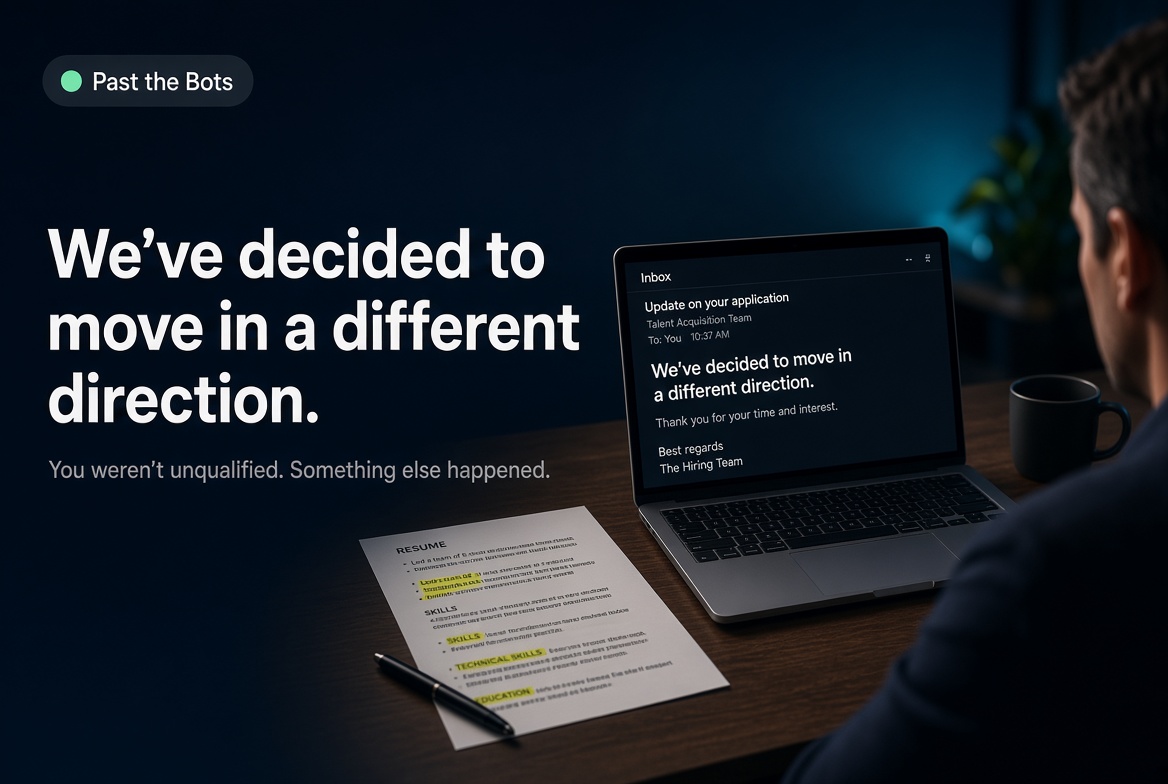 You saw the posting and thought, finally. Every bullet point in the job description matched something you've actually done. You customized your résumé, the phone screen went well, the final interview felt like a conversation between future colleagues. Then three days later: "We've decided to move in a different direction."
That stings in a specific, disorienting way. Because you weren't rejected for being unqualified. Something else happened.
Here are the most common culprits, and what you can actually do about them.
Your résumé never made it to a human in the first place
This one is brutal because the whole experience feels like it happened in order: apply, interview, reject. But the timeline is messier than that. Many companies collect applications for days or weeks before a recruiter starts reviewing them. If your résumé was hard for the ATS to parse, it may have been ranked low or flagged before anyone read it, even if you eventually got an interview through a referral or a recruiter outreach.
That matters because résumé scores in the ATS can follow your application all the way through the process and influence how seriously your candidacy is taken.
What to check: Run your résumé through an ATS scan before your next application. Tools like Past the Bots show you exactly what a parser extracts, including whether your job titles, skills, and contact info are being read correctly or garbled. A résumé that looks great in PDF can be a mess inside an ATS.
Your keywords matched the posting but not the internal language
Job postings are often written by HR or a hiring manager working from a template. The actual team may use completely different terminology. You said "revenue operations," they think in terms of "pipeline management." You wrote "agile methodology," the engineering team calls it "scrum."
This isn't about stuffing your résumé with synonyms. It's about doing a little research before you apply.
What helps:
- Look at LinkedIn profiles of people already in that role at that company. What language do they use?
- Check the company's blog, product pages, or job postings for adjacent roles.
- In interviews, mirror the language the interviewer uses, and note any terms that feel specific to their culture.
You were the backup candidate the whole time
Sometimes a role is posted even though there's already an internal candidate or a strong referral in the pipeline. You got the interview because they're required to interview a certain number of people, or because they wanted a comparison point. This is frustrating and not entirely fair, but it happens constantly.
You usually can't know this in advance. What you can control is making your candidacy so clear and compelling that passing on you feels like a real loss, not a formality.
Your "great" interview and their "great" interview weren't the same thing
Interviews that feel like great conversations don't always score well on internal rubrics. A lot of companies use structured scoring, meaning each interviewer rates you on specific competencies after the fact. If you had a warm, friendly chat but didn't explicitly hit the examples they were listening for, your scorecard might look thin even if you left feeling confident.
A simple fix: Use the STAR format (Situation, Task, Action, Result) deliberately, not because it sounds impressive, but because it makes your examples easy to score. Interviewers filling out a rubric need a clear outcome to check a box.
Also, send a follow-up note that isn't just "thanks for your time." Briefly reinforce one specific thing from the conversation that connects your experience to their actual problem. It takes five minutes and most candidates don't do it.
The offer went sideways at the end
Sometimes you got the job internally and something broke down in negotiation, background check, or reference calls. If you made a counter-offer and then heard nothing, that's worth noting. If a reference was lukewarm when you expected them to be enthusiastic, that's a real factor. Always brief your references before you give their names.
The honest answer: you may never know
Companies rarely tell you the real reason. They give you the "we went with someone whose background more closely aligned" line regardless of what actually happened. That's not cruelty, it's legal caution.
What you can do is audit the parts of your candidacy that you can see: your résumé's ATS readability, how well your skills actually map to the job description, and whether your interview answers are specific enough to score well on a rubric.
The job description being written for you is a great sign. It's just not the finish line.