The Rejection Letter That Could Change Everything (For Candidates and Recruiters)
July 30, 2026 · 4 min read · Past the Bots
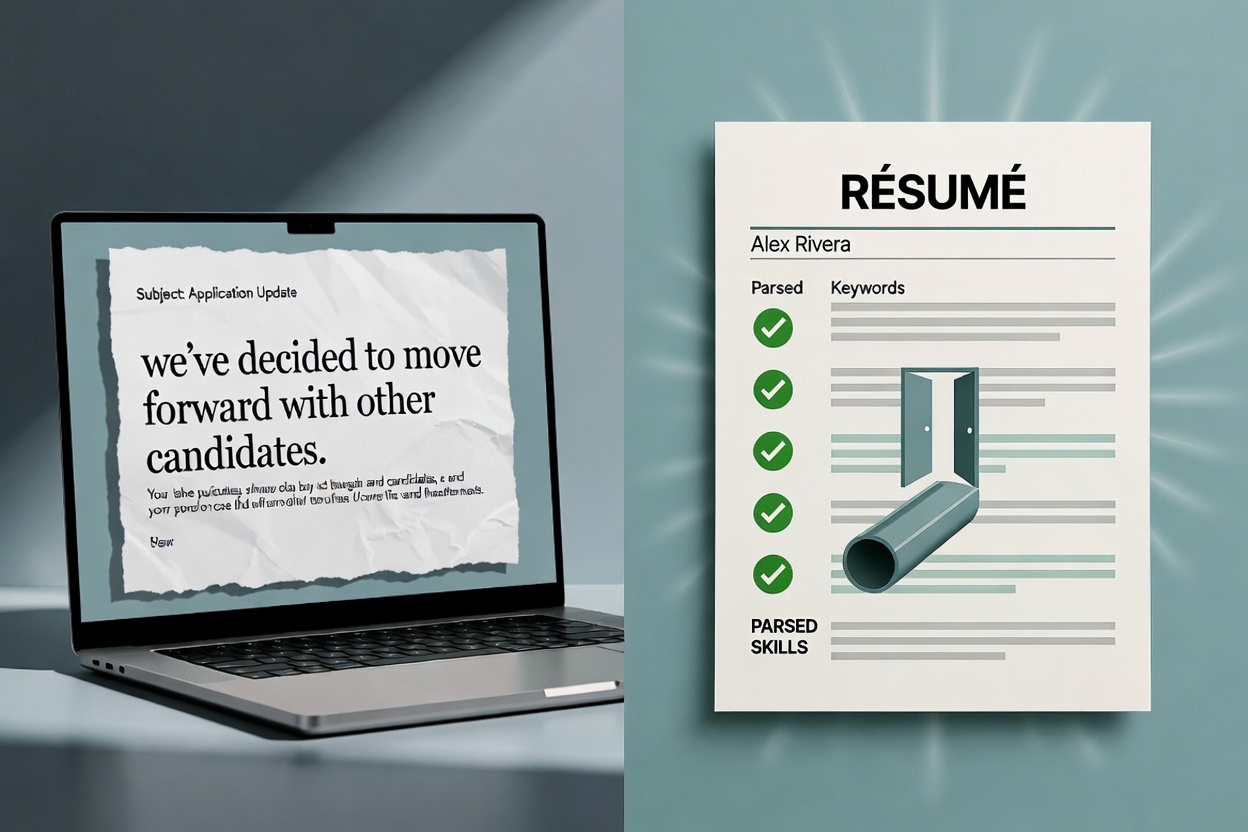 Nobody likes getting a rejection letter. You spend hours tailoring your résumé, you hit submit, and then weeks later you get a politely worded "we've decided to move forward with other candidates" email that tells you absolutely nothing useful.
But here's a shift worth paying attention to: some companies are starting to rethink how they handle rejections. A growing number of talent teams recognize that a candidate who wasn't right for this role might be perfect for the next one. A well-handled rejection, one that's respectful and maybe even constructive, can keep that door open and build genuine goodwill.
That's good news for job seekers. But it comes with a catch.
Being "Kept on File" Only Matters If Your Résumé Is Actually Ready
When a recruiter says they'll keep your information for future opportunities, they mean it more often than you might think. Talent teams build pipelines. They tag strong candidates in their ATS. They come back around when a new role opens up.
The problem? Your résumé goes back into that system exactly as it was submitted. If it had parsing problems the first time, it still has them. If your skills section wasn't reading correctly, the ATS still isn't seeing what you actually bring to the table.
This is where a lot of job seekers leave real opportunity on the table. They take the rejection, maybe feel discouraged, and move on without ever fixing the underlying issues that may have filtered them out before a human even looked at the file.
What's Actually Happening When You Get Rejected
Before your résumé reaches a recruiter's eyes, it usually passes through an Applicant Tracking System that parses it into structured data. The ATS extracts your name, contact info, work history, skills, and education, then scores or filters you based on what it finds.
If the formatting is off, if you used a two-column layout, a header with your contact info in a text box, or a creative font, the parser can misread or completely skip entire sections. A strong candidate can look like a weak match purely because of a structural issue.
The Audit the Bots tool on Past the Bots shows you exactly how different parsers read your résumé. You can see what gets extracted correctly and what gets garbled or missed entirely. It's a pretty eye-opening thing to look at the first time.
Turning a Rejection Into a Rebound Strategy
If you've recently been rejected for a role you were genuinely qualified for, here's a concrete way to use that as a starting point:
- Run your résumé through an ATS scan. Past the Bots flags critical issues (things that break parsing), warnings (things that hurt your score), and items that are fine. You want to know which category your résumé falls into before you apply anywhere else.
- Check your match score against the job description. Paste the job posting into the skill-match tool and see what keywords you hit, what you missed, and whether there are any knockout gaps. Sometimes a rejection isn't about qualifications at all, it's about vocabulary. You may have the skill but not the exact phrasing the ATS is scanning for.
- Rewrite your bullets with the job in mind. The AI tailoring feature rewrites your experience to better reflect the language of a specific role without fabricating anything. It surfaces what you actually did in terms the ATS and the hiring manager are looking for.
- Rebuild in an ATS-safe format. If your current résumé has formatting issues, the single-column rebuild tool creates a clean, parser-friendly version you can export as a .docx and use going forward.
For Recruiters: The Rejection Is Part of the Relationship
If you're on the hiring side, this is worth sitting with. The way you reject someone shapes whether they'll apply again, refer friends, or speak well of your company. A form letter with zero information is a missed chance.
Consider pairing a more thoughtful rejection process with better tooling on your end. When candidates come back around, or when you're sourcing for a new role, having clear data on what those past applicants actually looked like, skills, experience, match gaps, makes it easier to reconnect with the right people quickly.
The Bottom Line
Rejections sting. But the candidates who bounce back fastest are the ones who treat a no as diagnostic information rather than a final verdict. Fix the résumé, close the keyword gaps, and make sure the next time your file lands in an ATS, it actually represents what you can do.
The door might already be cracked open. Make sure you're ready when someone pushes it wider.