The Workforce Is Changing at the Top — Here's What That Means for Your Job Search
July 28, 2026 · 4 min read · Past the Bots
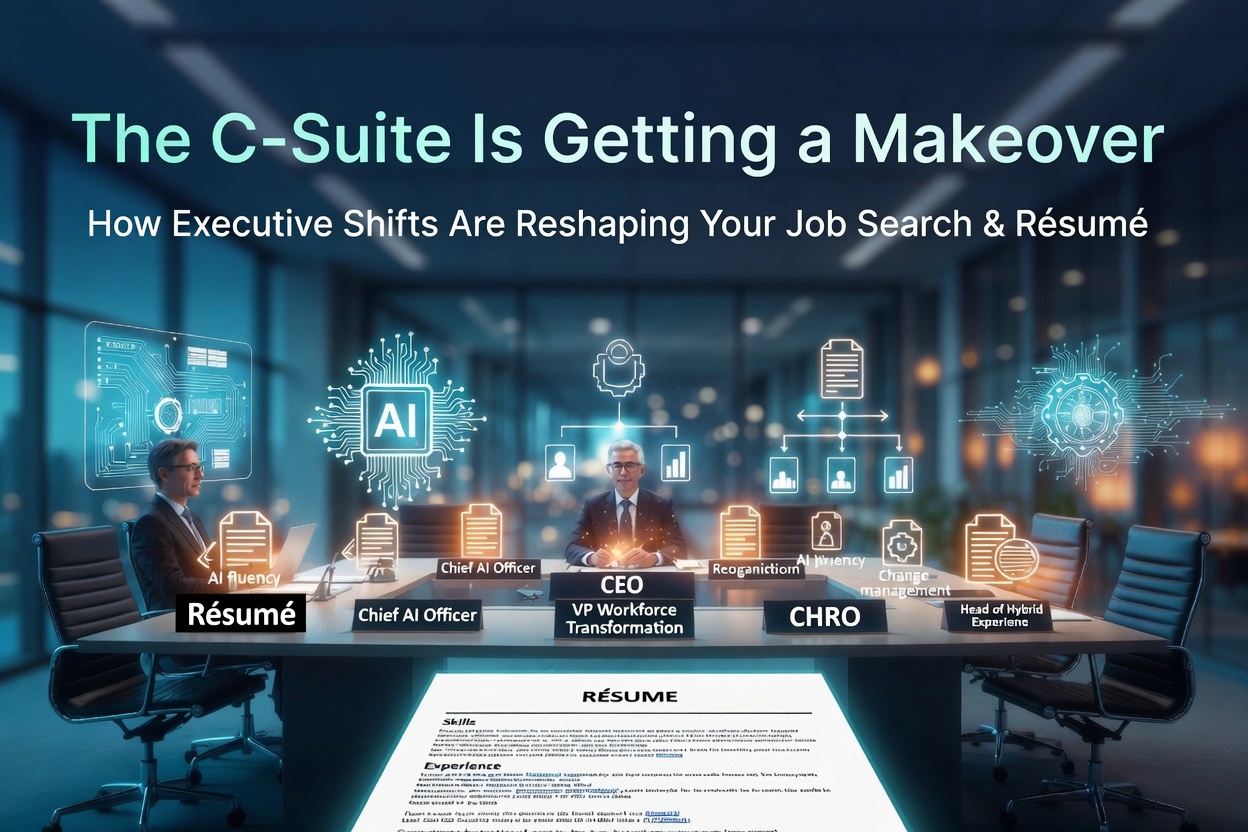
The C-Suite Is Getting a Makeover
A recent wave of reporting highlights something worth paying attention to: companies are expanding and reshuffling executive roles in response to major shifts in how work actually gets done. We're talking about new titles around workforce strategy, AI integration, hybrid operations, and organizational design landing at the VP and C-suite level.
That's not just interesting business news. It's a signal that ripples all the way down to how job descriptions are written, what skills hiring managers are prioritizing, and ultimately, what your résumé needs to say to get through the door.
Why Executive Reshuffling Affects Everyone's Job Search
When companies create a new Chief AI Officer, a VP of Workforce Transformation, or a Head of Hybrid Experience, they're not just filling a seat at the top. They're signaling a strategic priority. And that priority almost always flows downstream into hiring at every level.
Here's how that plays out practically:
- New titles mean new keywords. If your company just hired a Chief People and AI Officer, every job description underneath that function will start reflecting that leader's language and priorities. If your résumé still uses older terminology, an ATS may not connect the dots.
- Skill expectations shift faster than job seekers realize. "Change management" used to be a nice-to-have. In a workforce-transformation moment, it becomes a core requirement. Same with things like "AI fluency," "distributed team leadership," or "workforce planning."
- Organizational redesigns create new openings. When the structure at the top changes, middle layers get restructured too. That means more job postings, often with evolving and sometimes inconsistent language.
The catch? Applicant Tracking Systems are scanning for exact or near-exact matches against those new, evolving job descriptions. If your résumé was great two years ago but hasn't been refreshed, you might be getting filtered out before a human ever reads it.
What This Means for Your Résumé Right Now
This is exactly the kind of moment where a quick résumé audit pays off. Not a vague "review" where you read it over and feel okay about it, but an actual structured check against what an ATS is extracting and what a specific job description is asking for.
A few things to look at:
Are your skills section and bullet points using current language? If a job description says "workforce strategy" and your résumé says "staffing planning," those may mean the same thing to you and a hiring manager, but an ATS often won't bridge that gap. Running a skill-match check against the actual job description you're applying for will surface those gaps fast.
Are your section headers ATS-readable? Creative headers like "Where I've Been" or "My Toolkit" are charming but invisible to most parsers. Stick with standard labels: Work Experience, Skills, Education. Past the Bots' résumé scan shows you exactly what an ATS is extracting from your document, including whether it's reading your sections correctly at all.
Does your résumé reflect the strategic level of work you've done? If your company went through a restructure or transformation and you played a role in it, that experience is genuinely valuable right now. Make sure your bullets say so explicitly. "Supported team through organizational change" is vague. "Managed communication and onboarding for a 40-person team during a division merger" is concrete and keyword-rich.
Don't Just Update -- Tailor
The bigger mistake job seekers make during periods of industry change is doing one big résumé refresh and then sending the same document to every job. That worked less well even before ATS became standard. Now it's a real liability.
Each job description you apply to is essentially a map of what that company's ATS is scanning for. Reading it carefully, then adjusting your résumé's language to reflect those priorities, is the single highest-leverage thing you can do.
If that sounds tedious, tools like Past the Bots can speed up the process considerably. Paste in a job description, get a match score, see exactly which keywords are present and which are missing, and use the AI tailoring feature to rewrite bullets that better reflect the role without inventing anything.
The Bottom Line
The workforce is being redesigned from the top down, and that redesign changes what hiring managers are looking for and what language shows up in job postings. Your résumé doesn't need to predict every trend. But it does need to be specific, current, and readable by the systems that sit between you and an actual interview.
Take the time to audit it against the jobs you actually want. The companies are evolving. Your application materials should too.