There Are No Company Men Left. Your Résumé Should Reflect That.
October 22, 2026 · 4 min read · Past the Bots
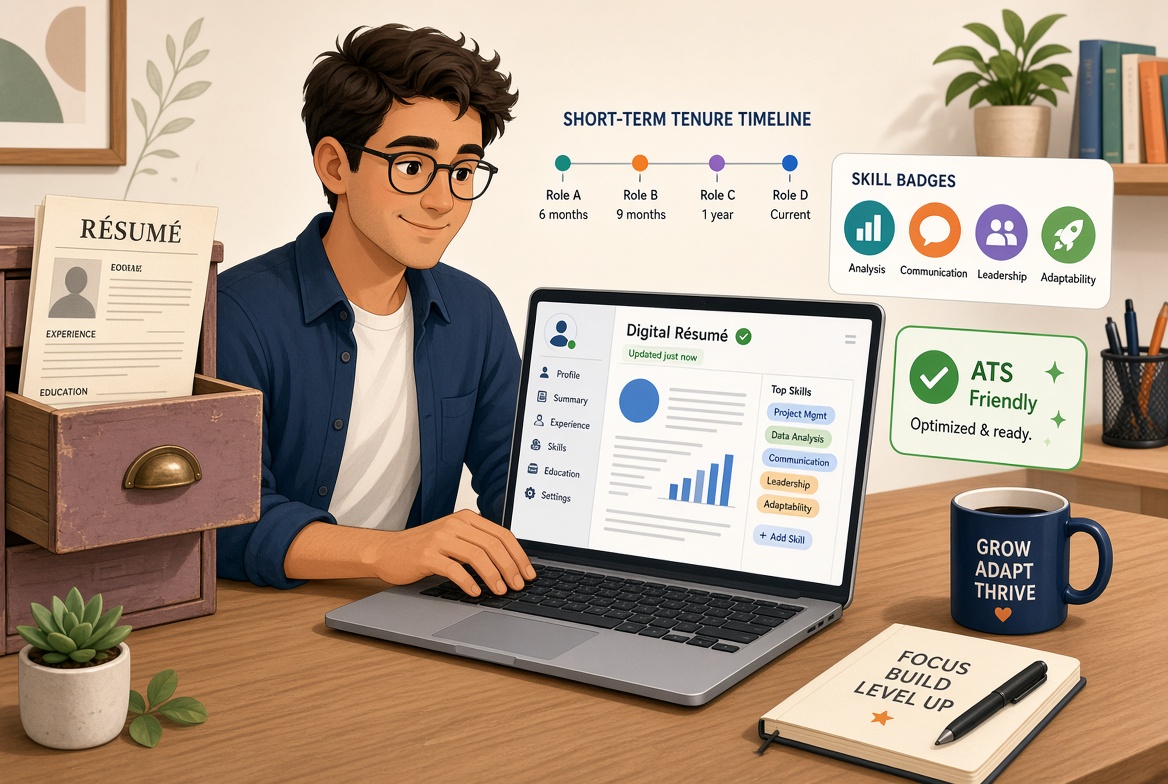 Your grandfather probably retired from the same company he started at in his twenties. Maybe your parents did too. That world is gone.
The average worker today stays at a job for about 4.1 years, according to Bureau of Labor Statistics data. For workers under 35, it's closer to 2 to 3 years. Layoffs, acquisitions, pivots, and burnout happen to careful, dedicated people at good companies. The job market doesn't care how loyal you are.
What that means practically: you are always, at some level, a job seeker. Not necessarily actively looking, but never more than a few months away from needing to be.
And yet most people treat their résumé like a document they dig out of a drawer in a panic when something goes wrong.
The "I'll Update It Later" Trap
Here's how it usually goes. You start a new role, you're busy, you tell yourself you'll update your résumé once you've accomplished something worth adding. Then a year passes. Then two. Then you're in a layoff meeting or you get a recruiter message about a genuinely exciting opportunity, and you're staring at a résumé that still lists responsibilities from a job you barely remember.
The problem isn't just that it's outdated. It's that you've lost the details. You can't remember the exact numbers from that project. You don't recall which tools you used in which role. The wins that seemed obvious at the time have blurred together.
Updating a résumé from memory, under pressure, is one of the worst ways to do it. You leave out things that would have made a real difference.
ATS Changed the Game Too
Beyond the content problem, there's a format problem. Applicant Tracking Systems, the software that screens résumés before a human ever sees them, have become standard at companies of almost every size. And they're not forgiving.
A résumé that got you interviews five years ago might not even make it into a recruiter's queue today. Fancy formatting, tables, headers in text boxes, skills buried in graphics: all of it can cause a parser to misread or skip your information entirely.
The job market has changed. The screening process has changed. Your résumé needs to keep up with both.
What a Modern Résumé Maintenance Habit Looks Like
Instead of the panic-rewrite approach, think about résumé maintenance the way you'd think about any other professional habit. Small, regular updates are dramatically easier than one massive overhaul.
A few things that actually work:
- After finishing a project, jot down what you did, what tools you used, and any measurable outcome. Even rough notes are valuable.
- When you learn a new skill or get certified, add it immediately. Skills sections go stale fast, especially in technical fields.
- Once or twice a year, run your current résumé through an ATS check. Formatting problems creep in, especially if you've edited a file across different programs or devices.
- When you see a job you'd genuinely want, even if you're not ready to apply, paste the description into a match tool and see where the gaps are. It's useful market intelligence.
Past the Bots is built for exactly this kind of ongoing maintenance. You can audit how different parsers read your résumé, see a clear breakdown of what an ATS actually extracts from it, and get a skill-weighted match score against any job description you're curious about. It's not just a one-time fix before an application, it's something you can come back to at every stage.
The Lifecycle Nobody Talks About
A career has phases, and your résumé strategy should match where you are:
- Settled in a role: Maintain your résumé, track wins, keep your skills section current.
- Passively open: Run occasional ATS audits, check your match against roles you'd consider, keep a talent profile updated so recruiters can find you.
- Actively searching: Tailor for each application, check your match score, tighten your bullets, generate a cover letter that speaks to the specific role.
- Between jobs: Move fast. Your résumé needs to be ATS-clean and ready to customize quickly.
Most résumé tools are built only for that third phase. The reality is that the other phases matter just as much.
You Are Your Own Career Manager Now
There's no HR department quietly building your career path for you. No company loyalty program that rewards you for staying. The career infrastructure that used to exist for workers has largely been dismantled.
That's not doom and gloom, it's just the situation. And the people who navigate it best are the ones who stay ready, not the ones who scramble.
Keep your résumé current. Know how it reads to a machine. Know how your skills match the market. Do it before you need to.