What Job Seekers Can Learn From How Great Employers Think About Fit
July 24, 2026 · 4 min read · Past the Bots
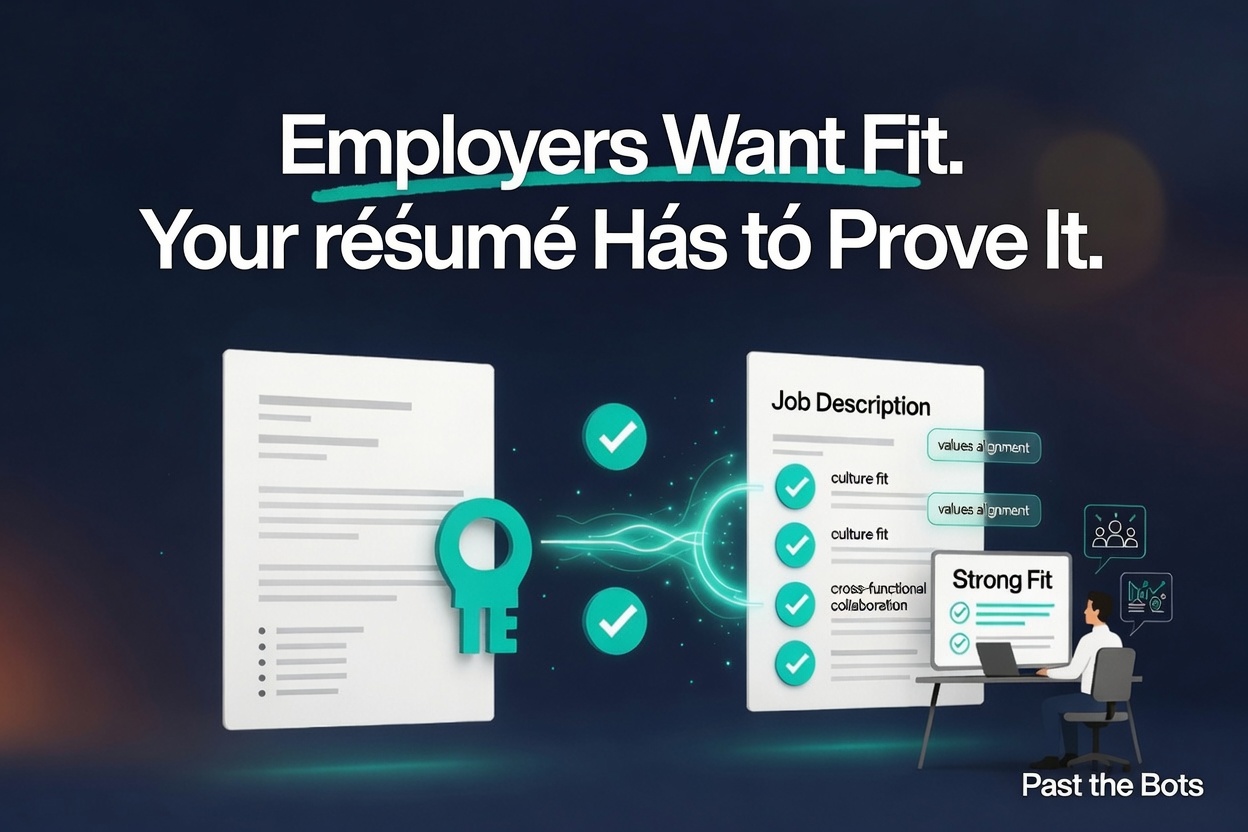 There's a quiet shift happening in hiring right now. More employers are realizing that filling a seat isn't the same as making a great hire. A recent piece from MSN highlights three strategies companies are using to attract employees who will genuinely love their jobs, things like being transparent about company culture, hiring for values alignment, and communicating what makes the role meaningful.
That's useful reading for HR teams. But there's a flip side here that job seekers should pay attention to: if employers are screening harder for genuine fit, you need to show up as a genuinely fitting candidate. That means your résumé can't just be a generic list of responsibilities. It needs to signal the right things to the right employer, and it needs to survive the automated screening layer that stands between you and a human reader.
Let's break down what this mindset shift means for your job search.
Employers Want Fit. Your Résumé Has to Prove It.
When a company says they want someone who aligns with their values or will thrive in their culture, they're not just being idealistic. They're telling you exactly what to put in your résumé and cover letter.
The problem is most people write one résumé and send it everywhere. That approach fails on two fronts:
- It doesn't pass ATS screening. Applicant Tracking Systems score your résumé against the job description. If your wording doesn't match, you get filtered out before anyone reads your application.
- It doesn't communicate fit. Even if you do get through, a generic résumé doesn't show a hiring manager why this role at this company makes sense for you.
The fix is tailoring, but tailoring that's specific and honest, not just stuffing keywords in.
Read the Job Description Like a Translator
A well-written job posting is basically a company telling you what they care about. Your job is to translate your real experience into their language.
Here's a simple process:
- Paste the job description somewhere you can study it. Look for repeated words, the skills in the requirements section, and any language about culture or values.
- Identify the must-haves vs. the nice-to-haves. Some skills are knockout criteria. If you're missing them, you need to know before you apply.
- Find the overlap with your actual experience. Don't invent anything. Just surface what's genuinely relevant.
- Rewrite your bullets in the employer's language. If they say "cross-functional collaboration" and you've been writing "worked with other teams," update the phrasing.
Past the Bots has a skill-weighted match score tool that does a lot of this work automatically. You paste in a job description, and it shows you which keywords you're hitting, which ones are missing, and which gaps are likely knockout criteria. That last part is especially useful because it tells you whether to tailor harder or move on to a better-fit role.
Tailoring Doesn't Mean Making Things Up
One thing worth saying clearly: tailoring your résumé does not mean fabricating experience. It means presenting your real experience in a way that's relevant to the specific role.
For example, if a job emphasizes "customer retention" and your background is in customer success, you probably have relevant experience. But if your bullets say "managed client relationships," an ATS might not connect those dots. Rewriting that bullet to mention retention metrics, renewal rates, or churn reduction tells the same true story in a way that actually lands.
The AI tailoring feature in Past the Bots is built around this principle. It rewrites your bullets to match a job description without fabricating anything. You stay in control, and the result reads like you, just more precisely targeted.
Show Culture Fit in Your Cover Letter and Outreach
If employers are actively trying to hire people who will love the job, give them evidence you're that person. A cover letter is your best shot at this.
- Reference something specific about the company, a product, a mission, a recent initiative.
- Explain why this role fits where you want to go, not just what you've done before.
- Keep it short. Three to four tight paragraphs is plenty.
Recruiter outreach works the same way. A cold LinkedIn message that says "I'd love to connect" goes nowhere. One that says "I noticed your team is expanding into X, and my background in Y might be relevant" actually starts a conversation.
The Bottom Line
The companies hiring well right now are thinking carefully about who will thrive in their environment. As a job seeker, your edge is showing up as that person clearly and specifically. That means a tailored résumé that survives ATS screening, bullets that reflect real accomplishments in the employer's language, and a cover letter that connects the dots.
Generic applications get generic results. The job seekers landing interviews right now are the ones treating every application like it matters, because to the right employer, it does.