Where Your First Salary Actually Goes Furthest (And How to Land It)
August 13, 2026 · 4 min read · Past the Bots
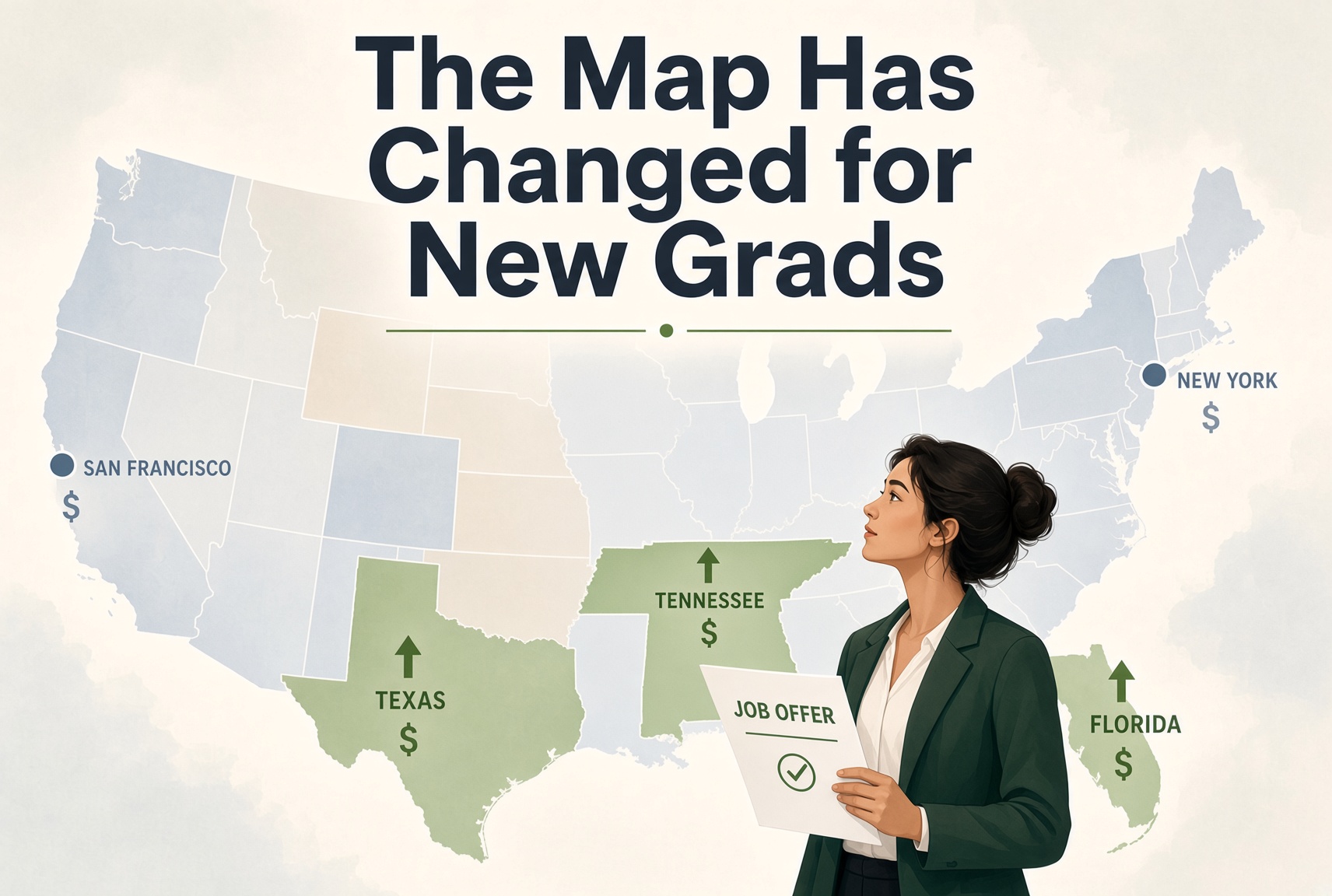
The Map Has Changed for New Grads
If you just graduated and you're staring down a job offer, the number on the offer letter is only part of the story. New research highlighted by MSN shows that recent college grads who want their first salaries to actually feel like real money should be paying close attention to where they land, not just what they land.
States like Texas, Florida, Tennessee, and parts of the Midwest consistently show up as places where entry-level salaries go meaningfully further once you factor in cost of living, state income tax (or lack of it), and housing costs. Meanwhile, chasing a higher nominal salary in a high cost-of-living city can leave you with less purchasing power than a lower offer somewhere else entirely.
That's worth sitting with for a second. A $65,000 offer in Austin or Nashville can outperform a $78,000 offer in San Francisco or New York in terms of what you actually take home and keep.
So What Does This Mean for Your Job Search?
A few practical things:
- Widen your geography intentionally. Don't just apply where you went to school or where your friends are moving. Run the numbers. Sites like NerdWallet's cost-of-living calculator or the MIT Living Wage tool can help you compare apples to apples.
- Research the local job market before you optimize your résumé. Employers in different metros often use different language for the same roles. A "Marketing Coordinator" in Chicago might be called a "Brand Associate" in Nashville. This matters more than you'd think.
- Remote-first roles change the math, but not entirely. If you're targeting remote jobs, you get to choose where your salary is spent. That's a real advantage worth maximizing.
The Part Nobody Tells You: Location Affects How Your Résumé Gets Screened
Here's something that catches a lot of new grads off guard. Many applicant tracking systems flag candidates based on location. If a company is hiring for an in-person role in Dallas and your résumé shows a home address in Boston, some ATS setups will score you down or filter you out before a human ever sees your name.
If you're planning a move or are open to relocating, say so clearly on your résumé. A simple line like "Relocating to Austin, TX in August 2025" near your contact information can keep you in the running.
This is exactly the kind of thing the ATS scan inside Past the Bots checks for. When you upload your résumé, the tool shows you what a parser actually extracts, including your contact details and location, so you can see exactly what an employer's system is reading. If your address is getting pulled in a way that could hurt you, you'll know.
Tailoring for Local Markets (Without Rewriting From Scratch Every Time)
Once you've decided which markets to target, you need your résumé to reflect the language employers in those markets are actually using. This is where the keyword gap becomes real for new grads especially, because you're already working with less experience to fill the page.
Here's a simple process:
- Paste the job description into a match tool to see which skills and keywords you're missing versus what you actually have.
- Identify the gaps you can legitimately close. Did you use a tool in a class project that's listed as a requirement? Did you do something in a part-time job that maps to a bullet they're asking for? Surface it.
- Let AI help you rewrite, not fabricate. This is an important line. Good AI tailoring takes what you actually did and reframes it in language that matches the role. It doesn't invent experience you don't have.
The AI tailoring feature in Past the Bots is built specifically around that constraint. You can rewrite your bullets to match a job description without crossing into territory that'll get you caught in an interview.
The Bigger Picture
For new grads right now, the combination of a tight entry-level market and high competition from other candidates means two things have to be true at once: you need to be strategic about where you're applying, and your résumé needs to actually get through automated screening once you do.
Getting the geography right is the strategic layer. Getting your résumé readable by ATS and matched to the right keywords is the tactical layer. Both matter.
The good news is that neither requires starting from scratch. A clear-eyed look at cost-of-living data plus a résumé that's been checked against real ATS parsing puts you meaningfully ahead of most applicants who are still just blasting out the same PDF and hoping for the best.
Start with the data. Then make sure the bots can actually read what you send.