Your Boss Is Watching (And So Is the Hiring Algorithm): What Surveillance Culture Means for Your Job Search
September 13, 2026 · 4 min read · Past the Bots
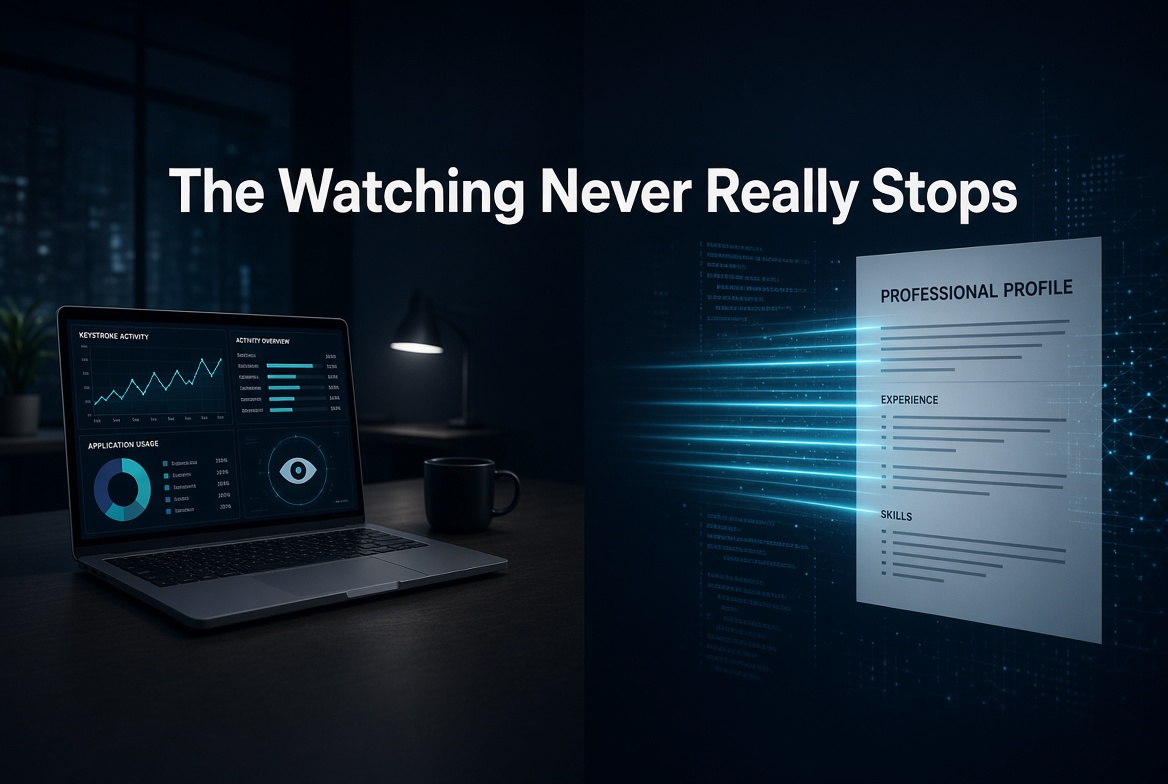
The Watching Never Really Stops
If you've read anything lately about workplace surveillance, you already know the picture isn't pretty. Employers are tracking keystrokes, monitoring emails, logging time spent on specific apps, and in some cases using AI to flag "productivity dips." According to a recent report covered by MSN, workplace monitoring has grown sharply since remote work became mainstream, and many employees have no idea how much data is being collected about them.
But here's what most of those articles miss: the surveillance starts before you're even hired.
Applicant Tracking Systems (ATS) are, in their own way, a form of automated screening. They parse your resume, score it against a job description, and decide whether a human ever lays eyes on it. That's not sinister the way keystroke logging is, but the effect is the same: an algorithm is making a judgment call about you, and you have almost no visibility into how.
Understanding both sides of this equation, what happens while you're employed and what happens while you're applying, puts you in a much stronger position.
What Employers Are Actually Tracking
The MSN piece outlines several common surveillance tools companies use:
- Email and messaging monitoring on corporate platforms like Outlook, Teams, and Slack
- Activity tracking software that logs keystrokes, screenshots, or time spent in specific apps
- Productivity scores generated by AI that flag employees deemed "disengaged"
- Location tracking on company-issued devices or through badge swipes
- Network monitoring that logs every site visited on a company connection
Experts quoted in the article recommend assuming anything done on a work device or network is visible to your employer. That's practical advice. It also means your job search activity, your resume uploads, your time spent on job boards, should stay on your personal device and your own internet connection.
This isn't paranoia. It's just good hygiene.
The Parallel Problem: ATS Surveillance on Your Resume
Once you're actively applying, you run into a different kind of automated judgment. ATS platforms parse your resume the moment you upload it. They're looking for specific things: your name and contact info, recognizable section headers, skills that match the job description, and work history in a format the parser can read cleanly.
The problem is that most people have no idea what a parser actually sees when it reads their resume. A beautifully designed PDF with columns, icons, and a header graphic might look great to a human recruiter. To a parser, it can look like scrambled text or missing data entirely.
This is exactly why tools like the Audit the Bots feature on Past the Bots exist: to show you, in plain language, what different parsers extract from your resume and where the gaps are. Things like a missing skills section, a phone number formatted in a way the parser skips, or a job title buried in a graphic text box can quietly knock you out of consideration before anyone reads a word you wrote.
Practical Steps to Take Right Now
Whether you're actively job hunting or just keeping your options open, here's how to protect yourself on both fronts:
On the surveillance side:
- Do all job search activity on personal devices and your home network
- Use a personal email address for applications, never your work one
- Be mindful of what you discuss in work communication tools, even "private" direct messages
- Know your company's monitoring policy (many are required to disclose it)
On the ATS side:
- Use a clean, single-column resume format so parsers can read it without errors
- Make sure your contact information is in plain text in the body of the document, not in a header or footer
- Tailor your skills section to mirror the language in each job description
- Check what an ATS actually extracts from your resume before you submit it anywhere
The Bigger Takeaway
Surveillance culture in the workplace is a real and growing concern, and job seekers deserve to understand it. But the most immediately actionable thing you can do right now is make sure the first algorithm that evaluates you, the ATS screening your resume, actually gets an accurate read on your experience and skills.
You can't control whether your employer monitors your Slack messages. You can control whether your resume makes it past the bots.
Start there.