Your Job Search Check-Ins Aren't Working — Here's How to Fix Them
August 29, 2026 · 4 min read · Past the Bots
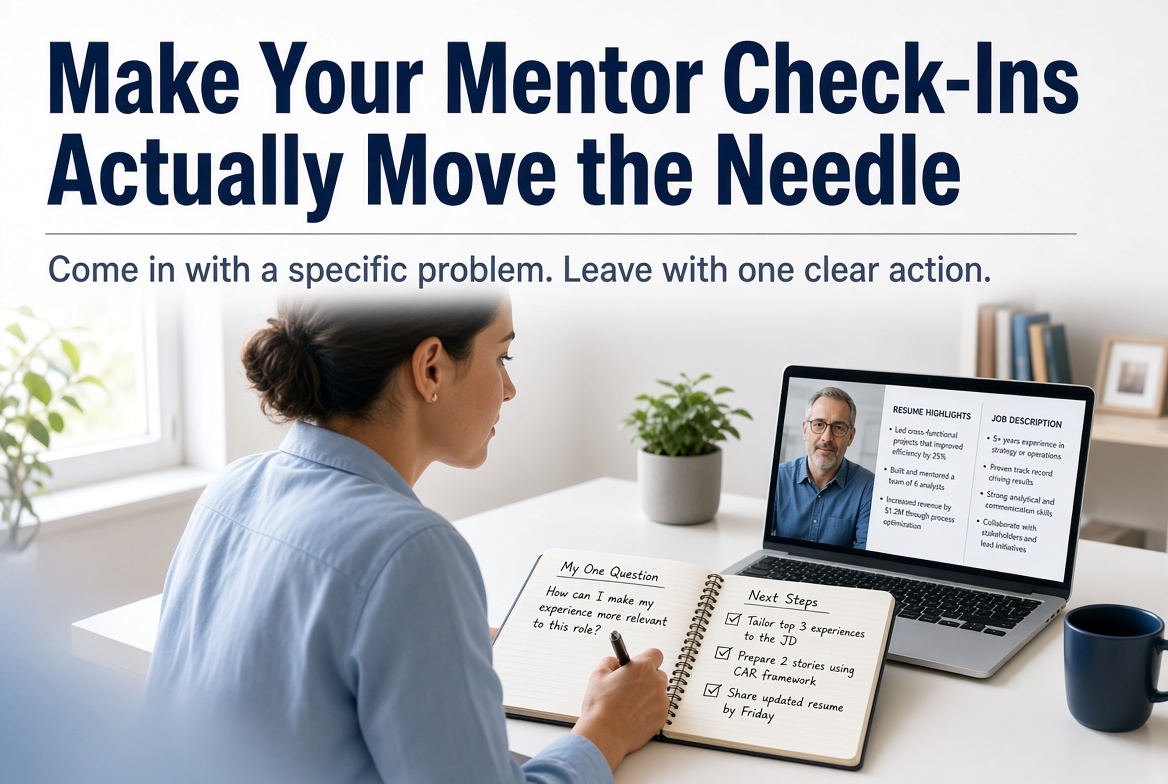 You've got a mentor. Maybe a career coach. Perhaps a trusted former manager who offered to help. You're having regular calls. And yet... your job search still feels stuck.
Sound familiar? You're not alone. A lot of job seekers go through the motions of check-ins without getting much out of them. The problem usually isn't the person you're meeting with. It's the structure (or lack of it) going into those conversations.
Here's how to turn your one-on-ones into sessions that actually move the needle.
Come In With a Specific Problem, Not a General Update
The biggest mistake people make is treating a check-in like a status report. "I applied to 12 jobs this week, heard back from two, did one phone screen." That's a summary, not a conversation starter.
Before every meeting, write down one specific thing you're stuck on. Examples:
- "I keep getting phone screens but no second interviews. Can we look at how I'm answering the 'tell me about yourself' question?"
- "I'm not sure if my resume is actually getting read by ATS software. What should I prioritize fixing?"
- "I've been applying for six weeks with no response. I think my resume might not be matching the job descriptions well enough."
A focused question gives your mentor or coach something to actually help with. Vague updates just eat time.
Bring the Evidence
Talking about your resume in the abstract is almost useless. Talking about a specific bullet point on your resume while your coach is looking at it? That's productive.
The same goes for job descriptions. If you're struggling to get callbacks from a certain type of role, pull up two or three of those postings and walk through them together. Where are the gaps? What are they asking for that your resume doesn't clearly show?
If you're not sure how your resume is actually being read by an ATS, tools like the Audit the Bots feature on Past the Bots can show you exactly what a parser extracts from your file. Bring those results to your next check-in. Suddenly "I think my resume might have issues" becomes "here's exactly what the system sees" and the conversation gets way more specific.
Stop Asking for Permission, Start Asking for Feedback
There's a subtle but important difference between these two questions:
- "Do you think I should apply to this role?"
- "I'm planning to apply to this role. Here's my thinking. What would you do differently?"
The first puts the decision on your mentor. The second shows you've done the thinking and just want a gut-check. People give better, more direct feedback when you've already committed to a direction. They'll push back on the details instead of hedging on the big picture.
Set a Clear Action Item Before the Call Ends
Every check-in should end with one concrete thing you're going to do before the next one. Not a list. One thing.
- Rewrite your summary section using the language from your target job descriptions
- Reach out to three people at companies you've been eyeing
- Do a practice answer to your toughest interview question on video and watch it back
If you leave a call without a next action, the conversation probably felt good but didn't move anything forward.
Give Your Mentor Something to React To
If you're working with a career coach or a mentor who's offered to review materials, don't wait for them to ask. Send your resume, a sample cover letter, or a job description you're targeting before the call. Even 24 hours of lead time means they show up having thought about it.
This is also where doing some pre-work yourself pays off. Running your resume through an ATS scan before a coaching session means you're not discovering basic formatting issues on the call. You're showing up with a list of specific questions about the things that actually need a human opinion.
The Bigger Picture
One-on-ones with coaches, mentors, and career-savvy friends are genuinely valuable. But the value comes from preparation and specificity, not just from showing up.
The job search is full of things outside your control. How you run your support conversations isn't one of them. Treat every check-in like a short consulting session where your time is limited and the goal is a clear next step. You'll get more out of every conversation and you'll move faster.
And if the honest answer is that you're not sure what to bring to your next meeting, start with your resume. Understanding exactly what an ATS sees when it reads your file tends to surface plenty of specific, actionable questions pretty quickly.